Top Spas USA: The 2026 Forensic Guide to High-Utility Wellness
In 2026, the American spa industry has moved beyond the “pampering” paradigms of the late 20th century, evolving into a sophisticated infrastructure of preventative health and sensory recalibration. No longer just an ancillary hotel amenity, the modern high-end spa functions as a specialized medical-wellness hybrid. As chronic stress and digital saturation reach unprecedented levels, the demand for “Deep Restoration”—a state of physiological and cognitive recovery that cannot be achieved in domestic environments—has turned the search for the top spas in the USA into a strategic pursuit of longevity and mental clarity.
The systemic landscape of domestic wellness is currently defined by “Biological Personalization.” Leading institutions are moving away from standardized treatment menus in favor of data-driven protocols. By utilizing biometric screening, genetic testing, and metabolic tracking, these facilities have transformed from simple retreats into “Human Optimization Centers.” This transition reflects a broader shift in the American luxury market: a move from “Conspicuous Consumption” to “Conspicuous Wellness,” where the ultimate status symbol is not a physical possession, but a regulated nervous system and a high-functioning biological age.
Achieving a superior restorative result requires a departure from the “vacation” mindset and the adoption of an “intervention” perspective. It involves assessing a facility not merely by its square footage or the brand of its linens, but by its “Clinical Integrity”—the credentials of its practitioners, the sophistication of its hydrotherapy circuits, and the evidence-based nature of its modalities. This inquiry provides an exhaustive framework for understanding the mechanics of top-tier American wellness, exploring the historical evolution of “Healing Waters,” the risk landscape of medical aesthetics, and the rigorous governance protocols necessary to maintain a world-class therapeutic environment.
Understanding “Top spas usa”
To navigate the market of top spas USA, one must first dismantle the oversimplification that “more expensive equals more effective.” In 2026, “Luxury” in the wellness sector is an indicator of “Friction Removal”—the degree to which a facility can remove environmental stressors to allow the body’s natural homeostatic processes to take over. A top-tier spa is a controlled environment where light, sound, temperature, and nutrition are all engineered to induce a specific physiological state.
Common misunderstandings often center on the “Amenity vs. Modality” confusion. Many travelers book a spa based on the aesthetic of its infinity pool (amenity) rather than the efficacy of its lymphatic drainage protocols or the quality of its craniosacral therapists (modality). The risk of this oversimplification is high: a guest may spend $2,000 a night at a visually stunning resort but leave with the same cortisol levels they arrived with because the “service” was purely surface-level.
Furthermore, the concept of “Destination” versus “Day” spas is merging into a single “Wellness Continuum.” The elite tier of top spas in the USA now focuses on “Continuity of Care.” This means that a guest’s experience does not end at checkout; it includes post-stay nutritional tracking and remote consultation. The best facilities are those that function as “External Habitats”—places where guests go to re-learn how to live in their own bodies.
Deep Contextual Background: From Mineral Springs to Biohacking
The genealogy of the American spa can be traced to the “Sanatorium Era” of the 19th century. Locations like Saratoga Springs, New York, and Hot Springs, Arkansas, were originally sought out for their “Curative Waters.” These were the first “Health Resorts” in the U.S., where the elite sought relief from the industrial-era ailments of “neurasthenia” and “rheumatism.“
The 1950s and 60s introduced the “Golden Era of Pampering,” led by institutions like the Golden Door in California. This era focused on the “Beauty Farm” concept—weight loss, skincare, and social seclusion. It was during this period that the “Destination Spa” model was perfected: a closed ecosystem where every meal and activity was curated by the house.
By the early 2000s, the “Medical Spa” (Med-Spa) emerged, driven by FDA approvals for non-invasive cosmetic procedures like Botox. This introduced a new systemic complexity: the integration of clinical oversight into the hospitality environment. Today, in 2026, we are in the “Bio-Optimization Era.” The focus has shifted from “looking better” to “functioning better.” Modern top-tier spas utilize infrared saunas, cryotherapy, and hyperbaric oxygen chambers—technologies once reserved for professional athletes—making them accessible to the high-net-worth traveler seeking an “Edge.“
Conceptual Frameworks and Mental Models for Wellness Evaluation
To analyze a wellness institution with professional discipline, one should employ mental models that prioritize physiological depth over aesthetic surface.
1. The “Therapeutic Depth” Index
This framework measures the degree to which a treatment penetrates the body’s systems.
-
Level 1 (Epidermal): Facials, body scrubs, superficial massage.
-
Level 2 (Muscular/Lymphatic): Deep tissue work, manual lymphatic drainage, hydrotherapy.
-
Level 3 (Neurological/Metabolic): Sound baths, IV nutrient therapy, breathwork, and acupuncture. A true “Top Spa” must offer mastery across all three levels, moving the guest from a state of “Pampered” to “Reprogrammed.“
2. The “Contextual Silence” Model
In 2026, the rarest commodity is silence—not just acoustic silence, but “Digital and Visual Silence.” This model evaluates a facility’s ability to “Grit the Signal”—how well they block EMF, blue light, and social friction. A resort with a “No-Phone” policy enforced through hardware lockers is inherently more “Luxurious” than one that merely asks for quiet.
3. The “Clinician-to-Caretaker” Ratio
This model assesses the ratio of licensed medical/therapeutic professionals to general hospitality staff. A facility with a high ratio of MDs, RNs, and specialized bodyworkers indicates a “High-Utility” health asset, whereas a high ratio of waitstaff and concierges indicates a “Service-Oriented” leisure asset.
Taxonomy of Elite Facilities: Categories and Trade-offs
The American spa landscape is divided into distinct operational archetypes, each offering different trade-offs.
| Category | Typical Example | Key Trade-off | Strategic Value |
| The Destination Medical | Canyon Ranch, AZ | High rigor / Fixed schedule | Radical health pivot |
| The Spiritual Sanctuary | Mii amo, Sedona | “Woo” factor / Emotional heavy | Mental & energetic reset |
| The Hydrotherapy Hub | Kohler Waters Spa, WI | High guest volume in wet areas | Systematic circulatory health |
| The Bio-Optimization Lab | Sensei Porcupine Creek | High tech / High data tracking | Physical peak performance |
| The Wilderness Retreat | The Lodge at Woodloch | Nature exposure / Remote logistics | Deep sensory grounding |
| The Urban Medical | Carillon Miami | Urban noise / Proximity to city | Efficiency & advanced diagnostics |
Decision Logic: The “Goal-Environment” Alignment
A traveler must choose between “Immersion” (Destination Spas where you stay on-site) and “Intervention” (Urban Med-Spas where you drop in for specific treatments). If the goal is “Burnout Recovery,” a Destination Spa in a wilderness setting is non-negotiable. If the goal is “Aesthetic Maintenance,” an Urban Med-Spa with a high-speed turnover of advanced lasers is more efficient.
Detailed Real-World Scenarios and Decision Logic
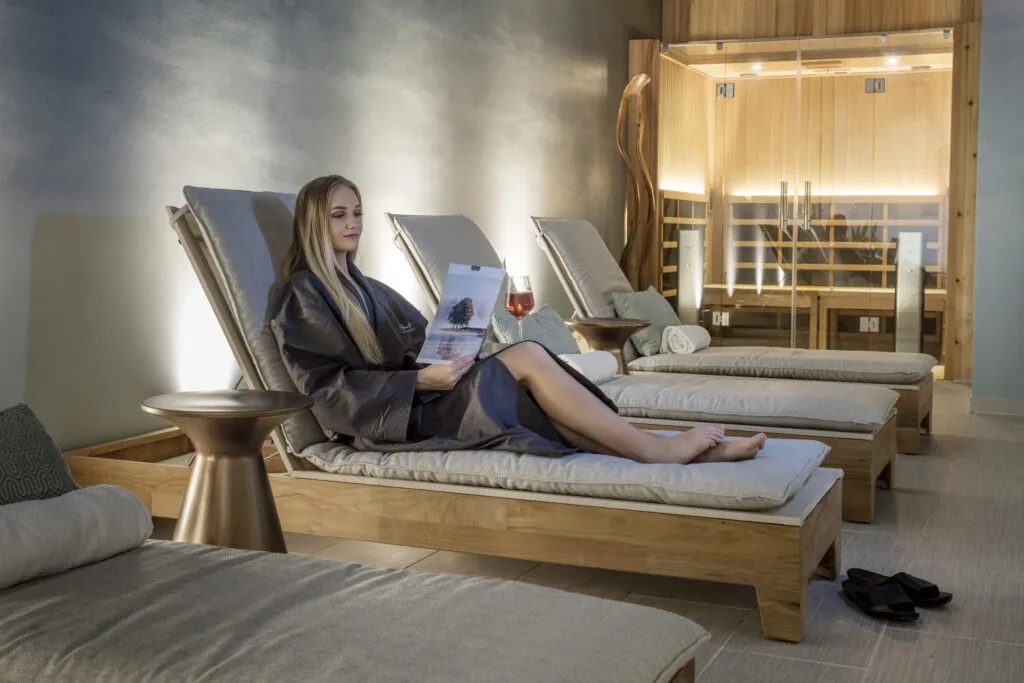
Scenario A: The “Post-Burnout” Recalibration
An executive seeks a 4-day escape after a merger.
-
The Conflict: They want to “do nothing” but need “results.“
-
The Move: Booking a “Silent Retreat” tier at a facility like Miraval.
-
Decision Logic: The move is not for the massage, but for the “Mindfulness Curriculum.“
-
Failure Mode: Booking a high-activity “Adventure Spa” where the schedule itself creates a new form of “Executive Stress.“
Scenario B: The “Longevity-Focus” Intervention
A guest in their 50s wants to address “Biological Aging.“
-
The Move: A facility like Four Seasons Westlake (California Health & Longevity Institute).
-
Decision Logic: Utilizing a “Medically Supervised” program that includes blood panels and VO2 Max testing alongside the spa treatments.
-
Second-Order Effect: The spa treatment becomes a “Recovery Tool” for the clinical diagnostic work, rather than just an indulgence.
Planning, Cost, and Resource Dynamics
The economic structure of top spas in the USA involves high fixed entry costs and “Add-On” volatility.
The Wellness Capital Matrix (Per Person, Per Stay)
| Component | Cost Range (2026) | Variable Factor | Necessity |
| All-Inclusive Day Rate | $900 – $2,500 | Room tier & season | Primary |
| Medical Diagnostics | $1,500 – $5,000 | Scope of bloodwork/genetics | Strategic |
| Specialized Bodywork | $250 – $600/hr | Practitioner “Master” status | High-Utility |
| Nutritional Integration | Included – $500 | Private chef/supplementation | Core |
The “Opportunity Cost” of Short Stays: A 2-night stay at a top-tier destination spa is often an “Inefficient Investment.” The body typically takes 48 hours just to down-regulate out of a “Fight or Flight” state. For maximum ROI on a high-cost stay, a 4-7 day window is the “Minimum Effective Dose.“
Tools, Strategies, and Support Systems
To maximize the utility of a wellness stay, a guest must utilize a technological and organizational stack.
-
Biometric Wearables (Oura/Whoop) Integration: Facilities that can “read” your sleep and stress data upon arrival to adjust your treatment pressure.
-
Contrast Bathing Protocols: Using a specific sequence of “Hot-Cold-Rest” (e.g., 15 min sauna, 2 min cold plunge, 15 min neutral rest) to trigger mitochondrial health.
-
Circadian Lighting Systems: In-room lighting that syncs with the sun to reset melatonin production, a critical “Silent Tool” of top spas.
-
Acoustic Resonance Therapy: Specialized beds that use sound frequencies to vibrate the body at a cellular level, aiding in deep muscle relaxation.
-
Digital “Black-Hole” Services: High-end concierge teams that manage your emails/comms so you can remain “Off-Grid” without anxiety.
-
Post-Program “Implementation Blueprints”: A documentation package that translates your spa “lessons” into your domestic lifestyle.
Risk Landscape and Failure Modes
The “High-End Wellness” space contains structural risks that can lead to “Experience Decay.“
-
The “Clinical-Hospitality” Conflict: A facility may have world-class doctors but terrible service, or five-star service but “junk-science” treatments. This “Quality Asymmetry” is the most common failure mode in top spas USA.
-
Compounding Risk: The “Med-Spa Infection” Hazard. In the rush for non-invasive results, some spas under-train staff on laser safety or injection protocols. A “Top Spa” must have a visible Chief Medical Officer (CMO).
-
The “Group-Dynamic” Interference: A destination spa’s atmosphere can be ruined by a single large, loud corporate group. “Exclusive Use” or “Small Group” caps are a defensive indicator of quality.
-
The “Placebo Premium”: Paying $500 for a “Vibrational Crystal Healing” that has no physiological basis. One must distinguish between “Sensory Indulgence” (valid) and “False Medical Claims” (invalid).
Governance, Maintenance, and Long-Term Adaptation
How does a world-class facility maintain its “Apex” status? It requires a “Stewardship Philosophy.“
The “Wellness Integrity” Checklist
-
Practitioner Longevity: Does the spa retain its therapists for 5+ years? High turnover is the #1 killer of treatment quality.
-
Water Purity Audits: In hydrotherapy-heavy spas, the filtration of the “Healing Waters” must be of a pharmaceutical grade.
-
Modality Evolution: Does the spa retire “Trendy” treatments in favor of those backed by new peer-reviewed research?
-
Staff Wellness Governance: A spa cannot provide healing if its own staff is burned out. The “Top” spas have the best employee-benefit packages in the industry.
Measurement, Tracking, and Evaluation
How do you quantify the success of a stay at the top spas usa?
-
Quantitative Signal: HRV (Heart Rate Variability). A successful stay should show a significant increase in HRV by day three, indicating a more resilient autonomic nervous system.
-
Qualitative Signal: “Cognitive Load Reduction.” The ability to read a physical book for 60 minutes without the urge to check a screen.
-
Leading Indicator: “Pre-Arrival Depth.” How many questions does the spa ask before you arrive? A high-quality facility will send a 20-page intake form; a low-quality one will just ask for your credit card.
Common Misconceptions and Oversimplifications
-
Myth: “A hard massage is a better massage.” Correction: Excessive pressure can trigger a “Protective Reflex” (muscle guarding), which defeats the purpose of the treatment. The “Best” therapists work with the nervous system, not against it.
-
Myth: “Detox means starving.” Correction: The liver and kidneys require specific nutrients (amino acids, antioxidants) to function. A “Top Spa” provides high-density nutrition, not deprivation.
-
Myth: “Men don’t go to destination spas.” Correction: Male patronage in the “Performance-Wellness” sector has risen to nearly 40% as the focus shifts from “Beauty” to “Longevity.“
-
Myth: “A five-star hotel spa is the same as a destination spa.” Correction: A hotel spa is a “Break”; a destination spa is a “Reset.” The cultures are fundamentally different.
Ethical, Practical, or Contextual Considerations
The ethics of the 2026 spa landscape revolve around “Inclusivity vs. Exclusivity.” While the price point of the top spas in the USA remains a barrier, many institutions are implementing “Outreach Models,” providing scholarships or community wellness days. Practically, one must consider the “Ecological Footprint” of the spa. A desert spa that wastes millions of gallons of water is a 20th-century relic; the new standard is “Closed-Loop Hydrotherapy” and native-flora landscaping.
Conclusion
The pursuit of the top spas USA is ultimately a pursuit of “Biological Sovereignty”—the ability to maintain one’s health and clarity in a world designed to erode them. As we look toward the 2030s, the “Spa” will increasingly become the “Primary Care” of the wealthy—a place where health is built through the strategic application of rest, science, and nature. To enter these spaces is to participate in an ancient human ritual, upgraded for a digital age: the recognition that our most valuable asset is the integrity of our own awareness.