Reward Points Itineraries: The 2026 Forensic Guide to Global Travel
The modern global transit network operates on a dual-currency system. While the primary layer is fueled by sovereign fiat, a secondary, highly volatile, yet immensely lucrative layer exists in the form of transferable loyalty assets. Constructing effective itineraries within this secondary layer is an exercise in complex systems engineering. It requires a departure from the linear “booking” mindset—where a traveler simply exchanges currency for a fixed seat—and an adoption of a “logistical arbitrage” mindset. In this environment, the traveler acts as an architect, assembling disparate nodes of airline alliances, hotel partnerships, and credit card transfer ratios into a coherent, high-value journey.
As we move through 2026, the complexity of this task has escalated. Dynamic pricing algorithms, the fragmentation of airline alliances, and the “devaluation cycles” of major loyalty programs have rendered traditional, static advice obsolete. A high-integrity itinerary is no longer just about finding a “deal”; it is about managing the lifecycle of an asset. The difference between a novice and a master of this craft is found in the ability to anticipate systemic friction—such as “phantom availability” or “stopover constraints”—and to design around it with surgical precision.
This article serves as a forensic examination of the structural mechanics of high-leverage travel. We will dismantle the components of modern loyalty systems to understand how they can be reconstructed into definitive, resilient journeys. By moving beyond the superficial “blog-style” tips, we provide a structural framework for navigating the global landscape using assets that are often misunderstood or undervalued. This is a guide for the analytical traveler who views a map not as a series of destinations, but as a network of potential value-nodes awaiting orchestration.
Understanding “reward points itineraries.”
To engage with the concept of reward points itineraries is to enter a theater of “Asymmetric Logistics.” In traditional travel planning, the price of a route is largely dictated by demand and fuel costs. In the points-based layer, however, the “cost” is determined by the specific rules of the loyalty program being utilized as the booking engine, regardless of which airline actually operates the aircraft. A primary misunderstanding is the belief that an itinerary is a static product; in reality, it is a variable output of a specific set of transfer-ratio and routing-rule inputs.
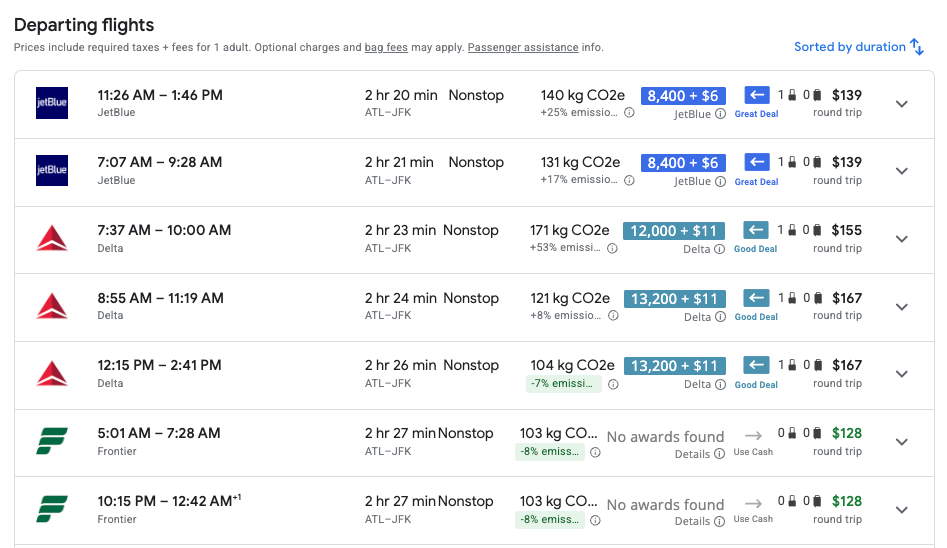
The risk of oversimplification in this space is profound. Many travelers assume that a “good” itinerary is simply one that uses the fewest points. This fails to account for “Opportunity Cost” and “Yield Management.” For instance, an itinerary that costs 50,000 points but incurs $800 in “Fuel Surcharges” may be objectively inferior to one that costs 80,000 points with $5.60 in taxes. The sophistication of the itinerary is found in the balance between point-expenditure, cash-outlay, and the “Quality of Transit”—factors like layover duration, cabin hardware, and terminal access.
Furthermore, we must address the “Availability Mirage.” Modern booking engines often display itineraries that appear bookable but fail during the final transaction phase—a phenomenon known as phantom availability. Designing a resilient itinerary requires “Cross-Node Verification”—the process of checking the same flight across multiple alliance-partner platforms to ensure the inventory actually exists in the global distribution system. Without this forensic step, an itinerary is merely a theoretical construct, not a viable plan of movement.
Contextual Evolution: From Flat-Rate Miles to Global Arbitrage
The history of loyalty-based movement has transitioned through three distinct systemic phases. The Industrial Phase (1981–2005) was characterized by “Distance-Based” logic. A mile flown was a mile earned, and a flight from New York to London cost a fixed number of miles regardless of the underlying cash price. Planning during this era was simple, but options were limited to the specific airline the traveler flew most often.
The Financialized Phase (2006–2020) saw the rise of “Transferable Currencies.” Banks (Chase, Amex, Citi) decoupled points from specific airlines, turning them into a universal “Pivot Currency.” This allowed travelers to move points into the program that offered the best routing for a specific trip. The focus shifted from “Brand Loyalty” to “Strategic Arbitrage.”
Today, we occupy the Algorithmic Phase (2021–Present). Most programs have moved to “Dynamic Pricing,” where the point-cost fluctuates based on the cash fare. Simultaneously, “Sweet Spot” redemptions—where a specific partner program prices a flight significantly lower than the operating carrier—have become the primary target of high-leverage planning. Itineraries are no longer built; they are “harvested” from gaps in the algorithmic pricing models of global alliances like Star Alliance, SkyTeam, and Oneworld.
Conceptual Frameworks and Mental Models
To design reward points itineraries with professional rigor, one should employ these specific mental models:
1. The “Transfer Pivot” Framework
Never view points as a static balance in an airline account. Instead, view them as “Liquid Potential” held at the bank level. The bank is the “Pivot Point.” You only commit the asset to a specific airline node at the moment the “High-Utility” itinerary is confirmed. This protects the traveler against the devaluation of any single airline’s currency.
2. The “Fifth-Freedom” Node
A critical tool in the architect’s kit is the “Fifth Freedom” flight—a route operated by an airline between two countries where neither is its home base (e.g., Emirates flying from New York to Milan). These routes often have higher award availability and lower surcharges than domestic or flag carriers, acting as “Pressure Relief Valves” for crowded itineraries.
3. The “Positioning Flight” Logic
The “Hub” you depart from is the greatest constraint on your itinerary. The mental model of “Positioning” involves buying a cheap cash ticket to a different hub (e.g., flying from Omaha to Chicago) to unlock a high-value points itinerary that isn’t available from your home airport. The cost of the positioning flight is an “Access Tax” paid to unlock thousands of dollars in value.
Taxonomy of Itinerary Categories and Strategic Trade-offs
| Itinerary Archetype | Primary Strategic Engine | Value Logic | Core Trade-off |
| The Global Sweep | Round-the-World (RTW) Chart | Fixed cost for 15+ flights | Rigid routing; complex booking |
| The Luxury Pivot | Partner Sweet Spots | First/Business at Economy rates | Extremely limited availability |
| The Multi-City Stopover | Program “Add-on” Rules | Extra destination for 0 points | High “Time-Tax” in transit |
| The Family Bulk-Buy | Fixed-Value Redemption | Guaranteed seats for 4+ people | Low “Cents Per Point” (CPP) value |
| The Short-Haul Arbitrage | Distance-Based Tiers | High-value on expensive regional routes | Minimal luxury “experience.” |
Decision Logic: The “Value-to-Friction” Ratio
The architect must decide where they sit on the “Optimization Curve.” A “Maximized” itinerary (e.g., ANA First Class booked via Virgin Atlantic) offers extreme value but requires monitoring availability 355 days in advance. A “Utility” itinerary (e.g., Southwest or JetBlue) offers low value-per-point but allows for total flexibility. The realistic decision point is usually found in the “Middle Market”—Business Class on a reliable partner like Qatar Airways or Turkish Airlines, booked 3–6 months out.
Operational Real-World Scenarios
Scenario A: The “Closed-Loop” Failure
A traveler accumulates 200,000 miles in a single airline program, only to find that “Dynamic Pricing” has raised the cost of their desired flight to 450,000 miles.
-
The Error: Asset Concentration.
-
The Solution: Utilizing “Flexible Currencies” to pivot to a different alliance that still uses a “Fixed Award Chart,” bypassing the local inflation.
Scenario B: The “Reverse-Engineered” Stopover
A traveler wants to visit Tokyo and Singapore. Instead of booking two separate trips, they use the “Excursionist” or “Stopover” rules of a program like United or Air Canada.
-
The Logic: Booking North America to Singapore with a “Legal Stopover” in Tokyo.
-
Outcome: The second leg (Tokyo to Singapore) costs 0 additional points, effectively “Manufacturing” a multi-city itinerary out of a one-way booking.
Planning, Cost, and Resource Dynamics
The “Cost” of a points-based itinerary is multi-variant. It includes the point balance, the cash surcharges, and the “Planning Hours” required to execute the booking.
Itinerary Efficiency Matrix (2026 Projections)
| Itinerary Tier | Points (Avg) | Cash (Avg) | Planning Hours | Target Value (USD) |
| Economy Utility | 25k–40k | $50 | 1–2 | $400–$800 |
| Transatlantic Biz | 60k–88k | $200–$900 | 5–10 | $3,500–$6,000 |
| Transpacific First | 110k–150k | $150 | 20+ | $12,000+ |
| RTW Multi-Stop | 160k–250k | $600–$1.2k | 40+ | $20,000+ |
The “Fuel Surcharge” Variance: This is the most volatile variable in planning. Airlines like British Airways and Lufthansa pass on massive “Carrier Imposed Surcharges” to point bookings. A strategic architect avoids these by booking through “Surcharge-Averse” partners like Avianca LifeMiles or Air Canada Aeroplan, which may charge more points but zero surcharges.
Tools, Strategies, and Support Systems
To construct high-integrity reward points itineraries, one must utilize a “Tactical Stack” of specialized tools.
-
Multi-Alliance Aggregators: Tools like Point.me or Roame.travel act as a search engine across dozens of programs, identifying where a specific flight is cheapest.
-
Availability “Bots”: Services like Seats. aero allow for real-time monitoring of “Last-Minute” Business Class availability, essential for spontaneous high-value itineraries.
-
Route-Mapping Visualizers: Using GCMap or FlightConnections to identify valid routing paths. Most points programs have “Maximum Permitted Mileage” (MPM) rules; if your itinerary is too circuitous, the system will reject it.
-
Transfer-Bonus Trackers: Timing the movement of points from the bank to the airline during a “30% Bonus” window can reduce the cost of an itinerary by nearly a third.
-
Expert “Award Services”: For complex Round-the-World itineraries, hiring a professional “Award Booker” is an exercise in “Strategic Outsourcing”—paying $200 to save 40 hours of work and 100,000 points.
-
“Open-Jaw” Logistics: Designing an itinerary that flies into one city (e.g., Paris) and out of another (e.g., Rome), filling the gap with a cheap train or regional flight. This prevents the “Backtracking” that wastes both time and points.
The Risk Landscape: Failure Modes in Complex Routing
-
The “Phantom” Transaction: The most common failure occurs when a partner airline shows a seat that doesn’t actually exist. If you transfer points from a bank to an airline to book a phantom seat, the points are “Orphaned”—trapped in the airline program with no way to move them back.
-
The Schedule Change Collapse: In a multi-segment itinerary (e.g., NYC – London – Nairobi – Seychelles), a 2-hour schedule change on the first leg can cause a “Cascading Failure,” where you miss subsequent connections that were booked on separate tickets.
-
The “Waitlist” Trap: Some programs (like Singapore Airlines) allow you to “Waitlist” for a seat. This is not a confirmed itinerary. Relying on a waitlist for a time-sensitive journey is a high-risk strategy that often ends in “Logistical Stranding.”
-
The Fraud-Flag Delay: Transferring 200,000 points into a brand-new airline account often triggers a “Security Freeze.” If the freeze takes 48 hours to clear, the high-value seat you were targeting will likely be gone.
Governance and Long-Term Asset Maintenance
Managing a portfolio of reward points itineraries is not a “one-and-done” event; it is a governance cycle.
The “Lifecycle” Checklist
-
Monthly Expiration Audit: Ensure no balances are reaching their “Sunset Date.” A single $1 purchase on a shopping portal can often reset the clock.
-
Alliance Health Check: Are your preferred partners stable? In 2024–2025, we saw major shifts in airline partnerships (e.g., SAS moving from Star Alliance to SkyTeam). An itinerary planned for 2026 must account for these “Geopolitical” shifts in the travel world.
-
Devaluation Buffering: Always maintain a “Buffer” of 20% more points than the itinerary requires to account for sudden pricing shifts between the “Search” and “Book” phases.
-
Hard-Copy Documentation: In the era of digital failure, always carry a physical printout of your “Ticket Number” (a 13-digit code starting with the airline’s prefix). A “Confirmation Code” is a reservation; a “Ticket Number” is a contract of carriage.
Measurement, Tracking, and Evaluation
The success of an itinerary must be measured using both quantitative and qualitative signals.
-
Quantitative: Cents Per Point (CPP).
$$CPP = \frac{Cash Price – Taxes & Fees}{Points Used} \times 100$$-
Standard: 1.0 – 1.5 CPP
-
Mastery: > 3.0 CPP
-
-
Qualitative: The “Friction Score.” Did the itinerary require three layovers and a 12-hour bus ride to save 10,000 points? If the “Friction” exceeds the “Value,” the itinerary is a failure of design.
-
The “Net-Worth” Impact: Did using points for this trip allow you to keep $5,000 in your investment account, where it can earn compound interest? The ultimate goal of a points itinerary is “Wealth Preservation.”
Strategic Myths and Common Misconceptions
-
“Points are free travel.” Points are a “Rebate” on your data and spending. They have a tangible cost in annual fees and credit card interest (if not paid in full). An itinerary is a “Tax-Advantaged Purchase,” not a gift.
-
“You should always use points for the most expensive flight.” If a flight costs $5,000 but only 60,000 points, it’s a great deal. If it costs $500 and 50,000 points, you should pay cash. The “Cash-to-Point” ratio is the only metric that matters.
-
“Airlines want you to use your points.” Airlines treat points as a liability on their balance sheet. Their goal is to encourage you to use points for “Low-Value” redemptions (toasters, magazine subscriptions) to clear that liability cheaply. The architect’s goal is the exact opposite.
-
“Direct flights are always better.” In the points world, “Direct” is often synonymous with “No Availability.” The most comfortable itineraries often involve a “Connecting Hub” like Doha, Dubai, or Istanbul, where the ground experience (lounges, spas) is part of the reward.
Ethical and Contextual Considerations
The pursuit of high-leverage itineraries exists within an ethical framework. The “Points Gap” is a reality—those with the highest credit scores and spending capacity receive the greatest rebates, often subsidized by the “Interchange Fees” paid by merchants and, ultimately, by cash-paying customers. Furthermore, the “Overtourism” factor is compounded by points; when a specific “Sweet Spot” (like a luxury resort in the Maldives) becomes “Viral” in the points community, it can lead to ecological and social strain on a destination that wasn’t designed for such high-intensity throughput. A responsible architect considers the “Footprint” of their itinerary as much as its “Value.”
Conclusion
The construction of reward points itineraries is the ultimate expression of the “Logical Traveler.” It is a discipline that rewards patience, technical literacy, and a willingness to embrace complexity. By viewing the world as a network of interconnected alliances and pricing gaps, one can unlock experiences that are otherwise reserved for the ultra-wealthy. However, this mastery requires a commitment to the “Systems Mindset”—understanding that an itinerary is never just a ticket, but a carefully governed asset within a volatile global market. In an era where the cost of movement is rising, the ability to architect these journeys is not just a hobby; it is a vital skill for the modern global citizen.