Luxury Villas America: The 2026 Forensic Guide to Private Estates
The American luxury villa market has transitioned from a fragmented collection of high-end vacation rentals into a rigorous, institutionalized asset class. In the contemporary landscape, the villa is no longer merely a large house in a desirable location; it is a bespoke infrastructure designed to facilitate “Total Privacy Autonomy.” As the global hospitality industry leans toward hyper-personalization, the domestic villa sector has emerged as the primary vehicle for high-net-worth individuals to bypass the friction of communal hotel environments. This shift is driven by a fundamental reassessment of “luxury” itself—moving away from shared opulence toward the absolute control of one’s immediate physical and social environment.
Navigating this sector requires a sophisticated understanding of the “Residential-Hospitality Hybrid.” Unlike a traditional hotel, where service is centralized and standardized, a luxury villa in the United States operates as a decentralized entity. It requires a complex web of logistical support—ranging from private culinary teams and security details to specialized estate management protocols. The systemic complexity of maintaining a world-class villa in regions as varied as the high deserts of Arizona, the coastal cliffs of California, or the mountainous enclaves of Colorado involves a high degree of technical and operational mastery.
As of 2026, the valuation of these properties is increasingly tied to their “Technological and Ecological Resilience.” It is no longer sufficient for a villa to possess aesthetic appeal; it must now demonstrate structural integrity against climate volatility and offer a technological stack that supports seamless global connectivity without compromising biometric security. This inquiry provides an exhaustive framework for identifying and evaluating these elite assets, moving beyond superficial marketing narratives to examine the forensic reality of what constitutes a top-tier residential retreat in the current era.
Understanding “Luxury villas america”
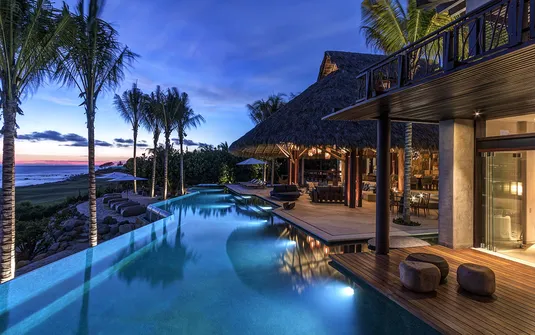
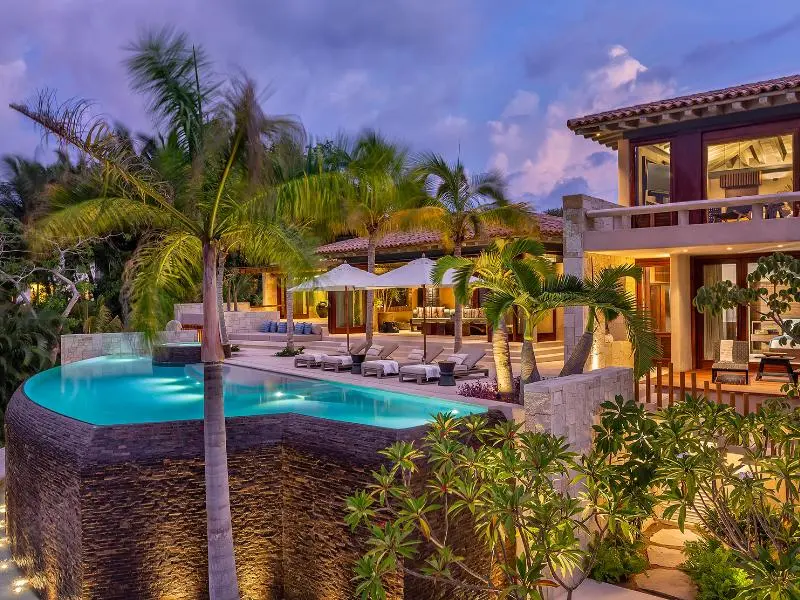
To effectively grasp the mechanics of Luxury Villas America, one must first decouple the term “villa” from its European Mediterranean roots. In the American context, a villa is a high-utility, stand-alone residence that functions with the service depth of a five-star resort. The primary misunderstanding in the market is the belief that any high-value home listed on a rental platform qualifies as a luxury villa. In reality, the “Luxury” designation is a reflection of the property’s “Service Readiness”—the presence of a dedicated onsite or on-call staff, a commercial-grade kitchen infrastructure, and architectural layouts that separate service corridors from guest living spaces.
The risk of oversimplification in this domain is substantial. Travelers often focus on the “Amenity List” (infinity pools, home theaters, wine cellars) while ignoring the “Operational Infrastructure.” A villa with a ten-car garage but a residential-grade electrical grid that cannot support a full events team is a compromised asset. True luxury villas in the United States are engineered for high-occupancy events and multi-generational stays, requiring a level of durability and “back-of-house” sophistication that mirrors a boutique hotel.
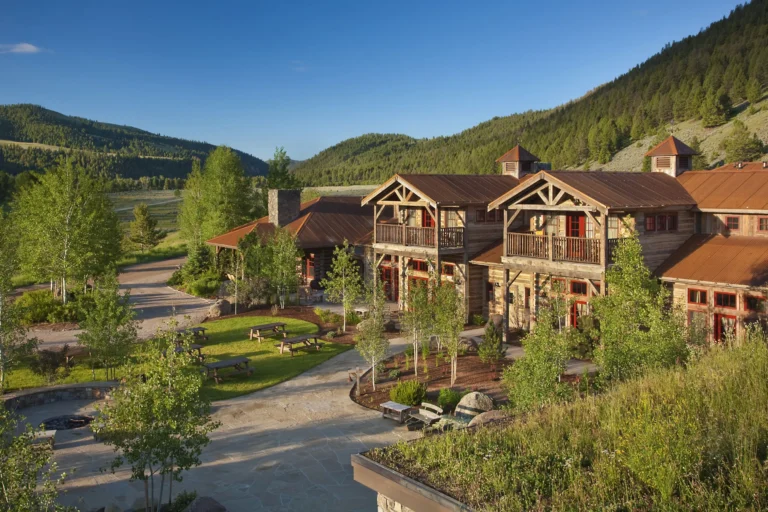
Furthermore, we must address the “Geographic Specificity.” The requirements for a villa in the Hamptons are fundamentally different from those in the Florida Keys or the Hawaiian Islands. Mastery of this sector involves understanding how the local environment dictates the villa’s design and service model. For instance, a Florida villa must prioritize “Atmospheric Humidity Control” and “Storm Resilience,” while a Montana estate must be evaluated on its “Thermal Efficiency” and “Off-Grid Longevity.” The “Best” villa is never a universal standard; it is a property that has been perfectly calibrated to its specific biome and the specific privacy needs of its occupants.
Contextual Evolution: From Gilded Age Cottages to Sovereign Estates
The American villa did not emerge in a vacuum; it is the descendant of the “Summer Cottages” of Newport, Rhode Island, and the “Great Camps” of the Adirondacks. During the late 19th century, the American elite sought to replicate European aristocratic estates but integrated them with American industrial efficiency. These properties were the first to feature “In-House Technical Staff,” moving away from the traditional servant model toward a more specialized, professionalized management structure.
The Mid-20th Century saw the rise of the “Architectural Statement” villa. This era was defined by properties in Palm Springs and the Hollywood Hills, where the villa became a laboratory for Modernist design. These homes prioritized “Indoor-Outdoor Flow” and utilized the emerging technology of air conditioning to make desert and tropical living not just possible, but indulgent. This period introduced the idea of the villa as a “Social Fortress”—a place for the entertainment elite to congregate away from the prying eyes of the burgeoning paparazzi.
In the Current Era (2020-2026), the villa has undergone a “Functional Institutionalization.” Driven by the global pandemic and the subsequent rise of “Work-from-Anywhere” for the ultra-wealthy, the villa has become a primary residence for extended periods. This has forced an upgrade in the “Home Office” and “Wellness” infrastructure. Modern luxury villas now feature medical-grade air filtration, soundproofed broadcast-quality suites for virtual board meetings, and comprehensive physical security systems that include “Safe Room” integration and drone-detection technology.
Conceptual Frameworks and Mental Models for Villa Evaluation
To analyze a private estate with professional discipline, one should employ mental models that prioritize systemic depth over aesthetic surface.
1. The “Hospitality-to-Home” Spectrum
This framework measures where a property sits between a “Standard Residence” and a “Full-Service Hotel.” A top-tier villa must occupy the extreme hospitality end, meaning the home is designed for someone else to run it. If a guest has to understand how to reset the pool heater or where the fuse box is located, the property has failed the “Villa Utility” test.
2. The “Privacy Gradient” Model
This model assesses the layers of separation between the public world and the guest.
-
Level 1: Gated community access.
-
Level 2: Private perimeter fencing and biometric gate entry.
-
Level 3: Natural topological barriers (cliffs, private islands, dense forest).
-
Level 4: Encrypted communications and “No-Fly” zone advocacy.
Evaluating Luxury villas in America requires determining which level of privacy is required for the specific occupant’s risk profile.
3. The “Asset-to-Utility” Ratio
High-value homes are often “Asset Heavy” (expensive art, rare marble) but “Utility Light” (poor kitchen layout, inadequate WiFi). The mental model here prioritizes the “Serviceability” of the asset. Can the villa handle a 20-person dinner party on two hours’ notice? If the answer is no, the asset’s luxury status is purely cosmetic.
Taxonomy of Private Estates: Categories and Strategic Trade-offs
The American villa market is categorized by regional archetypes, each presenting unique logistical challenges and lifestyle “payoffs.”
| Category | Typical Location | Key Trade-off | Primary Utility |
| Coastal Enclave | Malibu, CA / Maui, HI | High salt-air maintenance | Immediate water access |
| Mountain Retreat | Aspen, CO / Jackson, WY | High altitude acclimation | Seasonal sport & seclusion |
| Desert Oasis | Scottsdale, AZ / Palm Springs | Water scarcity/Heat management | Architectural “Indoor-Outdoor” |
| Tropical Sanctuary | Florida Keys / USVI | Storm risk/Humidity | Year-round temperate climate |
| Urban Fortress | Miami, FL / Los Angeles | Higher traffic/Noise proximity | Proximity to culture/finance |
| Agricultural Estate | Napa Valley / Bluegrass, KY | Remote logistics | Farm-to-table/Wine culture |
Decision Logic: The “Turn-Key” vs. “Bespoke” Choice
A traveler must decide between a “Managed Villa” (part of a larger resort complex like Montage or Auberge) and an “Independent Estate.” Managed villas offer the highest “Reliability ROI”—the service is guaranteed by a brand. Independent estates offer the highest “Exclusivity ROI”—no one else is on the property, but the quality of service depends entirely on the specific estate manager hired for the duration.
Operational Scenarios: Navigating the Complexities of Private Occupancy
Scenario A: The “Remote Technical Failure”
A guest is staying in a $50,000-a-week villa in the San Juan Islands. At 10:00 PM, the “Smart Home” system glazes over, locking the climate control at 62°F.
-
The Conflict: In a hotel, you move rooms. In a villa, there is no other room.
-
The Management: A top-tier villa must have “Redundant Manual Overrides” and a 24/7 technical “First Responder” contract.
-
Failure Mode: Relying on a single local handyman who is unavailable after hours. True luxury is the redundancy of the support system.
Scenario B: The “Security-Service” Tension
A high-profile guest requires a six-man security detail. The villa was designed for a family of four.
-
The Conflict: Where does the security detail sleep, eat, and monitor the feeds without intruding on the guest’s “Relaxation ROI”?
-
The Management: Evaluating the villa for “Ancillary Housing” or a “Security Hub” room that is separate from the main guest wings.
-
Second-Order Effect: If the staff feels cramped or “exposed,” the quality of protection drops. The villa must accommodate the “Support System” as comfortably as the guest.
Economic Dynamics: The High Cost of Absolute Privacy
The “Sticker Price” of a luxury villa in America is only the baseline. The true cost of operation involves significant “Variable Overhead.”
The Villa Resource Matrix (Weekly Operational Estimate)
| Expense Item | Cost Range (High-End) | Necessity | Variable Factor |
| Base Rental/Holding | $20,000 – $150,000 | Primary | Seasonality / Zip Code |
| Private Chef & Staff | $5,000 – $15,000 | Strategic | Cuisine type / Hours |
| Utility & Tech Support | $1,000 – $3,000 | Invisible | Pool heating / Starlink |
| Daily Estate Maint. | $2,000 – $5,000 | Defensive | Landscaping / Sanitization |
The “Opportunity Cost” of Ownership: For many, the “Rental” of a luxury villa is a strategic financial move to avoid the $500,000+ annual carrying cost of a private estate that is only used six weeks a year. The “Best” villa managers understand that they are selling “Liquid Luxury”—all the benefits of ownership with none of the long-term liability.
Support Systems: The Infrastructure of Discrete Service
To maintain a villa at a “Global Standard,” a guest or owner must utilize a specialized technical and professional stack.
-
Estate Management Systems (EMS): Software like Tokeet or Hostaway is used to coordinate housekeeping, maintenance, and guest arrivals.
-
Commercial-Grade HVAC: Systems that can handle rapid temperature shifts and high-volume air exchange, essential for large-scale entertaining.
-
Water Mitigation Technology: High-flow drainage and moisture-sensing shut-off valves, particularly in coastal or tropical villas.
-
Professional Concierge Networks: Connections to private aviation, “Sold-Out” restaurant tables, and specialized medical support (on-call doctors).
-
Digital Fortress Protocols: High-level WiFi encryption and “Geofencing” for the villa’s internal network to prevent data theft.
-
Staff Lodging Standards: Ensuring that onsite staff quarters meet professional standards, which reduces turnover and ensures service continuity.
-
Asset Inventories: Using blockchain or specialized digital ledgers to track high-value art and furniture within the villa.
The Risk Landscape: Vulnerabilities in the Private Sector
The pursuit of absolute privacy in Luxury villas in America introduces a unique “Taxonomy of Risks.”
-
The “Isolation” Hazard: The more remote the villa, the longer the response time for medical or fire emergencies. A villa without a “Helipad” or “Emergency Medical Kit” (including AED and oxygen) is a high-risk asset.
-
Cyber-Physical Convergence: As homes become “Smarter,” they become more vulnerable to hacking. A compromised smart-lock system can lead to a physical security breach.
-
Staff Dependency: In a hotel, if one waiter is rude, it’s a minor issue. In a villa, if the Chef is problematic, the entire experience is compromised. The “Concentration Risk” of personnel is a major failure mode.
-
Ecological Fragility: Coastal erosion and wildfires are increasingly threatening the most desirable villa locations in the US. The “Insurance Delta”—the gap between the property value and what can be insured—is widening.
Governance, Maintenance, and Long-Term Adaptation
A luxury villa is a “Living Organism” that requires a rigorous stewardship protocol.
The Quarterly Villa “Audit” Checklist
-
Envelope Integrity: Checking seals on windows and doors (critical in salt-air environments).
-
Tech Stack Update: Refreshing security firmware and testing “Dead-Zone” WiFi coverage.
-
Staff Training Refresh: Ensuring the local team understands the specific “Guest Profile” for the upcoming season.
-
Landscape Resilience: Pruning fire-prone vegetation and checking irrigation efficiency.
-
Aesthetic “Patina” Review: Identifying where “Old World Charm” has crossed over into “Deferred Maintenance.”
Measurement, Tracking, and Evaluation: Quantifying the Intangible
How do you measure the success of a villa stay or the value of a villa asset?
-
Metric: “Frictionless Hours.” The number of hours a guest spends without having to ask a question or fix a problem. A “Perfect” day has a Frictionless Score of 24.
-
Metric: “Arrival-to-Utility Time.” How long does it take from the moment the guest enters the door until they are fully functional (WiFi connected, luggage unpacked, first meal served)?
-
Metric: “Privacy Leakage.” A qualitative measure of how many times the guest saw a neighbor, a passerby, or an unauthorized staff member.
Documentation Examples
-
The “House Bible”: A comprehensive, digital, and physical manual that explains every system in the house in “Simple-Technical” language.
-
The “Guest Preference Ledger”: A secure record of exactly how a repeat guest likes the villa configured (fridge stocked, pillow types, lighting presets).
Strategic Myths and Common Misconceptions
-
Myth: “A more expensive villa is always better.” Correction: Many “Over-Priced” villas are simply paying for a famous zip code while neglecting the “Service Infrastructure.” A $10,000 villa with a world-class manager is superior to a $50,000 villa with a mediocre one.
-
Myth: “Villas are only for large groups.” Correction: The “Solo Villa” trend is growing, where individuals book large estates for the sole purpose of absolute solitude and focused work.
-
Myth: “You don’t need a security detail in a gated community.” Correction: Gated communities often provide a “False Sense of Security.” Most high-level breaches occur through the “Service Entrance” or through domestic staff.
-
Myth: “The pictures on the website are current.” Correction: High-end villas age quickly due to heavy “Event Wear.” A “Forensic Guest” always asks for a “Timestamped Video Walkthrough” from the current week.
Ethical and Practical Considerations
In the 2026 landscape, the “Ethics of the Villa” revolves around “Resource Consumption.” A villa that uses 50,000 gallons of water a month in a drought-stricken desert is increasingly seen as a “Reputational Liability.” The “Best” luxury villas are pivoting toward “Net-Zero Luxury”—utilizing solar-plus-storage, graywater recycling, and sustainable landscaping.
Practically, guests must manage their “Digital Footprint.” Many luxury villas now include “No-Phone Zones” or “Signal Blocking” in certain rooms to facilitate true presence. The ethical villa owner also considers their impact on the local community—hiring local artisans and ensuring that their “Staff Housing” does not displace residents.
Conclusion: The Synthesis of Utility and Heritage
Mastering the world of Luxury villas in America is an exercise in “Complexity Management.” It is the realization that the ultimate luxury is not found in the gold-plated faucets, but in the invisible systems that allow for a life without friction. The American villa has evolved into a sovereign territory—a place where the owner or guest can define their own reality, protected by technology and served by experts.
As we look toward the 2030s, the “Private Estate” will continue to be the gold standard for high-utility living. Whether it is a glass-walled sanctuary in the Hollywood Hills or a sprawling ranch in the Big Sky country of Montana, the value remains in the “Horizon.” To own or occupy such a space is to participate in a grand American tradition of self-determination, scaled to the highest possible level of comfort. The villa is not just a home; it is a fortress of the soul, a theater of the mind, and the final word in the American pursuit of happiness.