Luxury Urban Stays USA: The 2026 Forensic Strategy Guide
The definition of a premium metropolitan residence has undergone a profound metamorphosis in the post-2020 era. Where once a gilded lobby and a concierge desk sufficed to signal status, the contemporary high-end market now demands a complex orchestration of architectural historicalism, hyper-localized service nodes, and biometric seamlessness. The American city, as a vessel for these experiences, has fractured into distinct micro-markets where the value proposition of a stay is no longer just the room, but the “curated friction” of the surrounding district.
To engage with the concept of a high-tier city residence today is to navigate a landscape defined by the “Amenity War.” As remote work capabilities and the “digital nomadism” of the executive class have matured, the distinction between a hotel, a branded residence, and a private club has blurred. We are seeing a shift away from standardized global luxury toward “Contextual Elegance”—a design philosophy that prioritizes the specific geological and cultural history of the city over the generic markers of five-star status.
This article provides a forensic deconstruction of the current state of high-end metropolitan accommodation. By moving past the superficiality of star ratings and glossy brochures, we aim to provide a definitive framework for understanding how these spaces function as social and economic assets. From the brutalist conversions of the Pacific Northwest to the neoclassical revivals of the Eastern Seaboard, the American urban landscape offers a vast laboratory for exploring the human desire for a refined “temporary home.“
Understanding “luxury urban stays usa”
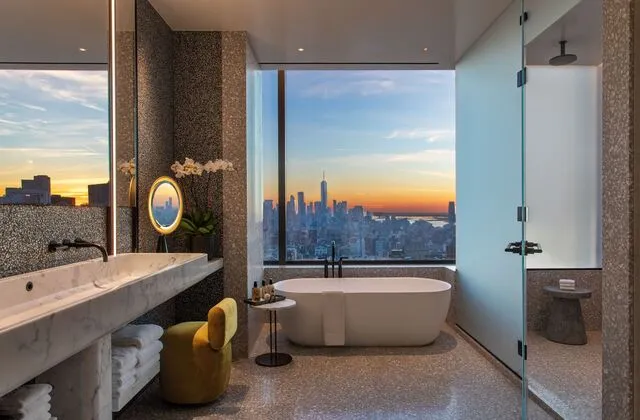
To categorize an experience under the rubric of luxury urban stays in the USA, one must look beyond the thread count of the linens. From a multi-perspective view, these stays represent the intersection of real estate speculation, service psychology, and urban planning. For the traveler, it is an exercise in “Environmental Control.” The city is, by its nature, loud, chaotic, and unpredictable; the premium stay functions as a filter, allowing the guest to engage with the metropolitan energy while maintaining a sanctuary that is technologically and sensory-controlled.
A primary misunderstanding in this space is the over-reliance on the “legacy brand” as a guarantee of quality. In the modern market, many legacy portfolios have suffered from “Brand Dilution,” where the administrative cost of maintaining a global footprint has come at the expense of on-the-ground service agility. Conversely, boutique “Independents” offer higher variability but often lack the robust security and logistical infrastructure that a corporate traveler requires. The risk of oversimplification lies in treating all “five-star” designations as equal, ignoring the significant delta in maintenance cycles and staff-to-guest ratios that actually define the daily experience.
Furthermore, the “urban” component of the stay is often underestimated. A high-end property in a declining or poorly managed district creates a “Disconnected Island” effect. True quality in this category is achieved when the property serves as a permeable membrane—offering private security and exclusivity while facilitating a meaningful, high-value connection to the city’s finest dining, art, and intellectual hubs. Understanding this balance is the key to mastering the procurement of premium city accommodations.
Historical Context: From Grand Hotels to Branded Residences
The evolution of the American city stay began with the “Grand Hotel” era of the late 19th century, characterized by properties like The Waldorf-Astoria or The Willard. These were civic monuments as much as they were places of rest. They functioned as the “Living Rooms” of the elite, where political and industrial power was brokered in public view.
The mid-20th century introduced the “Standardization Era,” led by the expansion of the Hilton and Marriott families. This period prioritized the “Known Quantity”—ensuring that a traveler from Chicago would find an identical room in New York. While this lowered the “Cognitive Load” of travel, it stripped the experience of its local character.
By 2026, we have entered the “Integration Era.” This is defined by the rise of the “Branded Residence”—residential buildings managed by luxury hotel flags. This model acknowledges that the high-end traveler no longer wants a “room,” but a “functional apartment” that includes a kitchen, office, and laundry, all serviced with the rigor of a five-star hotel. This shift reflects a broader societal move toward “Long-Stay” travel, where the line between home and hospitality is permanently erased.
Conceptual Frameworks and Mental Models
To analyze the market for premium city stays, one should adopt the following mental models:
1. The “Buffer Zone” Mental Model
Luxury is the distance between the guest and the chaos of the city. This is measured not just in physical distance, but in “Acoustic Insulation,” “Private Entryways,” and “Controlled Vertical Transportation” (elevators). A stay’s value is directly proportional to the integrity of this buffer.
2. The “Service Velocity” Framework
In an urban environment, time is the primary currency. A stay’s quality is evaluated by how quickly the staff can resolve friction—be it a last-minute dinner reservation or a technical failure in the room’s automation. High-tier stays prioritize “Predictive Service,” where the staff anticipates needs before they are articulated.
3. The “Localized Authenticity” Matrix
This framework evaluates a property on its ability to reflect its surroundings without becoming a caricature. A hotel in New Orleans should feel fundamentally different from one in Seattle, not just in décor, but in its ventilation (humidity control), its culinary partnership (local sourcing), and its staff’s “Cultural Literacy.“
Taxonomy of Urban Luxury: Categories and Trade-offs
A comprehensive understanding of luxury urban stays usa requires segmenting the market into distinct archetypes.
| Category | Primary Value | Core Trade-off | Ideal Scenario |
| Legacy Flagships | Reliability, Global Recognition | Rigid protocols, less “soul.” | High-stakes business |
| Boutique Independents | Unique design, artistic depth | Variable service, fewer resources | Cultural exploration |
| Branded Residences | Space, “Home” feel, full kitchen | Higher price point, less “lobby” life | 14+ day stays |
| Private Club Stays | Exclusive social network | Stringent dress codes/rules | Networking, high privacy |
| Adaptive Reuse | Architectural history, high ceilings | Logistical quirks (slow elevators) | Design enthusiasts |
Decision Logic: The “Base-Camp” vs. “Destination” Choice
When selecting a stay, one must determine if the property is the destination itself (where you spend 60%+ of your time) or a base-camp (a high-quality launchpad for city activities). Destination-style stays require extensive on-site amenities (spas, multiple restaurants), while base-camp stays prioritize location, transit access, and concierge expertise.
Operational Real-World Scenarios
Scenario A: The “High-Stakes” Negotiation
An executive team is in San Francisco for a week of merger talks. They require extreme privacy and 24/7 technical support.
-
The Selection: A Branded Residence with private meeting rooms.
-
The Decision Logic: The ability to host catering in a private dining room (within the residence) avoids the public exposure of a hotel restaurant.
-
Failure Mode: Choosing a “trendy” boutique hotel where the lobby is a social hub, risking the leak of confidential information to competitors or the media.
Scenario B: The “Cultural Immersion” Sabbatical
A couple is visiting Boston for the symphony and museum season.
-
The Selection: A historical Adaptive Reuse property in the Back Bay.
-
The Decision Logic: The proximity to the Symphony Hall and the architectural alignment with the city’s history enhance the emotional resonance of the trip.
-
Second-Order Effect: The thick masonry of the older building provides superior soundproofing against city noise compared to modern glass-and-steel towers.
Planning, Cost, and Resource Dynamics
The “Cost” of a luxury stay is often obscured by ancillary fees and the opportunity cost of bad location choices.
Expenditure Dynamics Table
| Resource Tier | Daily Rate (2026 Avg) | Support Ratio (Staff: Guest) | Amenity Access |
| Standard Luxury | $600 – $900 | 1.5: 1 | Pool, Gym, Concierge |
| Ultra-High-Net | $1,500 – $4,000 | 3: 1 | Private Butler, Car Service |
| Presidential/Suite | $8,000+ | Dedicated Team | Helipad access, Private Chef |
Variability in Pricing: Urban markets are hyper-sensitive to “Event Compression.” A $700 room in New York can jump to $2,500 during the UN General Assembly or Fashion Week. Sophisticated planning involves “Calendar Arbitrage”—identifying the “Dead Zones” (e.g., January in Chicago) where the physical hardware of luxury is available at a 40% discount.
Support Systems and Strategic Navigation
To maximize the utility of a high-end stay, one should utilize a “Logistical Stack”:
-
Independent Concierge Services: Do not rely solely on the hotel. Maintain a relationship with an independent city “fixer” who has no loyalty to the property’s preferred vendors.
-
Digital Perimeter Management: High-end stays are targets for cyber-theft. Using a dedicated travel router and VPN is mandatory, regardless of how “secure” the hotel Wi-Fi claims to be.
-
The “Pre-Arrival” Protocol: Communicate specific preferences (pillow type, humidity levels, bar stocking) 72 hours in advance. This tests the property’s “Internal Communication” systems.
-
Security Audits: For high-profile stays, verify the property’s “Egress Routes” and the presence of 24/7 on-site security personnel who are trained in emergency medicine.
-
Transit Integration: Verify if the property offers “House Cars.” In cities like LA or Atlanta, a dedicated driver can save 2 hours of daily “Transit Friction.“
-
Loyalty Portfolio Management: Strategic use of “Status Matches” can unlock upgrades that are worth thousands of dollars in “Phantom Value.“
The Risk Landscape: Failure Modes in High-End Stays
Even the most expensive itineraries are subject to “Systemic Fragility.“
-
The “Maintenance Gap”: A property may have beautiful photos, but if it is in year 6 of a 7-year renovation cycle, the “Soft Goods” (carpets, upholstery) will show significant wear.
-
Staffing Volatility: High turnover in the hospitality sector can lead to a “Service Vacuum,” where the front desk is polite but lacks the “Institutional Knowledge” to solve complex problems.
-
The “Amenity Bait-and-Switch”: Essential services (the spa, the rooftop bar) may be closed for private events during your stay. Always demand an “Amenity Guarantee” at the time of booking.
-
Environmental Encroachment: Urban construction is relentless. A “Quiet Room” can become a construction site at 7:00 AM if a neighboring lot begins a project.
Governance, Maintenance, and Long-Term Adaptation
For the frequent traveler, managing a portfolio of urban stays requires a “Governance Mindset.“
The “Stay Audit” Checklist (Post-Departure)
-
Accuracy: Did the final bill match the quote? (Check for “Destination Fees” or “Resort Fees”).
-
Friction Points: List any moment where you had to wait more than 5 minutes for a service.
-
Room Integrity: Did the HVAC maintain a constant temperature? Was the water pressure consistent?
-
Staff Recognition: Note the names of “Top Performers” to ensure continuity of service on the next visit.
Measurement and Evaluation: Qualitative vs. Quantitative Signals
How do you objectively measure the quality of luxury urban stays usa?
-
Leading Indicator (Response Latency): How long does it take for the concierge to reply to an email? (Target: < 2 hours).
-
Lagging Indicator (The “Recovery” Time): How long does it take you to feel “normal” after checking in? A high-quality stay should reduce “Travel Fatigue” within 60 minutes.
-
Quantitative Signal (The “Space-per-Dollar” Ratio): In cities like New York, the price per square foot of the room is a clear indicator of the property’s market tier.
Documentation Examples
-
The “Vibe Diary”: A brief note on the lighting, scent, and soundscape of the property.
-
The “Issue Tracker”: A log of technical failures (Wi-Fi drops, broken outlets) to be used for negotiating future credits.
Common Misconceptions and Strategic Myths
-
Myth: “Penthouse suites are always the best.” Correction: Penthouses are often directly under elevator mechanical rooms or rooftop bars, making them noisier than “Mid-Tower” suites.
-
Myth: “Booking through a big site is cheaper.” Correction: Booking direct or through a specialized travel advisor often unlocks “Hidden Inventory” and free breakfast/credits that the aggregators cannot access.
-
Myth: “New hotels are better.” Correction: “Opening Pains” often last for the first 12 months. The “Sweet Spot” is a property that has been open for 18 to 36 months.
-
Myth: “The Concierge knows everything.” Correction: Many concierges receive commissions for referrals. Always cross-reference their “Top Picks” with independent data.
Ethical and Practical Considerations
The presence of luxury enclaves in struggling urban centers raises questions of “Spatial Justice.” The most successful properties in 2026 are those that practice “Social Integration”—supporting local schools, hiring from the immediate neighborhood, and ensuring their presence does not lead to the aggressive displacement of local culture. Practically, the traveler must consider the “Sustainability Profile” of their stay. High-tier urban buildings are massive energy consumers; prioritizing properties with LEED Platinum certification or robust carbon-offset programs is no longer an option, but a requirement for the ethically-minded executive.
Conclusion
The pursuit of the “Perfect Urban Stay” is an exercise in managing complexity. In the diverse landscape of the United States, luxury is not a static commodity but a fluid response to the city’s unique challenges and opportunities. By employing a forensic approach to selection—evaluating acoustic buffers, service velocity, and architectural integrity—the traveler can move through the American metropolis not as a tourist, but as a master of their environment. The ultimate luxury is not found in the gold leaf on the ceiling, but in the seamless, silent execution of an itinerary that allows the human spirit to flourish amidst the urban roar.