Luxury Desert Resorts USA: The 2026 Forensic Strategy Guide
The American desert is a landscape of profound cognitive dissonance. It is a space defined by scarcity—of water, of temperate air, of hospitable biology—yet it has become the primary theater for some of the most opulent hospitality developments in the world. As of 2026, the sector for premium arid retreats has transitioned from a seasonal curiosity into a cornerstone of the “Restorative Travel” movement. For the modern executive or the culturally astute traveler, the desert no longer represents a void to be traversed, but a destination where the very extremity of the environment catalyzes mental and physiological recalibration.
The evolution of these spaces reflects a broader societal shift toward “Environmental Contrast.” As urban centers become increasingly dense and digitally saturated, the expansive, monochromatic vistas of the Mojave, Sonoran, and Great Basin deserts provide a necessary sensory relief. However, the operational reality of maintaining a five-star standard in a region where the diurnal temperature can swing by $40^\circ F$ is a feat of significant engineering and logistical mastery. It requires a sophisticated integration of subterranean cooling, solar-positive energy grids, and hyper-localized water recycling systems that most guests never see, but all fundamentally rely upon.
This article provides a definitive, forensic deconstruction of the current state of desert luxury. We will move past the superficial imagery of infinity pools and saguaros to examine the systemic architecture of these resorts. From the historical lineage of the “health sanatorium” to the 2026 rise of the “Self-Contained Hospitality Ecosystem,” we offer a framework for understanding how to evaluate, plan, and execute a stay in some of the most challenging—and rewarding—geographies in North America.
Understanding “luxury desert resorts usa”
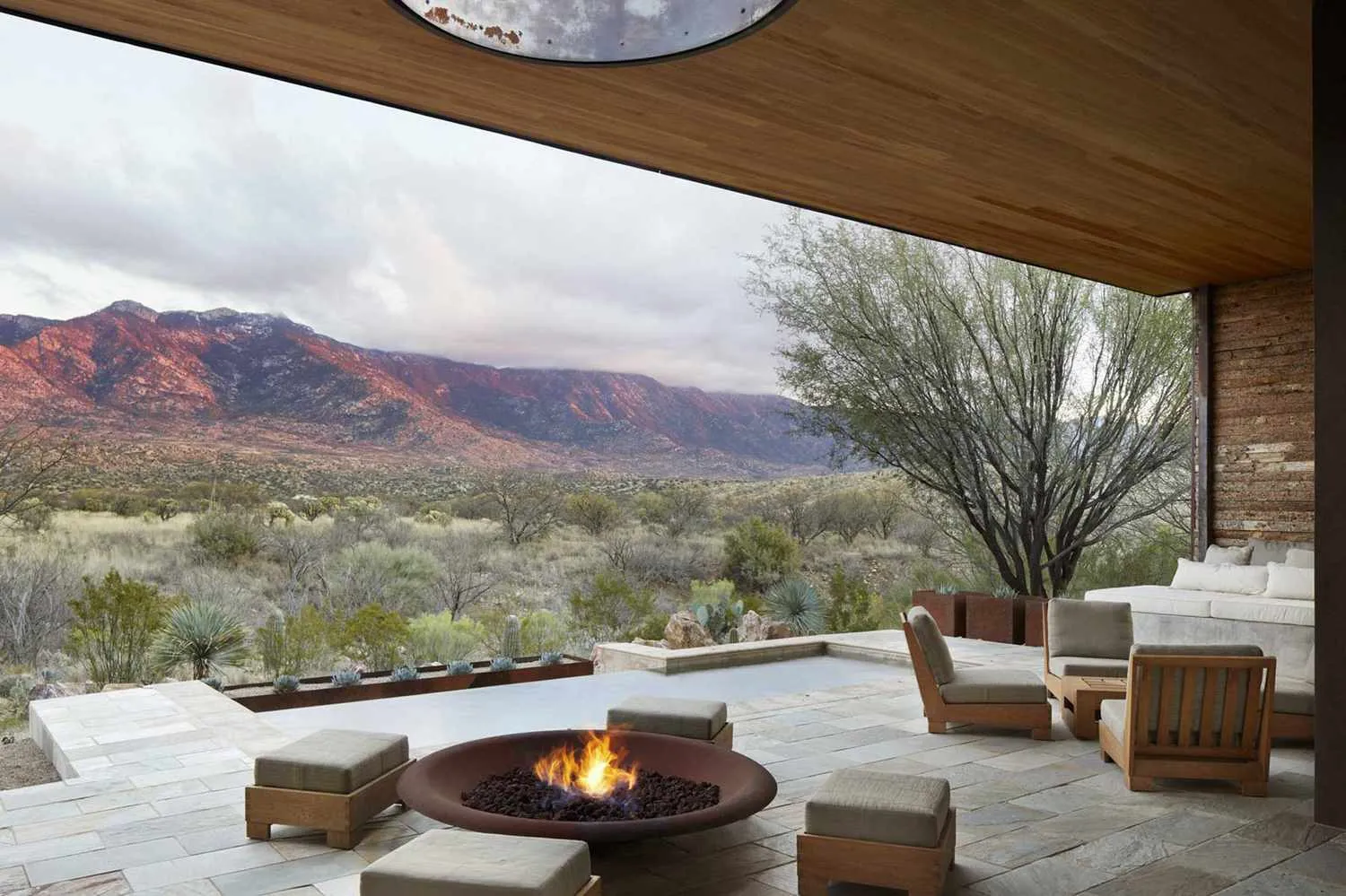
To engage with the category of luxury desert resorts usa is to acknowledge the intersection of high-fidelity service and low-redundancy environments. A primary misunderstanding in this space is the belief that “luxury” is synonymous with “excess.” In a desert context, true luxury is more accurately defined by “Precision.” It is the ability of a property to provide absolute thermal comfort, high-tier culinary experiences, and seamless logistics in a location where the natural environment is actively resistant to all three.
From a multi-perspective view, these resorts function as “Biophilic Enclaves.” For the guest, they are a sanctuary; for the developer, they are an exercise in resource management; and for the local ecology, they are a potential point of tension. The risk of oversimplification lies in treating the desert as a monolithic entity. A luxury stay in the high-altitude Sangre de Cristo foothills of New Mexico (approx. 7,000 ft) requires a fundamentally different physiological and logistical approach than a stay in the Coachella Valley (approx. sea level), where summer temperatures can exceed $120^\circ F$.
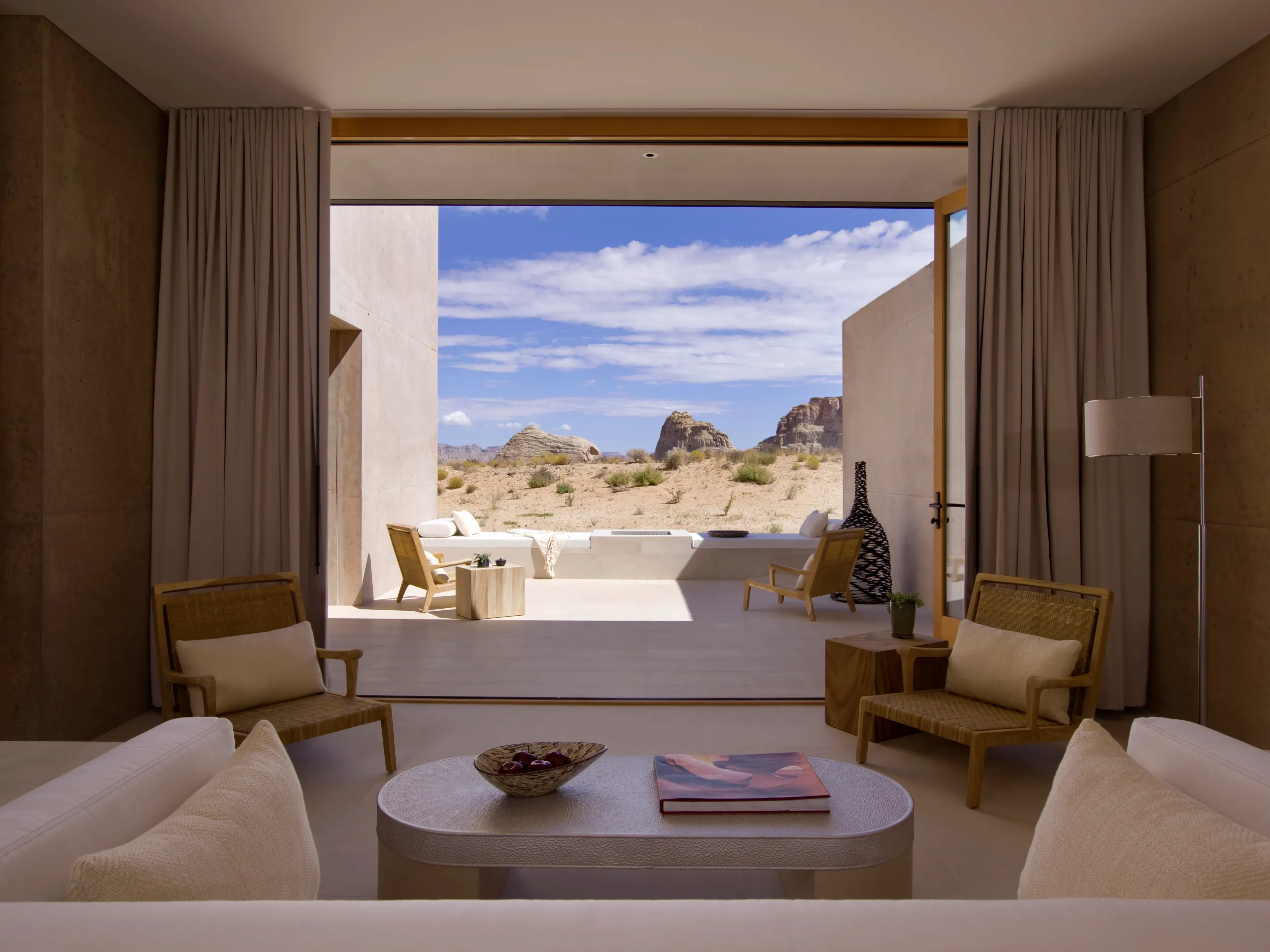
The 2026 market has also seen the rise of “Contextual Opulence.” We have moved away from the “Mediterranean Villa” aesthetic that dominated the 1990s toward an architecture that mirrors the geology of the site. The contemporary definition of a top-tier resort now includes its “Regenerative Profile”—its ability to exist without depleting the local aquifer or disrupting the migratory patterns of desert fauna. Understanding this balance is the hallmark of the sophisticated traveler.
Historical Context: From Mineral Springs to Modernist Oases
The American desert resort did not begin with the pool; it began with the “Cure.” In the late 19th and early 20th centuries, the Southwest was marketed as a vast sanatorium. Locations like Palm Springs and Tucson attracted “health seekers” escaping the smog and tuberculosis of the industrialized East. The original luxury was simply “Clean Air” and “Thermal Stability.”
By the 1930s and 40s, the “Dude Ranch” era introduced a more active form of luxury. Properties like the Rancho Encantado (now a Four Seasons) leveraged the romanticism of the American West, blending rugged outdoor activities with refined European dining. This was followed by the “Modernist Boom” of the 1950s, where architects like Albert Frey and Richard Neutra used glass and steel to blur the line between indoor and outdoor living, creating the iconic “Palm Springs Look” that still defines desert leisure today.
As we enter 2026, the “Systemic Era” has taken hold. Resorts are no longer just buildings; they are integrated “Campuses.” We are seeing the rise of properties like the Black Desert Resort in Utah, which utilize ancient lava fields as a design feature rather than an obstacle. This era is defined by “Experiential Specialization,” where a resort’s value is tied to its specific niche—be it neuro-wellness, high-altitude training, or astronomical observation.
Conceptual Frameworks and Mental Models
To analyze the desert luxury market with rigor, one must adopt the following mental models:
1. The “Thermoregulation” Framework
In the desert, luxury is the absence of heat stress. This is measured by the “Invisible Envelope”—the seamless transition between conditioned indoor air and “Aero-Cooled” outdoor spaces. A superior resort utilizes passive cooling, thermal mass (adobe or stone), and strategic shading to ensure the guest never experiences the “Wall of Heat” typical of the region.
2. The “Resource Scarcity” Mental Model
Everything on a desert property—from the humidity in the spa to the ice in the cocktail—is an engineered miracle. This model encourages the traveler to evaluate a resort by its “Water-to-Waste Efficiency.” High-tier properties now utilize “Gray Water” for landscaping and “Atmospheric Water Generators” for drinking, reducing their strain on the local municipality.
3. The “Light-Pollution” Matrix
One of the primary “Authority Assets” of the desert is the night sky. A resort’s quality can be measured by its “Dark Sky Compliance.” The use of downward-facing, low-Kelvin lighting preserves the guest’s ability to see the Milky Way—a luxury that is physically impossible in most urbanized regions.
Taxonomy of Desert Luxury: Categories and Trade-offs
The American desert landscape allows for distinct archetypes of hospitality, each with its own operational constraints.
| Category | Typical Geography | Primary Value | Core Trade-off |
| Wellness Campuses | Scottsdale, AZ; Austin, TX | Integrated medical/spa tech | Highly scheduled; less “freedom”. |
| High-Desert Refuges | Santa Fe, NM; Taos, NM | Art, history, cool nights | Altitude sickness risk; dry air |
| Geological Outposts | Southern Utah; Amangiri | Monumental privacy; “Moonscape.” | Extreme isolation; high transport cost |
| Mid-Century Icons | Palm Springs, CA | Aesthetic heritage; “Social” vibe | High density; summer heat peaks |
| Lava/Basalt Resorts | St. George, UT | Unique terrain; active sports | Rugged walking paths; newer trees |
Decision Logic: The “Diurnal Pivot”
When selecting a stay, the sophisticated traveler must decide if they are “Diurnal” or “Nocturnal.” High-desert locations (NM/CO) are ideal for day-long outdoor activity. Low-desert locations (CA/AZ) are often best experienced as “Nocturnal Oases,” where the primary social and leisure activity occurs after the sun sets and the desert “breathes.”
Operational Real-World Scenarios
Scenario A: The “Heat-Map” Strategy
A guest plans a visit to the California desert in August.
-
The Selection: A property with subterranean suites or “deep-shade” architecture.
-
Decision Logic: Avoiding “Surface Exposure” by scheduling spa treatments during the 2 PM – 5 PM peak heat window.
-
Failure Mode: Attempting a mid-day hike in the San Jacinto mountains without accounting for the “Inversion Layer,” where heat can actually increase with altitude.
Scenario B: The “Altitude Adjustment”
An executive team meets in Santa Fe for a strategic retreat.
-
The Selection: A resort with on-site oxygen therapy and hyper-hydration protocols.
-
Decision Logic: The property’s 7,000 ft elevation can impair cognitive function and lead to “Micro-Dehydration.”
-
Second-Order Effect: The lower atmospheric pressure enhances the effects of alcohol; a “one-drink” limit is strictly observed to maintain professional acuity.
Planning, Cost, and Resource Dynamics
The economics of luxury desert resorts usa are driven by “Seasonality Compression.”
Expenditure Dynamics Table (2026 Projections)
| Budget Tier | Avg Daily Rate (Peak) | Support Ratio (Staff: Guest) | Core Inclusions |
| Standard Luxury | $800 – $1,200 | 2: 1 | Pool, basic concierge, gym |
| Ultra-Boutique | $2,500 – $5,000 | 4: 1 | Private pool, guided treks, chef |
| The “Amangiri” Tier | $6,000+ | Dedicated Team | Private plane access, full seclusion |
The Hidden Cost of “Transit Friction”: In the desert, a 20-mile drive is not 20 minutes; it is an exposure event. Sophisticated travelers prioritize “All-In” resorts where dining, wellness, and adventure are co-located, reducing the need to enter the “Heat Zone” for basic needs.
Support Systems and Strategic Navigation
To maximize the utility of a desert stay, utilize this 2026 “Technical Stack”:
-
Smart-Hydration Monitoring: Wearable tech that tracks electrolyte loss in real-time. In the arid desert, sweat evaporates instantly, making dehydration “invisible.”
-
UV-Forecasting Apps: Tracking the “Solar Peak” to schedule outdoor exposure.
-
Acoustic Management: Desert air carries sound differently. Seek resorts that utilize “Desert Landscaping” (berms and rocks) as natural sound baffles.
-
Specialized Skincare Regimes: Standard urban moisturizers fail in 10% humidity. Utilize lipid-heavy, “barrier-repair” products 48 hours before arrival.
-
Private Transit (Climate Controlled): Verify that the resort’s house cars have “Pre-Conditioning” capabilities to avoid the “Hot Seat” effect.
-
Night-Vision Optics: For properties near National Parks, high-end night-vision goggles allow for wildlife observation without using white light that disturbs the ecosystem.
Risk Landscape: Failure Modes and Compounding Hazards
The desert is a “Low-Forgiveness” environment.
-
The “Flash Flood” Trap: Even if it is sunny at the resort, a storm 50 miles away can send a wall of water through a dry wash. Never camp or hike in “Arroyos” without professional local guidance.
-
The “Micro-Climate” Error: Assuming the temperature at the airport is the temperature at the resort. Elevation and “Rock-Radiant Heat” can cause a $15^\circ$ difference.
-
Technological Over-Reliance: GPS signals can be erratic in deep canyons. Always maintain a “Hard-Copy” map of the property and surrounding trails.
-
Compounding Dehydration: The combination of altitude, dry air, and high-protein dining can lead to “Renal Stress” faster than in humid climates.
Governance, Maintenance, and Long-Term Adaptation
For the recurring traveler, managing a desert portfolio involves a “Cycle of Resilience.”
The “Stay Audit” Checklist
-
Thermal Integrity: Did the AC maintain a constant temperature without “Cycling Noise”?
-
Dust Mitigation: How effective was the room’s filtration? (Check for “Fine Particulate” buildup on surfaces).
-
Staff Acuity: Did the staff provide hydration cues without being asked?
-
Ecosystem Impact: Did the resort provide “Litter-Free” trail snacks and reusable water systems?
Measurement and Evaluation: Qualitative vs. Quantitative Signals
-
Leading Indicator (Response Latency): How quickly does the “Adventure Center” reply to specialized requests? (Target: < 3 hours).
-
Qualitative Signal (The “Skin-Feel” Test): A high-quality resort manages its indoor humidity. If your skin feels “tight” inside your suit, the property is failing its HVAC governance.
-
Quantitative Signal (The “Solar-to-Grid” Ratio): Does the resort publish its renewable energy stats? The best properties in 2026 are at least 60% solar-reliant during peak daylight.
Common Misconceptions and Strategic Myths
-
Myth: “The desert is only for winter.” Correction: High-desert locations (Santa Fe) are stunning in the summer, offering a “Cool-Mountain” alternative to humid coastal heat.
-
Myth: “All deserts have scorpions/snakes everywhere.” Correction: High-end resorts employ “Biological Barriers” and professional handlers to ensure guest areas are clear of dangerous fauna.
-
Myth: “A pool is enough for cooling.” Correction: In high heat, pools can reach $90^\circ F$ (the “Tea Effect”). Look for resorts with “Chilled Pools” that maintain a constant $78^\circ F$.
-
Myth: “Booking through an OTA is fine.” Correction: Desert resorts have highly specific room orientations (Sun-Side vs. Shade-Side). Booking direct allows you to specify a “North-Facing” room for better natural light without the heat gain.
Ethical and Practical Considerations
Desert development is controversial. In areas like the Coachella Valley, the massive use of water for golf courses and pools has significantly depleted ancient aquifers. As a guest of luxury desert resorts USA, the ethical choice is to support properties that have transitioned to “Desert-Scape” (Xeriscaping) and retired their water-heavy lawns. Furthermore, many desert regions are the ancestral homes of Indigenous nations. The most “Integrated” resorts are those that partner with local tribes for cultural programming, ensuring that the luxury experience is not an act of erasure, but one of appreciation and shared stewardship.
Conclusion
The American desert resort of 2026 is a triumph of human ingenuity over environmental hostility. It is a space where the “Architecture of Silence” meets the “Engineering of Comfort.” By adopting a forensic approach to selection—evaluating thermal envelopes, dark-sky compliance, and regenerative ethics—the traveler can transform a simple trip into a profound physiological reset. The desert does not give its secrets away easily; it requires a guest who is patient, prepared, and respectful of the arid majesty. In return, it offers a level of clarity and cosmic perspective that no other landscape on earth can provide.