Compare Loyalty Program Options 2026: A Strategic Manual
The modern marketplace is no longer merely a site of transaction; it has become a theater of long-term behavioral engineering. As customer acquisition costs continue to climb—often cited as being five to twenty-five times more expensive than retention—the strategic importance of the “loyalty engine” has reached a critical zenith. However, the sheer density of available structures often leads to a paralysis of choice for both the enterprise and the discerning consumer. Comparing loyalty program options is not an exercise in finding the “most popular” model, but rather in identifying the specific psychological and economic alignment between a brand’s margins and its customers’ latent desires.
Historically, loyalty was a matter of proximity and personal recognition. In the digital age, this has been codified into complex data-driven frameworks where value is traded for information. To the uninitiated, these programs appear as a simple exchange of points for discounts. Beneath the surface, however, they are sophisticated risk-management tools designed to flatten the volatility of consumer demand. The friction between “transactional” rewards (immediate discounts) and “experiential” rewards (exclusive access) creates a spectrum of engagement that defines the long-term viability of the brand-customer relationship.
This guide moves beyond the superficial metrics of “sign-up bonuses” to examine the systemic skeletal structures of modern loyalty. We will analyze the mechanics of tiered psychology, the hidden costs of “point debt,” and the shifting landscape of 2026, where gamification and wellness-integrated incentives are replacing the stale punch-card models of the past. By treating a loyalty program as a living asset class, we can begin to understand the nuances of yield, liquidity, and behavioral stickiness that separate world-class ecosystems from mere promotional noise.
Understanding “compare loyalty program options”
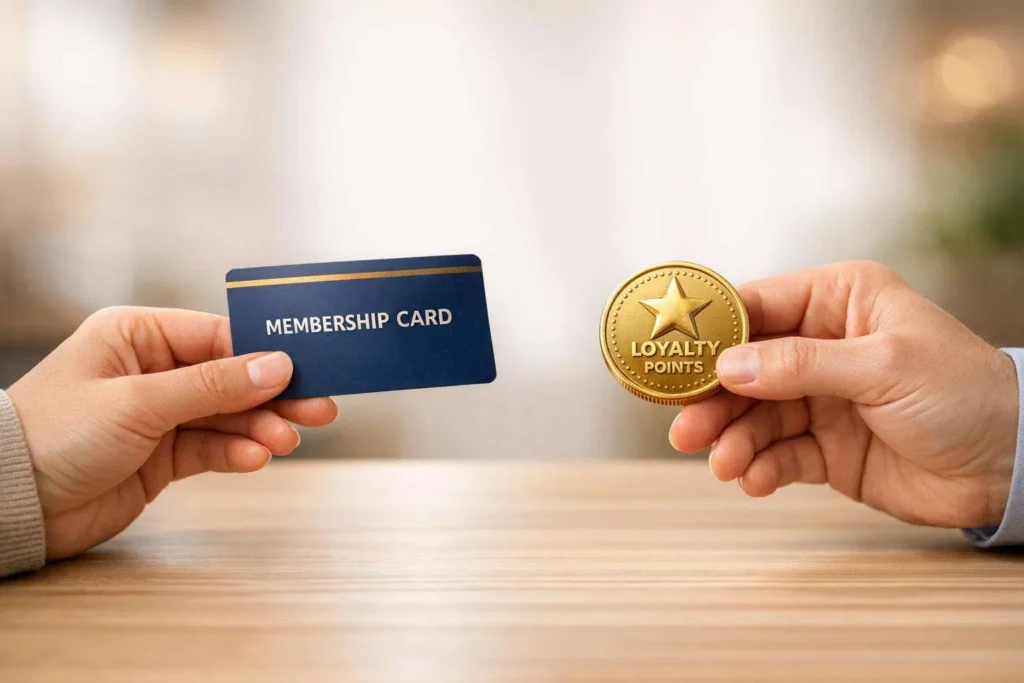
To effectively compare loyalty program options, one must first discard the notion that loyalty can be “bought” through discounts alone. In a professional editorial context, comparing these options involves a multi-dimensional audit of utility, friction, and perceived value. A program that offers high rewards but requires significant “cognitive load” to navigate will often fail against a simpler program with lower, but more accessible, benefits.
The primary misunderstanding in this space is the belief that “points” are the universal unit of loyalty. In reality, points are merely a placeholder for value, and their actual worth is highly elastic, dictated by the issuer’s redemption “burn” rates. When we compare options, we are actually comparing liquidity (how easily a reward can be used), aspiration (how much the reward drives future behavior), and exclusivity (the social capital earned by the participant).
Furthermore, the comparison must account for the “Velocity of Value.” A program that takes eighteen months to yield a reward is fundamentally different from one that provides micro-benefits weekly. For the enterprise, the comparison is one of “Margin Protection” versus “Share of Wallet.” For the consumer, it is a calculation of “Return on Effort.” Oversimplifying this into a list of “pros and cons” ignores the second-order effects of program saturation, where a consumer may belong to twenty programs but actively engage with only two.
The Evolutionary Trajectory: From S&H Green Stamps to Agentic AI
The concept of rewarding repeat business dates back to the copper tokens of the late 18th century, but the first systemic “program” was the S&H Green Stamp. These physical tokens created a tangible sense of “stored value” that could be redeemed via a physical catalog. This was the birth of the catalog-redemption model, which relied on the psychological principle of “endowed progress”—the feeling that you are already on a journey toward a goal.
The 1980s brought the Frequency Model, popularized by airline frequent flyer programs. This commoditized distance, turning miles into a currency. However, as the 2000s arrived, the market hit “Redemption Fatigue.” Programs became too complex, and “point inflation” began to erode consumer trust. This led to the rise of the Hybrid/Tiered Model, pioneered by brands like Sephora and Starbucks, which moved the focus from pure spend to “engagement tiers” and status-driven benefits.
In 2026, we have entered the era of “Loyalgentic” Systems. As shown in recent market shifts, loyalty is now being managed by agentic AI that automates perks and redemptions in real-time. We are seeing a move away from mass promotional blasts toward “Wellness-Integrated” ecosystems, where rewards are earned through non-transactional behaviors like sleep health or fitness milestones. Understanding this history is vital because it shows that the most successful programs are those that evolve from “bribing” the customer to “partnering” with them.
Conceptual Frameworks: The Psychology of Sustained Engagement
To compare loyalty program options effectively, one must look through the lens of behavioral economics.
1. The Goal Gradient Effect
This framework suggests that the closer a consumer gets to a reward, the faster they will spend to reach it. A program that offers “welcome points” or a “head start” (like a punch card with the first two spots pre-filled) leverages this to bypass the initial inertia of joining.
2. The Reciprocity Loop
Unlike a simple discount (which is a one-way gift), a loyalty program creates a social contract. When a brand provides “unsolicited” value—such as a surprise birthday gift or an “early access” invite—the consumer feels a psychological “debt” that is typically repaid through brand advocacy or higher purchase frequency.
3. The Status Endowment Model
Tiers (Silver, Gold, Platinum) are not just about the perks; they are about loss aversion. Once a customer reaches “Gold” status, the threat of losing that status is often a more powerful motivator than the desire to earn new points. The “best” options are those that make the “loss” of status feel like a personal demotion.
Taxonomy of Loyalty: Categories, Trade-offs, and Decision Logic
When an organization seeks to implemen,t or a consumer seeks to join, the choice usually falls into one of these six primary archetypes.
| Program Type | Earning Mechanic | Best For | Major Trade-off |
| Points-Based | $1 spent = X points | High-frequency, low-price retail (Grocery, Coffee) | High liability on the brand’s balance sheet; prone to inflation. |
| Tier-Based | Milestones/Status levels | Lifestyle and Luxury (Beauty, Fashion, Travel) | Can alienate “base-level” customers who feel excluded. |
| Paid (Subscription) | Upfront fee for perks | Convenience-heavy services (Amazon Prime, Walmart+) | High “churn” risk if the perceived value doesn’t exceed the fee. |
| Mission/Value-Based | Rewards for social action | Gen Z/Ethical brands (Patagonia, Toms) | Difficult to scale; rewards often feel “soft” to transactional users. |
| Gamified | Challenges, badges, streaks | Apps and Tech-led brands (Nike Run, Duolingo) | Requires constant content updates to prevent user boredom. |
| Partner/Coalition | Shared rewards across brands | Banking and Airline alliances | Complex data-sharing agreements and diluted brand identity. |
Decision Logic: The Alignment Matrix
To choose the right model, apply the following logic:
-
Purchase Frequency: If the customer buys weekly, use Points. If they buy twice a year, use Tiers.
-
Margin Sensitivity: If margins are thin, use Experiential Rewards (access/status) rather than cash discounts.
-
Data Requirement: If you need deep behavioral data, Paid Loyalty is the most effective way to filter for your most valuable “Power Users.”
Real-World Implementation Scenarios
Scenario 1: The “Invisible” Grocery Loyalty
A regional supermarket uses a hybrid of Points and Personalized Promotions.
-
The Strategy: They don’t just offer 1% back; they use AI to trigger “re-order” reminders with a 10% discount on the specific brand of milk the customer usually buys.
-
The Failure Mode: Over-personalization. If the customer feels “watched,” the program triggers a privacy-based “uncanny valley” response, causing them to churn.
Scenario 2: The Airline “Status” Hedge
A frequent flyer program in 2026.
-
The Strategy: They allow users to “earn” status by using a co-branded credit card and by hitting fitness goals via a synced health app.
-
The Result: The airline moves from being a “transportation provider” to a “lifestyle partner.”
-
Second-Order Effect: The airline’s credit card revenue eventually exceeds its ticket revenue, essentially turning the airline into a bank that happens to own planes.
The Economics of Loyalty: Cost Basis, Opportunity Cost, and ROI
The “cost” of a loyalty program is multifaceted. For a brand, it includes the Breakage Rate (points that are earned but never redeemed) and the Cost of Redemption (the actual margin hit when a point is used).
ROI Evaluation Range (Standard vs. High Performance)
| Metric | Industry Average | Best-in-Class (2026) |
| Redemption Rate | 20% – 30% | 50%+ |
| CLV Uplift | 10% | 25% – 40% |
| Program Cost (% of Rev) | 2% – 5% | <2% (via high-value, low-cost perks) |
| Incremental Margin ROI | 2x | 5.2x |
Strategic Tools and Support Infrastructure
To manage these ecosystems, 2026-era platforms focus on three pillars:
-
CDP (Customer Data Platforms): To unify siloed data from POS, mobile apps, and social media.
-
Real-Time Rules Engines: To trigger rewards the moment a behavior occurs, maximizing the “dopamine hit” of the reward.
-
API-First Ecosystems: Allowing points to be spent at third-party partners (e.g., spending Starbucks Stars on a Spotify subscription).
-
Omnichannel Trackers: Ensuring a customer who buys online gets the same recognition as when they walk into a physical store.
The Risk Landscape: Devaluation, Churn, and Data Integrity
A loyalty program is a liability. Every point issued is a promise of future value.
-
Devaluation Spirals: If a brand issues too many points, it must increase the “price” of rewards. This leads to member anger and a “run on the bank” where everyone tries to redeem at once.
-
The “Zero-Value” Trap: If the lowest reward requires $500 of spend, customers will give up before the first milestone.
-
Cybersecurity: Loyalty accounts are prime targets for “point-draining” hacks.
Measurement and Evaluation: The KPI Hierarchy
The true health of a program is found in leading indicators, not lagging totals.
-
Active Engagement Rate: What percentage of members have earned or redeemed in the last 90 days? (The “Pulse” of the program).
-
Share of Wallet: Are your members spending a larger percentage of their vertical budget with you than they were six months ago?
-
Patronage Ratio: A comparison of how many times a customer buys from you versus your direct competitors.
Common Misconceptions and Structural Myths
-
“Everyone wants discounts.” False. High-value customers often prefer time-saving perks (free shipping, priority service) over 5% off.
-
“The more members, the better.” False. A program filled with “discount hunters” who only buy when there’s a sale is a drain on resources.
-
“Points are a form of debt.” Partially true. They are a liability on the balance sheet, which is why brands love “expiration dates” to clear that debt.
-
“Gamification is just for kids.” False. 2026 data shows that high-net-worth professionals are the most responsive to “streaks” and “competitive leaderboards.”
Conclusion
To effectively compare loyalty program options, one must view them as an intersection of finance and psychology. The landscape of 2026 has proved that the “best” programs are no longer the ones that offer the most “stuff,” but the ones that create the least friction and the most relevance. As AI continues to automate the “transactional” side of rewards, the human “experiential” side—feeling recognized, valued, and part of a community—remains the only true differentiator. Whether you are a brand architect or a strategic consumer, the goal is the same: to find the ecosystem where the value earned is worth the data shared.