Best Reward Points Options 2026: A Definitive Guide to Value Maximization
The landscape of consumer loyalty has transitioned from a fringe benefit of specialized credit cards into a sophisticated, multi-trillion-dollar economy. This evolution reflects a shift in how value is stored and transferred outside of traditional fiat currency. Navigating this space requires more than just a list of high-earning cards; it demands an understanding of the underlying mechanics of transferable versus fixed-value assets. The complexity is compounded by the fact that the perceived value of a point is rarely its actual value, often fluctuating based on redemption timing, partner availability, and the specific architecture of the loyalty program in question.
Selecting the best reward points options is not a static decision but a strategic alignment between spending patterns and long-term utility. A program that yields high returns for a frequent international traveler may represent a significant loss in opportunity cost for a consumer focused on cash-back simplicity. The friction between “earn rates” and “burn rates” is where most participants lose value. High earning potential is frequently offset by restrictive redemption windows or devaluations, where the program issuer increases the number of points required for a specific reward without prior notice.
This analysis moves beyond the superficial rankings of credit card offers to examine the systemic structures of points-based value. We will explore the friction between bank-proprietary points and co-branded airline or hotel currencies, the mathematical reality of point valuation, and the risk management strategies necessary to protect these digital assets from expiration or programmatic shifts. By treating reward points as a secondary asset class, one can begin to see the nuances of liquidity, portability, and inflation that govern the most effective loyalty strategies today.
Understanding “best reward points options”

The phrase best reward points options is often treated as a subjective ranking, but in a professional editorial context, it refers to the optimization of “transferable currencies.” These are points issued by financial institutions—such as American Express Membership Rewards, Chase Ultimate Rewards, or Capital One Miles—that can be moved to various airline and hotel partners. The primary misunderstanding among casual users is the belief that a point is worth a fixed cent-per-point (CPP) amount. In reality, the value is highly elastic.
A fixed-value point (e.g., a point worth exactly 1.0 cents toward any travel) offers high predictability but low ceiling potential. Conversely, a transferable point can be leveraged for outsized value, sometimes exceeding 5.0 or 6.0 CPP when redeemed for premium cabin international travel. However, this “high ceiling” comes with a “low floor” risk; if used for low-value redemptions like Amazon purchases or gift cards, the same point might drop to 0.5 CPP. Therefore, identifying the “best” option requires an honest assessment of one’s willingness to engage with the logistical overhead of partner transfers.
Furthermore, the “best” option is inextricably linked to the velocity of earning. A program with a lower average redemption value but massive “multiplier” categories (e.g., 4x or 5x points on groceries and dining) may outperform a program with a higher base value but slower earning potential. We must view these options through a lens of “Total Yield,” which accounts for annual fees, earning multipliers, and the ease of reaching a redemption threshold.
The Systemic Evolution of Loyalty Currencies
The history of reward points began as a simple customer retention tool—specifically, S&H Green Stamps in the mid-20th century. These were physical tokens earned at gas stations and supermarkets, redeemable for catalog merchandise. The modern digital era of points was catalyzed by the 1981 launch of American Airlines’ AAdvantage program, which commoditized “miles” as a unit of loyalty.
As the airline industry consolidated, banks realized that the data and loyalty associated with these programs were more valuable than the core banking products themselves. This led to the creation of bank-led ecosystems. The 2010s saw a massive shift in power from the airlines to the banks. Financial institutions began buying miles in bulk from airlines to distribute to cardholders, effectively becoming the largest “customers” of the airline industry. This shift created the “transferable point” era, where the bank acts as a clearinghouse, allowing the consumer to wait until the moment of redemption before committing to a specific airline or hotel brand.
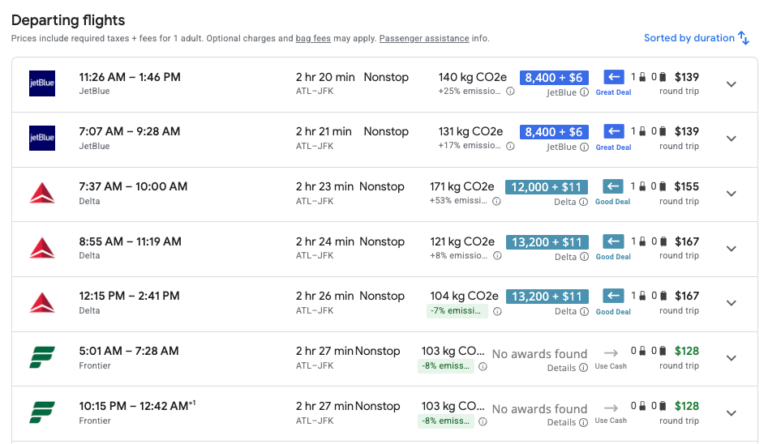
Today, we are in a period of “Redemption Inflation.” As more consumers enter the ecosystem, the supply of points has skyrocketed, leading many programs to move toward dynamic pricing. In this model, the “price” of a flight in points is tied directly to its cash price, which effectively caps the maximum value a user can extract. Understanding this history is vital because it explains why the best reward points options are increasingly those that maintain the highest degree of flexibility and portability.
Conceptual Frameworks and Mental Models
To evaluate points effectively, one must employ specific mental models that go beyond the marketing brochures.
1. The Liquidity Scale
Think of points as a spectrum of liquidity. Cash back is the most liquid but has the lowest growth potential (it is always 1:1). Transferable bank points are moderately liquid, as they can be converted into many different things. Co-branded miles (e.g., Delta SkyMiles) are the least liquid, as they are trapped within a single ecosystem. The “best” strategy usually prioritizes high-liquidity assets until the point of use.
2. The Opportunity Cost of Complexity
There is a direct correlation between the value extracted and the time invested. Searching for “sweet spot” award availability on a foreign carrier’s website requires hours of research. If a user values their time at $100/hour and spends 10 hours saving $500, they have effectively lost value. The best reward points options for a busy professional are often different from those for a hobbyist.
3. The “Burn or Earn” Ratio
Points are a depreciating asset. Unlike a savings account, points do not earn interest and are subject to arbitrary devaluation by the issuer. The mental model here should be “Earn and Burn.” Holding a million points for five years is a high-risk strategy. The optimal framework is to earn points with a specific redemption goal in mind, typically within an 18-month rolling window.
Key Categories and Trade-off Analysis
Choosing the right ecosystem involves balancing several competing priorities. No single program excels in every category.
| Category | Primary Benefit | Major Trade-off | Ideal For |
| Transferable Bank Points | Maximum flexibility across airlines/hotels | Higher annual fees, complex redemption | High-volume spenders, tactical travelers |
| Fixed-Value Systems | Simple 1-cent-per-point logic | No “outsized” value potential | Simplicity seekers, budget travelers |
| Co-branded Airline Miles | Perks like free checked bags, priority boarding | Limited to one airline or alliance | Brand-loyal frequent flyers |
| Hotel Loyalty Points | On-site benefits (upgrades, breakfast) | High point requirements for top properties | Frequent business travelers |
| Flat-Rate Cash Back | Pure liquidity, no expiration concerns | No leverage; 2% is the hard ceiling | Non-travelers, low-maintenance users |
Realistic Decision Logic
The decision should follow a “Waterfall Method”:
-
Analyze Spend: Where does the majority of the money go? (Travel, Dining, Business Supplies?)
-
Define Goal: Is the goal a “free” vacation or reducing the cost of luxury travel?
-
Check Feasibility: Does the preferred airline fly from your home hub?
-
Audit Fees: Do the credits offered by the card (Uber, lounge access) genuinely offset the annual fee?
Detailed Real-World Scenarios
Scenario A: The International Business Class Strategist
A consultant spends $50,000 annually on dining and travel. By using a card that earns 3x or 4x on these categories in a transferable currency, they accumulate 150,000–200,000 points.
-
The Move: Instead of using these points at a 1-cent value ($2,000), they transfer them to an international partner like Virgin Atlantic or ANA.
-
The Result: They book a round-trip business class ticket to Tokyo that retails for $8,000.
-
Risk: Award space is highly limited. If they can’t travel on specific dates, the points remain “stuck” in the bank or must be used for lower-value domestic flights.
Scenario B: The Small Business Logistics Manager
A business spends $200,000 a year on digital advertising and shipping.
-
The Move: They utilize a business-specific card that offers 3x points on the first $150,000 of spend.
-
The Result: They earn 450,000 points, which they use to offset employee travel costs using a fixed-value portal. This provides a guaranteed 1.5-cent-per-point value.
-
Failure Mode: If the business relies on one airline but that airline devalues its chart mid-year, the “savings” evaporate.
The Economics of Point Acquisition and Retention
The “cost” of a point is rarely zero. It is often hidden in interest rates, annual fees, and the loss of cash-back opportunities. If you use a 1x points card when a 2% cash-back card is available, you are effectively “buying” those points for 2 cents each. If you then redeem them for 1.5 cents, you have experienced a negative return.
Cost Dynamics Table
| Variable | Impact on Value | Mitigation Strategy |
| Annual Fees | Direct reduction of net profit | Utilize all “statement credits” provided |
| Interest Rates | Can easily exceed point value (20%+) | Never carry a balance; pay in full monthly |
| Point Inflation | Lowers purchasing power over time | Maintain a “lean” points inventory; avoid hoarding |
| Transfer Ratios | Some transfers are not 1:1 | Only transfer during “transfer bonus” periods |
Tools, Strategies, and Support Systems
Managing the best reward points options effectively requires a specialized toolkit.
-
Award Search Engines: Tools like Point.me or RoameTravell aggregate award availability across dozens of airlines.
-
Inventory Trackers: Services like AwardWallet track expiration dates and balances across multiple programs.
-
Multiplier Optimization: Apps that use geolocation to tell you which card in your wallet offers the highest earn rate at your current location.
-
Transfer Bonus Monitoring: Newsletters that alert you when a bank offers a 30% bonus for moving points to a specific airline.
-
Retention Requests: The practice of calling a bank before an annual fee is due to ask for “retention points” to offset the cost.
Risk Landscape and Failure Modes
The primary risk in the points ecosystem is unilateral devaluation. Unlike a bank account protected by the FDIC, a loyalty program can change the “price” of its rewards overnight.
-
Account Shutdowns: Banks may close accounts if they detect “gaming” behavior (e.g., buying gift cards to hit spend requirements).
-
Orphaned Points: Transferring points to an airline before confirming a seat, only to have the seat vanish before the transfer completes.
-
Expiration: Many miles expire after 12–24 months of inactivity.
-
The “Coupon Book” Trap: High-fee cards often provide value through dozens of small credits (e.g., $10/month for a specific delivery service). If you don’t naturally use these services, you are paying for value you don’t need.
Governance and Long-Term Adaptation
A successful points strategy requires a quarterly review. The best reward points options of 2024 may not be the same in 2026.
Quarterly Audit Checklist:
-
Review Spend Patterns: Has my grocery bill increased? Should I switch to a card with a higher grocery multiplier?
-
Check Expirations: Log into all secondary accounts (hotels/airlines) to ensure activity.
-
Evaluate Annual Fees: Is the “Total Yield” of the card still exceeding the fee?
-
Inventory Valuation: Estimate the total cash value of all points held. Is the “hoard” too large?
Measurement and Evaluation Metrics
To move beyond guesswork, one must track specific metrics:
-
Net Yield: (Total Point Value – Annual Fees) / Total Spend.
-
Weighted Average CPP: The average value obtained across all redemptions in a calendar year.
-
Burn Rate: The percentage of earned points used within the same year. A healthy burn rate is 50% or higher.
Common Misconceptions and Oversimplifications
-
“Points are free money.” Points are a rebate on your own spending, often at the cost of your data and a higher-than-average credit card interest rate (if not paid in full).
-
“The card with the highest sign-up bonus is the best.” A high bonus on a card with poor “everyday” earning rates is a short-term win but a long-term loss.
-
“Always transfer to the airline you fly most.” Sometimes, booking that same flight through a partner airline’s program costs fewer points.
-
“Cash back is for people who don’t understand points.” For many, the simplicity and 0% risk of cash back make it a mathematically superior choice to poorly managed points.
Conclusion
The pursuit of the best reward points options is an exercise in asset management. It requires a balance of high-velocity earning, disciplined liquidation, and constant market awareness. While the lure of “free” luxury travel is the primary driver for most, the underlying reality is that points are a complex, inflationary currency. The most successful participants are those who treat their points with the same analytical rigor as a traditional investment portfolio, prioritizing flexibility and “burn” over the psychological comfort of a large, stagnant balance. As the landscape continues to shift toward dynamic pricing and bank-led ecosystems, the value will increasingly reside not in the points themselves, but in the knowledge of how to move them.