Best Glamping America: A 2026 Forensic Guide to Luxury Outdoors
The American glamping industry has transitioned from a niche aesthetic trend into a sophisticated pillar of the domestic hospitality sector. In 2026, the concept of “glamorous camping” is no longer merely about the juxtaposition of canvas and chandeliers; it is a highly engineered response to the “nature deficit” of the digital age. As urban density increases and professional life becomes more ephemeral, the demand for structured, high-comfort outdoor immersion has created a new asset class in travel. The best glamping aAmericaoffers today is defined by its ability to provide “frictionless wilderness”—a state where the biological benefits of nature are decoupled from the physical hardships of traditional backcountry survival.
Systemically, the rise of glamping in the United States reflects a broader shift toward “experiential luxury.” High-net-worth travelers are increasingly diverting capital away from static, five-star urban hotels toward remote, ecologically sensitive sites that offer exclusivity through isolation rather than density. This has led to the emergence of “fortress retreats” in the American West and “botanical sanctuaries” in the East, where the infrastructure—be it geodesic domes, solar-powered yurts, or repurposed vintage trailers—is designed to be both impermanent and indulgent. To evaluate these properties effectively, one must look past the social media optics and examine the structural resilience of the operations, the sophistication of the off-grid utilities, and the integrity of the land-management protocols.
Navigating this market requires a departure from the “vacationer” mindset and the adoption of an “allocator” perspective. It involves assessing a site not as a campsite, but as a complex environmental theater where comfort is a variable managed through technology and design. This inquiry provides an exhaustive framework for understanding the mechanics of top-tier American glamping, exploring the systemic evolution of the sector, the hidden costs of remote luxury, and the rigorous governance necessary to maintain a world-class outdoor retreat in a volatile climate.
Understanding “Best glamping america”
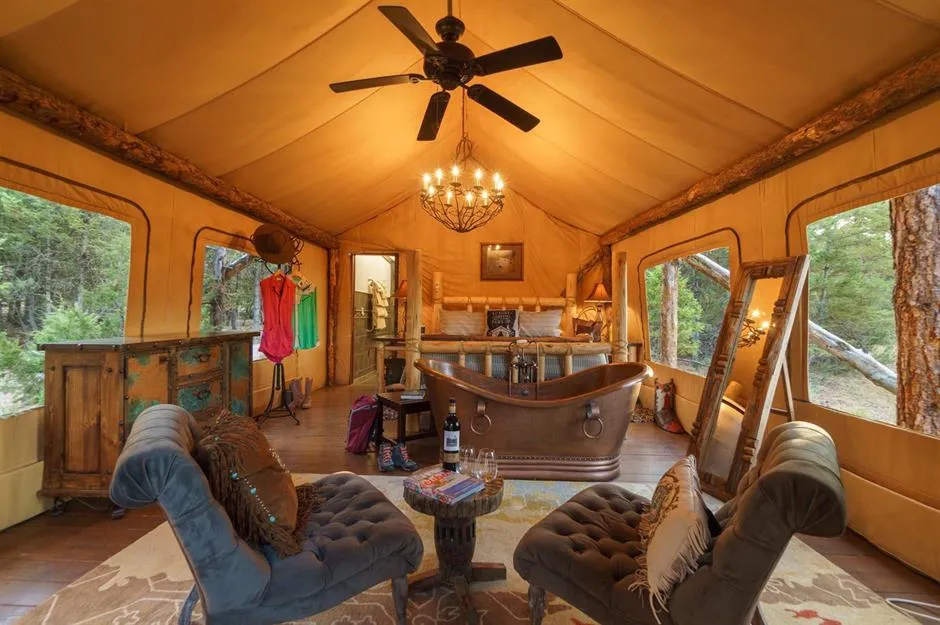
To engage with the concept of best glamping America, one must first dismantle the oversimplification that “glamping” is just a tent with a bed. In the 2026 market, the term serves as an umbrella for a wide-spectrum “Hospitality Intensity” index. At the lower end of this index, we find “facilitated camping,” where the hardware is provided but the service is minimal. At the apex—the “Best” tier—we find fully integrated resorts like Collective Retreats or Under Canvas, where the operational standards match those of the Four Seasons, but the “walls” are made of military-grade canvas or double-paned glass.
A primary misunderstanding in this sector is the belief that “luxury” in the wild is achieved by adding more amenities. In reality, the most elite glamping sites achieve luxury through “Curated Absence.” By removing the noise of HVAC systems, the glare of industrial lighting, and the digital friction of constant connectivity, these sites provide a sensory reset. The “Best” sites are those that have mastered the “Invisible Utility”—bringing hot water, climate-balanced bedding, and gourmet nutrition to the middle of a desert or a forest without shattering the illusion of being “unplugged.”
The risk of oversimplification is highest when considering geography. Many travelers assume that the “Best” glamping is confined to the “Big Sky” states like Montana or Utah. However, the 2026 landscape shows a maturation in the Hudson Valley, the Great Smoky Mountains, and the Pacific Northwest. In these regions, the “glamour” is found in the architectural integration with the local biome—be it a treehouse suspended in a temperate rainforest or a mirrored cabin that reflects the high-desert horizon. The true measure of a top-tier site is its “Ecological Transparency”: the ability for a guest to feel the environment without being harmed by it.
Contextual Background: From Safari Origins to Domestic Sophistication
The American glamping model is a cultural hybrid of the 1920s African Safari and the 19th-century Adirondack Great Camp. Historically, the “Safari” model introduced the idea that the “Upper Crust” could hunt and explore without sacrificing the comforts of home—portable generators, folding bathtubs, and fine linens were standard. Concurrently, the “Great Camps” of New York established the “Rustic Elegance” aesthetic, using local timber and stone to create massive, sprawling estates that felt like an extension of the forest.
The 2010s marked the “Democratization Phase,” where the term “glamping” entered the lexicon as a marketing buzzword for festivals and Airbnb listings. This era was characterized by a high volume of low-quality “pop-up” sites that often lacked the structural integrity to handle actual weather events.
By 2024–2026, the industry entered the “Institutional Phase.” Major hotel chains like Hyatt and Hilton began integrating glamping brands into their loyalty programs. This period has seen a “Hardening of the Infrastructure.” We are now seeing the widespread use of “permanent-temporary” structures—geodesic domes with R-30 insulation, yurts with radiant floor heating, and tents that can withstand 90 mph winds. The glamping site has evolved from a summer novelty into a year-round, high-performance hospitality asset.
Conceptual Frameworks and Mental Models for Outdoor Evaluation
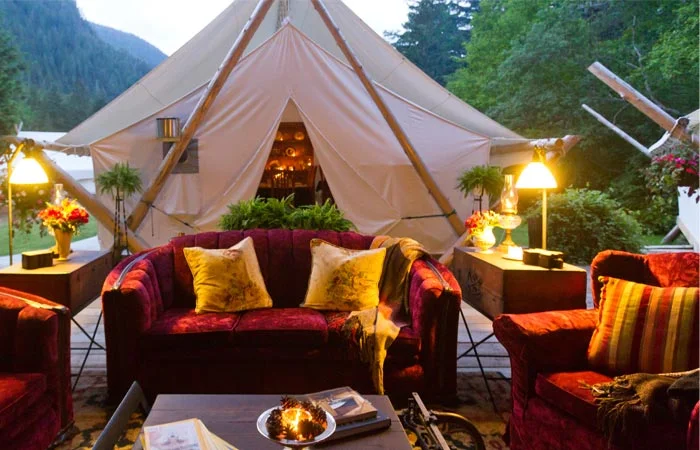
To evaluate a glamping site with professional discipline, one should employ mental models that prioritize systemic depth over aesthetic surface.
1. The “Canvas-to-Comfort” Ratio
This framework measures how much “nature” is allowed in versus how much “hospitality” is maintained. A site that is 100% nature is just camping; a site that is 100% hospitality is just a hotel with a weird roof. The “Best” sites occupy the 70/30 sweet spot: 70% sensory immersion (hearing the wind, smelling the rain) and 30% protective barrier (insect-proof mesh, temperature-regulating duvets).
2. The “Off-Grid Utility” Ladder
This model assesses the sophistication of the site’s life-support systems.
-
Level 1: Shared bathhouse, manual fire-pit (Standard).
-
Level 2: Ensuite chemical toilet, solar lighting, wood-burning stove (Premium).
-
Level 3: Flush toilets, rain-showers, solar-plus-storage power, greywater recycling (Ultra-Prime).
The best glamping America offers typically operates at Level 3, providing an experience that is indistinguishable from urban luxury while remaining environmentally neutral.
3. The “Contextual Permanence” Model
This mental model looks at the “Age of the Land” versus the “Age of the Structure.” A top-tier site treats the land as the primary asset and the tent as a “removable guest.” If a site has poured massive concrete pads and cleared wide swaths of old-growth forest, it has failed the “Contextual Permanence” test. True glamping leaves a “soft footprint.”
Taxonomy of American Glamping: Categories and Trade-offs
Glamping is no longer a monolith. The market has branched into specialized structural archetypes, each with its own operational logic.
| Category | Typical Example | Key Trade-off | Strategic Value |
| Safari Tents | Under Canvas, Zion | Highest wind noise / Lowest insulation | Classic “Tented” romance |
| Geodesic Domes | Clear Sky Resorts, AZ | “Fishbowl” privacy issues | Panoramic views & snow load resistance |
| Luxury Yurts | Cedar Ridge, WA | Circular space can feel cramped | Superior wind/thermal stability |
| Treehouses | Bolt Farm, TN | High maintenance / Access hurdles | Vertical exclusivity & childhood nostalgia |
| Mirrored Cabins | Mirror Hotel, NC | Bird-strike risks / Cleaning intensive | Total visual immersion |
| Vintage Airstreams | AutoCamp, CA | Low ceiling heights | Iconic Americana & social “cool.” |
Decision Logic: The “Soundscape” Filter
A guest must decide what they want to hear. A safari tent allows you to hear the rustle of leaves and the distant coyote—it is an “Acoustically Transparent” stay. A geodesic dome or a luxury yurt provides a “Hardshell” experience, muting the outside world. If a guest is a light sleeper, the “Best” choice is often a hardshell structure, whereas the “Purist” will always opt for the canvas walls of a safari tent.
Operational Scenarios: The Guest Experience in Unpredictable Environments
Scenario A: The “High-Desert” Heatwave
A guest stays in a geodesic dome in Southern Utah during a 110°F heat spike.
-
The Conflict: Domes act as greenhouses. Even with AC, the “thermal gain” from the panoramic window can be overwhelming.
-
The Management: Top-tier sites use “low-e” glass coatings, internal blackout shrouds, and “swamp coolers” to maintain a 30-degree differential from the outside.
-
Failure Mode: Sites that rely on “Standard AC” often blow fuses or fail to cool the large volume of air under a dome’s high ceiling.
Scenario B: The “Coastal Temperate” Mildew
A luxury tented site in the Pacific Northwest faces a month of 90% humidity.
-
The Conflict: Canvas is organic; moisture leads to mold.
-
The Management: High-utility sites use “Active Dehumidification” and “High-Permeability” fabrics that breathe, combined with raised platform foundations that allow airflow under the tent.
-
Second-Order Effect: By managing the humidity, the site also manages the “Scent of Luxury”—preventing the “musty tent” smell that ruins the high-end experience.
Planning, Cost, and Resource Dynamics
The economic reality of glamping is often paradoxical: it costs more to build a high-end tented site than a standard mid-range hotel due to the “Infrastructure Tax” of remote locations.
The “Glamping Resource” Matrix (Per Unit/Night)
| Component | Cost Range (Luxury) | Variable Factor | Necessity |
| Base Lodging Rate | $400 – $1,200 | Seasonal demand / Location | Primary |
| Off-Grid Surcharge | $50 – $150 | Water hauling / Solar upkeep | Indirect |
| Activity Integration | $100 – $500 | Guides / Gear rental | Strategic |
| Waste Management | High | Remote pumping / Composting | Invisible |
The “Scarcity Pricing” Logic: In 2026, the best glamping America offers is often priced at a premium during “Astronomical Events” (e.g., meteor showers or eclipses). The “Opportunity Cost” of a glamping stay is often the loss of the “Standardized Safety” of a hotel. A guest is paying for the risk of the outdoors, managed by the expertise of the host.
Defensive Infrastructure: Tools and Support Systems
To maximize the “Return on Nature,” a guest should utilize specific tools that bridge the gap between wilderness and wellness.
-
Ensuite Temperature Control: Look for “Dual-Fuel” heating—wood stoves for the aesthetic and propane/electric heaters for the 3:00 AM “Maintenance-Free” heat.
-
Bio-Acoustic Privacy: High-end sites use white-noise machines and “strategic spacing” (tents are at least 50 feet apart) to ensure you don’t hear your neighbor’s zipper.
-
The “Dry-Entry” System: Top sites have a “Mudroom” or a covered porch where you can shed wet gear before entering the “Clean Zone” of the bed area.
-
Off-Grid Communication: While “Unplugging” is the goal, “Security” requires satellite-linked emergency buttons or in-tent radios for site-wide alerts.
-
Water-Pressure Augmentation: In remote sites, gravity-fed water is the norm. The “Best” sites use “Pressure Boosters” to ensure your rain-shower actually feels like a shower.
-
Insect Interdiction: Beyond mesh, elite sites use “Organic Misting” systems and strategic wind-fans to keep the “Bite Pressure” low without using harsh chemicals.
Risk Landscape: Failure Modes and Compounding Hazards
Glamping sites face a unique “Taxonomy of Risks” that urban hotels never encounter.
-
Wildlife Encroachment: The “Best” sites have rigorous “Bear Box” protocols. A failure here is not just a guest annoyance; it is a “Systemic Failure” that endangers the animals and the property’s permit.
-
Structural Decay: Canvas and wood in the wild are under constant attack from UV radiation and pests. A site that doesn’t have a “Quarterly Refurbishment” cycle will quickly look “shabby” rather than “chic.”
-
Zoning Instability: Many glamping sites operate in “Regulatory Grey Zones.” A sudden change in local “Short-Term Rental” (STR) laws can shut down a multi-million dollar retreat overnight.
-
The “Social Media Sinkhole”: A site that prioritizes “Instagram-ability” over “Utility” will have high first-time bookings but zero “Return Guest” rates. If the bed is uncomfortable but the view is great, the business model is “Fragile.”
Governance and Long-Term Adaptation: The “Low-Impact” Legacy
How does a glamping site maintain its “Top-Tier” status over a decade? It requires a “Regenerative Governance” model.
The “Glamping Stewardship” Checklist
-
Native Flora Re-Seeding: Annual programs to repair trail-wear and “social paths.”
-
Carbon-Positive Operations: Moving from “Solar-Assist” to “100% On-Site Generation.”
-
Local Labor Integration: Hiring local “Nature Interpreters” rather than just hospitality staff. This adds “Cultural Depth” to the guest experience.
-
Material Lifecycle Audit: Ensuring that when a tent cover reaches its 5-year limit, it is recycled into gear rather than sent to a landfill.
Measurement, Tracking, and Evaluation of Authenticity
How do we quantify “Quality” in the wild? We use leading and lagging indicators.
-
Quantitative: The “Decibel Floor.” What is the lowest noise level recorded at the site? A true luxury site should have a noise floor below 30dB (the sound of a whisper).
-
Qualitative: The “Barefoot Confidence” Metric. Can a guest walk from their bed to the bathroom, or out onto the porch, comfortably without shoes? This measures the “Cleanliness-to-Wilderness” integration.
-
Lagging Indicator: The “Lodge-to-Tent” Ratio. How much time did the guest spend in the communal lodge versus their private unit? A high “Unit Time” indicates a successful “Private Wilderness” experience.
Strategic Myths and Common Misconceptions
-
Myth: “Glamping is safer than camping.” Correction: You are still in the wild. A “tent” does not protect a falling branch or a persistent predator. The safety is in the management, not the fabric.
-
Myth: “It’s a summer-only activity.” Correction: Modern yurts and domes are “Four-Season Optimized.” Some of the best glamping America offers is in the winter, where “Snow-Glamping” provides a silent, monochromatic luxury.
-
Myth: “Eco-friendly means uncomfortable.” Correction: Composting toilets in 2026 are odorless and use high-tech filtration; they are often more “hygienic” than old-fashioned plumbing in rural areas.
-
Myth: “The more expensive, the better the view.” Correction: Often, the most expensive sites are the most secluded, which might mean you are tucked in a deep forest “Cove” rather than on a windy, exposed ridge.
Ethical and Practical Considerations in the Wild
Travelers must consider the “Ethics of Access.” Glamping often takes place on land that is culturally significant or ecologically fragile. A “Mindful Guest” asks about the site’s relationship with local Indigenous communities and their “Dark Sky” compliance. Practically, one must manage their “Expectation Gradient.” If you require a “Smart Home” experience where you can control the lights with your voice, the “Best” glamping sites may frustrate you. True luxury in this space is about “Adaptive Grace”—learning to enjoy the fact that the fire takes a few minutes to start and the stars are brighter than your screen.
Conclusion
The best glamping America offers is a bridge between our technological present and our biological past. It is a sector that has matured from a “Tent with a Rug” into a sophisticated engineering feat. As we move further into the 2020s, the value of these sites will only increase as “Silence” and “Horizon” become the rarest commodities on the planet. For the traveler, a glamping stay is a strategic investment in “Perspective.” It is the realization that while we can build palaces of glass and steel, our deepest sense of peace is still found under a canopy of stars, protected by a single layer of canvas and a legacy of stewardship.