Best Reward Points for Luxury 2026: The Forensic Guide to High-End Travel
In the stratified world of high-end travel, the concept of “value” undergoes a fundamental transformation. For the entry-level traveler, a reward point is a discount; for the luxury connoisseur, it is a key to an otherwise inaccessible ecosystem of private aviation, atelier-level hospitality, and temporal sovereignty. As we move through 2026, the delta between “premium” and “ultra-luxury” has widened, driven by a global surge in demand for exclusivity that has rendered traditional cash bookings both common and, in some cases, less advantageous than strategic point redemptions.
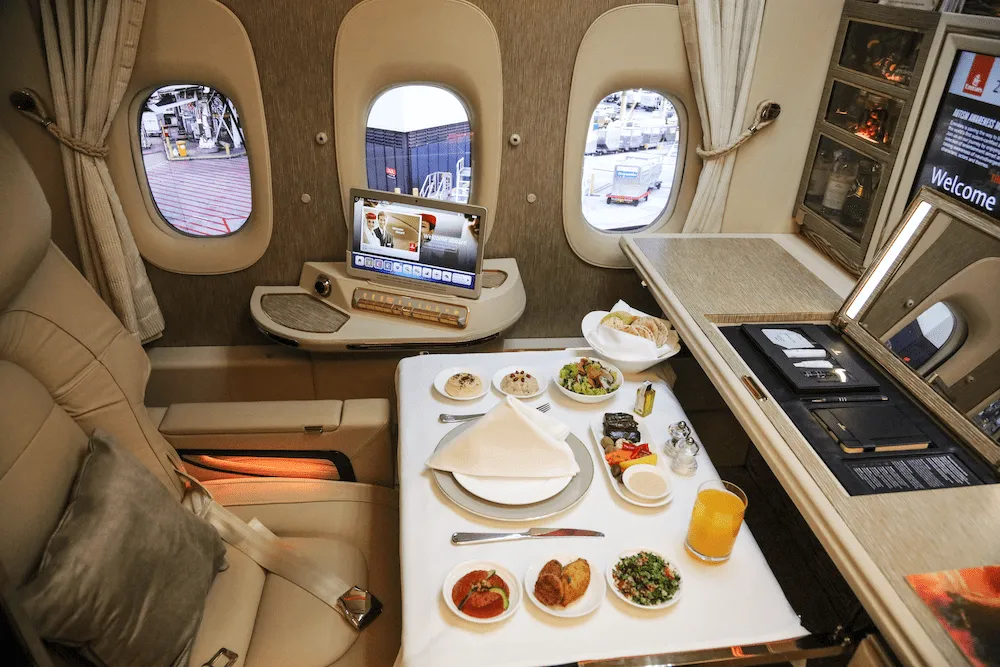
The current landscape is defined by the “Financialization of Exclusivity.” Banks and loyalty programs have realized that their most valuable members do not want mere rebates; they want the “Unbookable Experience.” This has led to the rise of Tier 1 master currencies—flexible assets that can be pivoted across alliances to secure international first-class cabins (such as Air France La Première or Emirates First Class) that frequently command five-figure cash prices. Managing these assets requires more than a casual interest in credit card bonuses; it requires an institutional approach to points as a secondary, tax-advantaged currency.
Navigating this terrain necessitates a departure from the “earn-and-burn” mentality of the mass market. To secure the best reward points for luxury, one must operate with the precision of a currency trader, anticipating devaluations, exploiting transfer bonuses, and understanding the “arbitrage of the aspirational.” This article serves as the definitive framework for the 2026 luxury landscape, deconstructing the mechanics of premium loyalty to provide a clear, analytical path for those who view travel not as a series of destinations, but as a portfolio of high-yield experiences.
Understanding “best reward points for luxury”
To identify the best reward points for luxury, one must first define the parameters of luxury in a post-scarcity rewards environment. In 2026, luxury is characterized by three pillars: Privacy, Access, and Seamlessness. Consequently, the “best” points are those that facilitate these outcomes with the lowest friction. While a program might offer a high numerical balance, if that balance cannot be converted into a confirmed suite at a Park Hyatt in Kyoto or a 14-hour lie-flat experience on a Qatar Qsuite, its utility for the luxury traveler is effectively zero.
The primary misunderstanding in this space is the conflation of “Premium” with “Luxury.” Most “premium” credit cards offer airport lounge access and basic travel insurance—services that are now commoditized and crowded. True luxury points provide a pathway to “First-Class-only” lounges, such as the Lufthansa First Class Terminal in Frankfurt or the Etihad First Class Lounge in Abu Dhabi. The risk of oversimplification is high: travelers often chase “points for points’ sake” without realizing that the true value lies in the Transferable Liquidity of the asset—the ability to move points from a bank to a niche airline partner at a 1:1 (or better) ratio.
Furthermore, the “best” points are those that hedge against the industry’s shift toward dynamic pricing. As hotel chains move away from fixed award charts, points that retain a “floor value” while maintaining a high “ceiling value” become the gold standard. In 2026, this status is held almost exclusively by bank-issued flexible currencies. These points allow a traveler to bypass the limitations of a single airline’s award availability by providing multiple “exit ramps” into various alliances (Oneworld, SkyTeam, Star Alliance), ensuring that the traveler is never captive to a single devaluing brand.
The Institutionalization of Premium Loyalty: A Historical Context
The evolution of luxury rewards has moved through three distinct epochs. The Mileage Era (1981–2010) was defined by the airline mile as a unit of physical distance. Luxury was achieved by “mileage running”—flying long distances on cheap tickets to earn status and upgrades. During this period, the system was predictable but required physical endurance. The goal was to reach a “million-miler” status that bestowed lifetime perks, a concept that has largely been diluted in the modern era.
The Flexible Currency Era (2010–2022) saw the transfer of power from airlines to financial institutions. Banks like American Express, Chase, and later Capital One, realized they could buy miles in bulk and use them to anchor high-annual-fee cards. This democratized luxury travel, allowing “heavy spenders” who never flew to accumulate the same assets as “road warriors.” However, this led to “Point Inflation,” as the supply of points in the market began to outstrip the supply of first-class seats.
In 2026, we have entered the Experiential Arbitrage Era. Programs have shifted their focus from “flight and hotel” to “access and exclusivity.” High-end cards now function as membership clubs, providing access to Michelin-starred culinary tours, private art previews, and “concierge-only” hotel rates (such as Hyatt Privé or Marriott STARS). The points themselves have become a “utility token” used to unlock these tiers of service. The focus has moved from “how many points do I have?” to “what door does this card open that cash alone cannot?“
Mental Models for High-Yield Asset Management
Navigating the 2026 rewards landscape requires a shift in cognitive framework. The following mental models are essential for the luxury optimizer:
1. The “Ceiling vs. Floor” Valuation
When evaluating the best reward points for luxury, distinguish between the “Floor” (the value of points when redeemed for cash or basic travel, usually 1.0 cents) and the “Ceiling” (the value when redeemed for international First Class, often exceeding 8.0 cents). A luxury-focused strategy ignores the floor and optimizes solely for the ceiling.
2. The Transferable Liquidity Premium
Points held in a bank ecosystem (Amex Membership Rewards, Chase Ultimate Rewards) are more valuable than points held in an airline program (Delta SkyMiles, United MileagePlus), even if the balances are identical. This “Liquidity Premium” exists because bank points can be moved to whichever partner currently offers the best luxury redemption, protecting the user from a single-brand devaluation.
3. The “Induced Spend” Fallacy
In luxury travel, there is a risk of spending more to “save” more. If a traveler books a 5-star hotel, they wouldn’t normally stay there just because they have points; they haven’t “saved” money; they have simply changed their consumption pattern. The professional traveler identifies their desired destination first, then works backward to find the point currency that facilitates it most efficiently.
The Taxonomy of Luxury Rewards: Categories and Strategic Trade-offs
A rigorous comparison of the landscape reveals several distinct archetypes of rewards.
| Category | Primary Luxury Lever | Strategic Trade-off | Representative Program |
| Transferable Powerhouse | Access to First Class “Sweet Spots” | Requires manual search and timing | Amex Membership Rewards |
| Boutique Hotel Specialist | High value at 5-star properties | Limited global footprint | World of Hyatt |
| The “All-In” Ecosystem | Guaranteed suite upgrades / Late checkout | Massive point inflation | Marriott Bonvoy |
| Access-First / Points-Second | Luxury Concierge / Private Events | High annual fees ($695+) | Amex Platinum |
| Niche Airline Currency | Exclusive “Partner-Only” cabins | Highly specific route networks | Virgin Atlantic / ANA |
Decision Logic: The Luxury Intent Profile
Choosing the best reward points for luxury depends on your “Intent Profile”:
-
The “First Class” Purist: Prioritizes bank points with 1:1 transfers to ANA, Emirates, and Singapore Airlines.
-
The “Suite” Resident: Focuses on Hyatt Globalist or Marriott Titanium status, prioritizing programs with confirmed Suite Upgrade Awards (SUAs).
-
The “Zero-Friction” Traveler: Values fixed-value redemptions (like the Chase Sapphire Reserve’s 1.5x portal) to book luxury hotels that don’t participate in traditional loyalty programs.
Operational Scenarios: The Mechanics of the “Unbookable” Trip
Scenario A: The “Emirates Game” (International First Class)
A traveler seeks to fly from New York to Dubai in an Emirates First Class Suite. The cash price is $18,000.
-
The Strategy: Instead of using “cheap” airline miles, the traveler utilizes 163,500 points from a flexible bank partner.
-
The Logic: By transferring points during a 30% bonus window, the effective cost drops to approximately 125,000 points.
-
Result: A redemption value of 14.4 cents per point.
-
Failure Mode: Trying to book this through a domestic partner like United or Delta, where the partner-access is restricted, or the pricing is dynamically tied to the $18,000 fare.
Scenario B: The “Maldives Arbitrage” (Ultra-Luxury Lodging)
A traveler plans a 5-night stay at the Ritz-Carlton Maldives, Fari Islands. Cash rate: $2,500 per night.
-
The Strategy: Leveraging the “Stay 5, Pay 4″ benefit of a major hotel loyalty program.
-
The Logic: Booking 400,000 points for a stay that would cost $12,500.
-
Result: A value of 3.1 cents per point, which is triple the industry average for hotel redemptions.
-
Second-Order Effect: Because the traveler holds top-tier status, they receive complimentary boat transfers and breakfast—amenities that would otherwise cost $1,500 in cash.
The Economics of Aspiration: Cost and Resource Dynamics
The pursuit of luxury points is not “free.” It carrieshight direct and opportunity costs.
Resource Allocation for Luxury Optimization
| Investment Level | Annual Fees | Management Time | Typical Yield (Luxury-Weighted) |
| Passive Luxury | $250 – $400 | 1 Hour / Month | 2.0% – 3.0% |
| Active Optimization | $700 – $1,500 | 5 Hours / Month | 5.0% – 8.0% |
| Institutional Strategy | $2,500+ | 10+ Hours / Month | 10.0% – 15.0% (Via Arbitrage) |
Point Deflation Hedge: In 2026, the real-world value of a point at a major airline typically devalues by 8-12% annually. A luxury traveler must maintain a “Burn Rate” of at least 30% of their balance per year to prevent their “ice cube” asset from melting.
Infrastructure and Support: The High-Net-Worth Toolkit
To effectively manage the best reward points for luxury, the modern traveler utilizes a sophisticated technical stack:
-
Award Seat Aggregators: Specialized software that monitors global first-class availability across all alliances in real-time.
-
Transfer Bonus Alerts: Systems that notify the user the moment a bank offers a premium on transfers to luxury-heavy partners (e.g., British Airways or Flying Blue).
-
Elite Status “Challenge” Monitoring: Identifying short-term windows to jump between status tiers via corporate partnerships.
-
Concierge Integration: Using the “unseen” human labor of premium card concierges to secure restaurant reservations that aren’t available on apps like Resy or OpenTable.
-
Virtual Card Routing: Dynamically shifting spend between cards to maximize “categorical multipliers” (e.g., 5x on airfare, 4x on dining) to ensure the fastest possible accrual of the primary asset.
The Risk Landscape: Dynamic Pricing and Programmatic Fragility
The primary threat to the luxury traveler in 2026 is the “Death of the Award Chart.” As airlines and hotels move toward dynamic pricing, the concept of a “sweet spot” is under constant siege.
-
The Scarcity Trap: Airlines increasingly withhold their best long-haul suites from partner bookings, forcing travelers to use the airline’s own (often inflated) currency.
-
The “Junk Fee” Proliferation: High-value redemptions are often accompanied by “carrier-imposed surcharges” that can reach $1,000 per ticket, eroding the net value of the points.
-
Geopolitical Volatility: A sudden change in international relations can close off entire route networks, rendering a “specific-partner” currency worthless overnight.
-
Regulatory Intervention: Increased scrutiny on interchange fees (the fees that fund rewards) could lead to a massive reduction in sign-up bonuses and earn-rates, signaling the end of the “Golden Age” of luxury redemptions.
Governance and Long-Term Adaptation of the Points Portfolio
Managing a luxury points portfolio requires a “Governing Policy” that evolves with the market.
The Luxury Portfolio Audit (Quarterly)
-
Liquidity Check: What percentage of my points are “locked” into a single airline vs. “liquid” in a bank? (Target: 70% Liquid).
-
Expiration Audit: Identify any balances nearing the 18-month inactivity mark.
-
Status Recalculation: Am I chasing a status (e.g., Marriott Titanium) that I no longer value due to a change in travel habits?
-
Fee vs. Perk Analysis: Am I utilizing the “Soft Benefits” (Lounge access, hotel credits) enough to offset the $1,000+ in annual fees?
Metrics of Success: Beyond the Cent-Per-Point (CPP) Standard
In 2026, the “Cent-Per-Point” (CPP) metric is often misleading. A 10 CPP redemption for a flight you didn’t want to take is a failure.
-
The “Displacement Ratio”: The amount of actual cash you didn’t spend on travel you were already going to take.
-
The “Access Index”: The number of times your points allowed you to bypass a queue, enter a private space, or secure a suite upgrade that was not available for cash.
-
Leading Indicator (Velocity): How many months does it take your current spend to generate one international business-class ticket? (Target: < 6 months).
-
Qualitative Signal (The “Friction Score”): If managing your points takes more time than the trip itself, you are suffering from “Optimization Fatigue.“
Strategic Myths and the Correction of Common Misconceptions
-
Myth: “The most expensive card has the best points.” Correction: Often, “mid-tier” cards have better earn-rates (multipliers), while the expensive cards are solely for “perks” and status.
-
Myth: “Points should be hoarded for retirement.” Correction: Points are a depreciating currency. Hoarding is the fastest way to lose 50% of your asset value.
-
Myth: “Booking through the bank portal is always best.” Correction: The portal offers 1.5 cents; transferring to a partner offers 5-10 cents. The portal is for “convenience,” the transfer is for “luxury.“
-
Myth: “Status doesn’t matter if you have points.” Correction: Status is what ensures your “point stay” gets the suite upgrade and the 4:00 PM late checkout. They are complementary, not interchangeable.
Conclusion
The pursuit of the best reward points for luxury is, ultimately, an exercise in sophisticated financial planning. In an era where the travel industry is increasingly bifurcated between the “mass-market” and the “ultra-premium,” points serve as the bridge that allows the strategic traveler to cross that divide. By prioritizing transferable liquidity, understanding the mechanics of arbitrage, and treating points as a depreciating asset that must be actively managed, the modern traveler can secure a level of opulence that cash alone cannot buy. Luxury in 2026 is not about how much you spend; it is about how intelligently you have positioned your loyalty assets to capture the “unbookable” moments of the global journey.