Luxury Travel Destinations USA: The Definitive 2026 Strategy Guide
The American luxury travel sector has entered a “post-extravagance” era in 2026, defined by a move toward metabolic health, cognitive restoration, and what industry analysts call “radical privacy.” The contemporary traveler is no longer satisfied with the gilded age tropes of the 1990s or the hyper-connected “lifestyle” hotels of the 2010s. Instead, there is a systemic shift toward environments that act as biological and psychological reset buttons. In a landscape as vast as the United States, this evolution has created a fragmented market where the most valuable commodity is not gold-leaf service, but unscripted time and environmental purity.
Domestic high-end travel now functions as a series of specialized ecosystems. We see the rise of “precision wellness” in the Southwest, “legacy conservation” in the Mountain West, and “salvaged heritage” in the urban Northeast. This diversification is driven by a demographic that views travel as an investment in their personal “human capital”—a way to optimize their cognitive performance, emotional resilience, and longevity. Consequently, the architecture of leisure has shifted from the “resort as a stage” to the “resort as a laboratory,” where data-driven health programs and deep nature immersion are the new benchmarks of status.
Navigating this complex landscape requires a departure from standard “top ten” lists. To identify the true leaders among luxury travel destinations usa, one must evaluate properties based on their ability to resist “amenity inflation” while providing a deep, authentic connection to the land and local culture. This guide provides a rigorous framework for assessing the domestic luxury market, moving beyond the surface-level polish to examine the infrastructure, economics, and risk landscapes of the nation’s most exclusive escapes.
Understanding “luxury travel destinations usa”
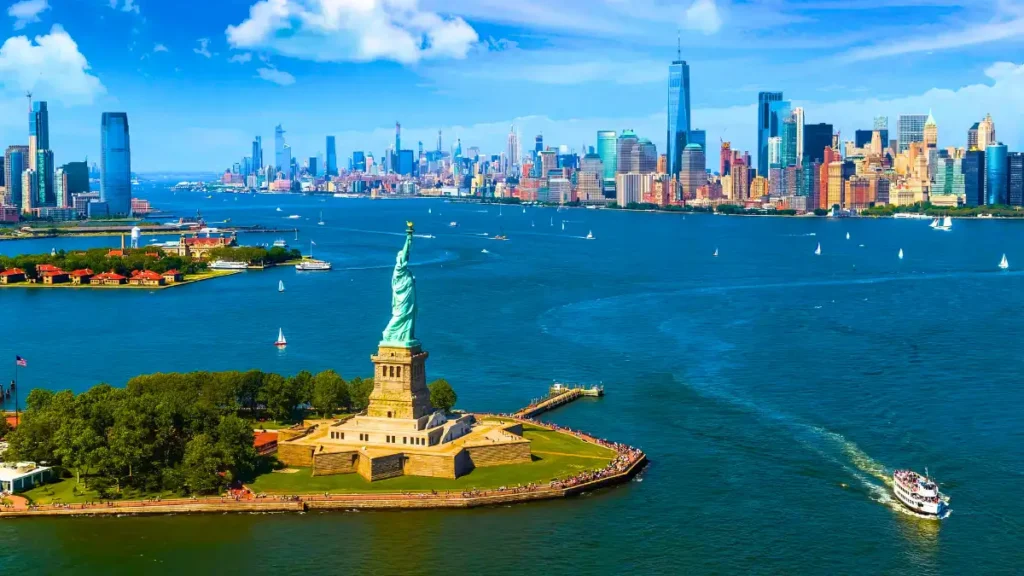
The term luxury travel destinations usa is frequently misunderstood as a simple synonym for “expensive.” In the current market, however, price is often a lagging indicator of quality. A true luxury destination is a system where the “friction-of-existence” is removed. This involves a multi-perspective reality: for the high-performing professional, it is “Decision Detox”—the outsourcing of logistical complexity to an expert concierge. For the family, it is “Generational Bonding Infrastructure”—spaces and programs that bridge the gap between toddlers and retirees without compromise.
A significant risk in this sector is “Beige-ification”—the tendency for luxury properties to adopt a standardized, mass-appeal aesthetic that strips away regional character. When a hotel in Miami looks and feels exactly like one in Seattle, it has failed the core test of luxury: the provision of a unique “Sense of Place.” The top destinations in the US are those that lean into their idiosyncrasies, whether that is the brutalist elegance of a desert retreat or the creaking floorboards of a meticulously restored Gilded Age mansion.
Furthermore, oversimplification occurs when travelers fail to account for “Service Entropy.” A resort may have five stars on its front door, but if the staff-to-guest ratio is insufficient or if the internal culture is focused on “transactional efficiency” rather than “relational hospitality,” the experience will degrade. The discerning traveler must evaluate the “Intangible Infrastructure”—the quality of the staff’s intuition, the intellectual depth of the programming, and the property’s commitment to long-term stewardship of its environment.
The Systemic Evolution of American High-Tier Travel
The historical trajectory of American luxury travel has moved through three distinct phases. The “Legacy Era” (1880–1950) was defined by grand rail-side hotels and the “Great Camps” of the Adirondacks, where the elite sought to mimic European aristocracy. The “Globalist Era” (1980–2015) saw the rise of the mega-brand and the standardization of luxury—the era of the “white-glove” service that was identical in New York or Tokyo.
We are now in the “Anthropocentric Era” (2020–present). This phase is characterized by:
-
Hyper-Personalization: Utilizing genomic data and metabolic tracking to tailor guest experiences.
-
Adaptive Reuse: Converting industrial or historical relics (breweries, banks, print shops) into “Salvaged Stays” that offer more character than new-builds.
-
Coolcations: A climate-driven shift where travelers seek high-latitude or high-altitude destinations (Montana, Maine, Alaska) to escape rising global temperatures.
This evolution has also changed the geographic center of gravity for luxury travel destinations usa. While the coastal hubs remain relevant, the interior “flyover” states have rebranded as “The High Wilderness,” offering a level of space and silence that is increasingly unavailable on the coasts.
Conceptual Frameworks for Evaluating Luxury Environments
To assess a destination with professional rigor, one should employ these mental models:
1. The “Human-to-Hardware” Ratio
This framework posits that the quality of a stay is determined by the balance between the physical environment (Hardware) and the service staff (Human). A “Hardware-Heavy” property (e.g., a massive new-build tower) often feels cold and sterile. A “Human-Heavy” property (e.g., an older, under-maintained lodge with a legendary staff) can feel warm but frustrating. The pinnacle of luxury is “Synchronized Excellence,” where the physical plant is flawless, and the staff is empowered to be intuitive.
2. The Bio-Environmental Sync
In 2026, the best destinations are evaluated on their ability to regulate theguests’s circadian rhythms and nervous system. This includes “Cognitive Wellness” features:
-
Circadian Lighting Systems: In-room lighting that shifts spectrum based on the time of day.
-
Acoustic Engineering: Specialized soundproofing and “pink noise” integration in sleep suites.
-
Biophilic Design: The integration of local flora and natural light to reduce cortisol levels.
3. The “Defensible Rarity” Model
Is the experience truly unique, or is it a commodity? This model asks if the resort provides access to something that cannot be bought elsewhere: a private trailhead into a National Park, a resident historian who is the leading expert on local indigenous art, or a proprietary “Seed-to-Table” program where the guest harvests their own ingredients with a Michelin-starred chef.
The Taxonomy of Domestic Luxury: Categories and Trade-offs
The US market is segmented into several key archetypes, each with inherent advantages and constraints.
| Category | Primary Benefit | Core Trade-off | 2026 Representative |
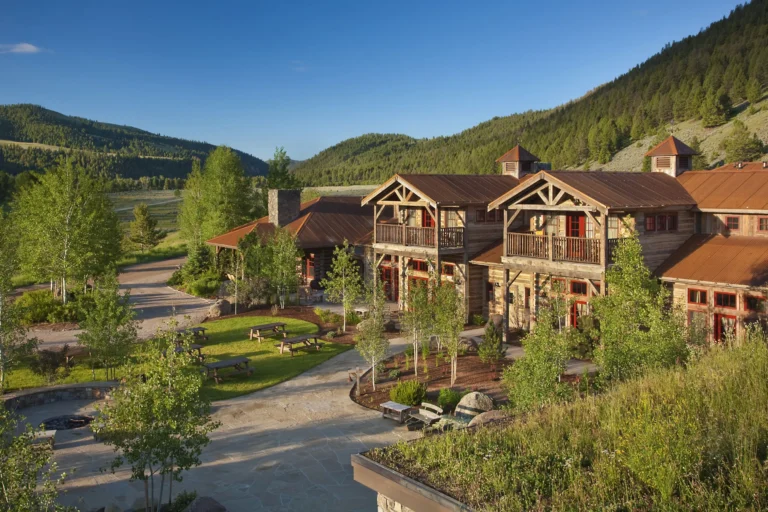
| The Mountain Ranch | Absolute privacy; vast acreage; multi-gen space. | Logistical complexity; high altitude acclimation. | Paws Up (MT), Brush Creek (WY) |
| The Desert Sanctuary | Precision wellness; metabolic health; stargazing. | Extreme heat (seasonality); water scarcity. | Mii amo (AZ), Amangiri (UT) |
| The Salvaged Heritage | Architectural depth; urban cultural density. | Noise pollution; lack of expansive nature. | Hotel Emma (TX), The Whitby (NY) |
| The Island Enclave | Isolation; tropical biodiversity; solar-powered luxury. | Long travel times; limited supply chain diversity. | Kona Village (HI), Sensei Lanai (HI) |
| The Lowcountry Estate | Classic hospitality; maritime access; slow pace. | High humidity; seasonal hurricane risk. | Palmetto Bluff (SC), Sea Island (GA) |
Decision Logic: The “Intent-First” Selection
Choosing among the luxury travel destinations usa requires a hierarchical filter:
-
Metabolic Goal: Is this for “Active Recovery” (Ranch) or “Passive Restoration” (Desert)?
-
Social Density: Do you want to be “Seen” (Urban Heritage) or “Hidden” (Enclave)?
-
Climate Tolerance: Can your party handle the “Coolcation” chill of the North or the dry heat of the West?
Detailed Real-World Scenarios
Scenario A: The “Three-Generation” Reconnect
A family (ages 6 to 78) seeks a 10-day summer retreat.
-
Selection: A Montana Mountain Ranch.
-
The Logic: Ranches provide “Parallel Programming.” Children engage in supervised “survival skills” classes, while parents go on guided fly-fishing trips and grandparents attend photography workshops.
-
Failure Mode: Selecting an urban luxury hotel where the group is confined to separate rooms, leading to “Social Fragmentation.”
Scenario B: The “C-Suite” Mental Reset
An executive team seeks a 4-day strategy retreat after a high-stress merger.
-
Selection: A Sedona-based Desert Sanctuary with “Cognitive Wellness” protocols.
-
The Logic: The use of “Sound Healing” and “Crystal Grotto” meditation facilitates “Theta State” thinking—crucial for divergent strategic planning.
-
Second-Order Effect: By regulating the team’s nervous systems, the retreat reduces conflict during high-stakes decision-making.
Planning, Cost, and Resource Dynamics
The “Total Cost of Luxury” (TCL) includes direct expenses, “Soft Costs” (fees, tips), and “Opportunity Costs” (travel time).
Resource Allocation Table (Weekly Estimates)
| Tier | Weekly Rate (2 Pax) | Soft Costs (Tips/Fees) | Logistics Effort |
| Accessible Luxury | $7,000 – $12,000 | 15% – 20% | High (Commercial Hubs) |
| Boutique Flagship | $15,000 – $35,000 | 10% (Often Inclusive) | Moderate (Regional Jets) |
| Ultra-High-Net-Worth | $50,000 – $150,000+ | Inclusive / Flat Fee | Low (Private FBO Access) |
Variable Costs: In 2026, “Supply Chain Surcharges” and “Carbon Offsetting Fees” have become standard in top-tier US resorts. Travelers should budget an additional 5-10% for “Environmental Stewardship Fees” that fund local conservation projects.
Tools, Strategies, and Support Systems
To maximize the value of luxury travel destinations usa, the strategic traveler uses these systems:
-
FBO-to-Resort Shuttles: Utilizing semi-private jet services (like JSX or Aero) that connect directly to resort-adjacent private terminals, bypassing commercial TSA entirely.
-
Property-Specific Concierge Apps: Engaging with the property’s digital platform 30 days before arrival to “pre-load” metabolic preferences and dietary requirements.
-
The “Hidden Inventory” Call: For peak dates (Christmas, July 4th), top suites are often held back from websites. A direct call to the Director of Sales is the only way to unlock this inventory.
-
Award-to-Cash Arbitrage: Using high-tier credit card points to book the base room, then using a “cash upgrade” at check-in—a strategy that often yields a 30% discount on the best suites.
-
Bespoke Insurance Riders: Specialized travel insurance that covers “Specific Event Cancellation” (e.g., if a wildfire smoke plume affects a ranch stay).
Risk Landscape and Failure Modes
Even the most prestigious destinations are subject to systemic failures.
-
The “Instagram-Saturation” Risk: When a destination becomes a viral hotspot, the quality of service often drops as staff become overwhelmed by “non-guest” visitors taking photos in communal areas.
-
Hardware Obsolescence: A resort built in 2015 that hasn’t updated its Wi-Fi or HVAC systems. In 2026, a “luxury” room without high-speed satellite internet (Starlink) and HEPA-grade air filtration is considered a failure.
-
Labor Fragility: The “Great Resignation” of the early 2020s has left many remote resorts with a “Staffing Deficit.” A 5-star lodge with a 3-star kitchen due to chef turnover is a common failure mode.
Governance and Long-Term Adaptation
Maintaining a high-value travel portfolio requires an annual “Strategic Review.”
The Annual Travel Audit Checklist:
-
Diversification Check: Are you over-indexed on one region (e.g., too many Southwest trips)?
-
Resilience Review: Do your preferred destinations have robust water and power management systems for climate stability?
-
Relationship Maintenance: Have you maintained “Legacy Guest” status at your top three properties to ensure priority booking?
-
Value-for-Time Analysis: Was the “Transit-to-Tranquility” ratio acceptable on your last three trips?
Measurement and Qualitative Evaluation Signals
How do you know if a destination is truly elite? Look for these “High-Fidelity” signals:
-
The “Pre-Arrival Intelligence” Test: Does the resort ask for your pillow height preference or your specific brand of sparkling water before you arrive?
-
The “In-Room Friction” Audit: Can you control all room functions (lights, shades, temp) from a single, intuitive interface? Is there a physical “off” switch for all technology?
-
The “Staff Continuity” Signal: Do you see the same faces year after year? High staff retention is the #1 indicator of a healthy service culture.
Common Misconceptions and Strategic Myths
-
“High cost equals high privacy.” Some of the most expensive hotels in NYC are also the busiest. Privacy is a function of “Guest Density,” not just room rate.
-
“Newer is better.” New resorts often have “bedding-in” issues with service and landscaping. The “Sweet Spot” is usually a property that is 3–5 years post-opening or 1 year post-renovation.
-
“All-inclusive is for mid-market.” In 2026, the ultra-luxury market has moved back toward all-inclusive models (e.g., The Ranch at Rock Creek) to reduce “transactional friction”—guests hate seeing a $25 charge for a bottle of water after paying $3,000 for a room.
-
“Peak season is the only time to go.” For many luxury travel destinations usa, the “Shoulder Season” (e.g., Utah in May or Montana in September) offers 80% of the weather quality for 50% of the crowd density.
Ethical and Contextual Considerations
As luxury travel becomes more resource-intensive, the “Ethics of Escape” have come to the forefront. The leading destinations are those that practice “Regenerative Tourism”—ensuring that the local community and ecosystem are in a better state because the resort exists. This includes water reclamation projects in the desert, indigenous land partnerships in the mountains, and living-wage guarantees for staff in high-cost-of-living areas.
Conclusion
The architecture of luxury travel destinations usa in 2026 is a study in the intersection of high-technology and deep-nature. The most successful properties are those that understand that the modern guest is seeking more than just a bed; they are seeking a profound shift in their state of being. Whether it is through the scientific precision of a Sedona spa or the rugged, soul-cleansing silence of a Wyoming valley, the pinnacle of American travel is defined by its ability to facilitate “The Great Reset.” For the strategic traveler, the goal is to navigate this landscape with a focus on environmental integrity, service intuition, and—above all—the preservation of the unscripted moment.