Top Flight Experiences in America: The Definitive 2026 Guide
Top-flight experiences in America. The American aviation landscape in 2026 presents a fascinating study in bifurcation. While the general discourse surrounding commercial flight often centers on diminishing legroom and systemic delays, a parallel reality exists for the discerning traveler. This upper echelon of aviation is characterized by a sophisticated interplay of private-terminal logistics, lie-flat transcontinental suites, and hyper-niche regional flight-seeing operations. To view the domestic sky merely as a means of transit is to overlook a complex infrastructure designed specifically to facilitate some of the most refined travel moments available in North America.
The definition of a premium flight experience has shifted from the mere provision of a larger seat to the total management of the traveler’s time and sensory environment. In a country of vast geographic diversity, the logistical hurdles of crossing three time zones or reaching remote wilderness areas have birthed a market for “frictionless” aviation. This market includes everything from the semi-private “shuttle” models that bypass commercial TSA checkpoints to ultra-exclusive flight-seeing tours that utilize specialized STOL (Short Takeoff and Landing) aircraft to access the deep interior of the National Park system.
Analyzing these offerings requires a departure from standard airline rankings. We must instead look at the systemic value of the experience: the integration of ground-to-air transitions, the culinary integrity of in-flight catering, and the technological sophistication of the aircraft themselves. This definitive reference explores the multi-layered world of premium domestic flight, providing a rigorous framework for evaluating which operations truly constitute the pinnacle of American aviation and how the strategic traveler can access them.
Understanding “top-flight experiences in america”
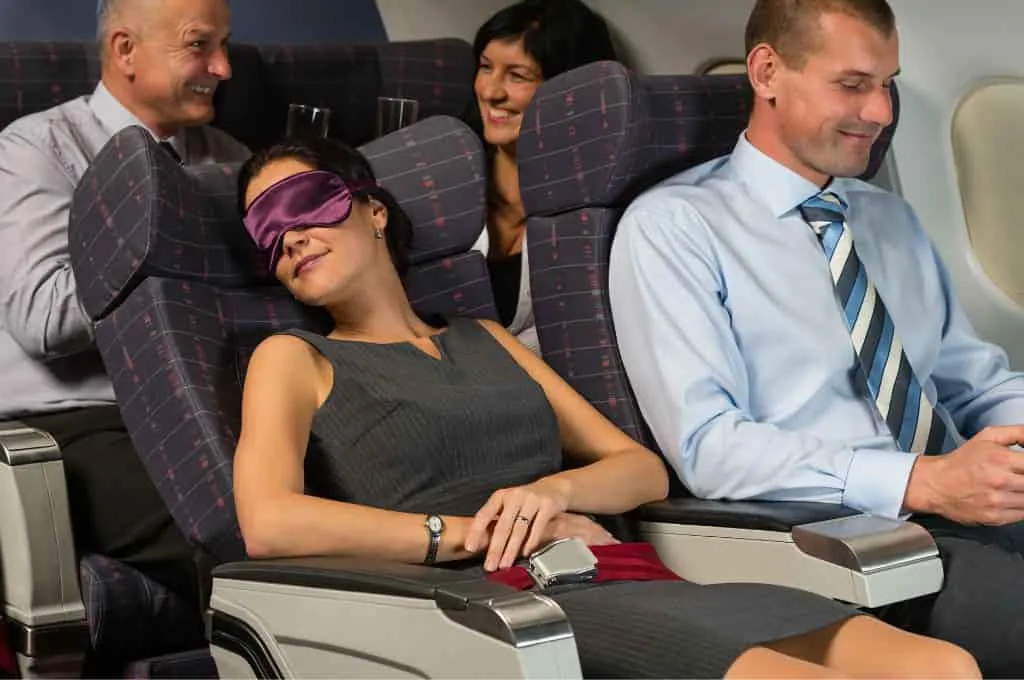
To engage with the concept of top-flight experiences in America, one must first recognize that “luxury” in aviation is often a misnomer for “efficiency.” From a professional editorial perspective, the highest-tier experiences are those that successfully remove the psychological and physical tax of travel. This involves a multi-perspective reality: for the business traveler, it is the ability to maintain a sleep cycle on a Newark-to-LAX red-eye; for the leisure traveler, it is the visual immersion of a low-altitude flight over the Grand Canyon or the Alaskan bush.
A primary misunderstanding is the belief that a First Class ticket on a major domestic carrier automatically equates to a top-tier experience. In reality, the domestic “First Class” product is often just a slightly wider seat with marginal catering improvements. True excellence is found in the “sub-commercial” and “specialized” sectors. This includes “Public Charter” operators that fly out of Fixed-Base Operators (FBOs), allowing guests to arrive fifteen minutes before departure, and the “Flagship” transcontinental routes that utilize international-grade wide-body aircraft for three-thousand-mile hops.
Oversimplification in this sector often leads to a focus on the “hardware” (the seat) while ignoring the “software” (the service and ground logistics). A top-tier flight experience begins two hours before take-off and ends an hour after landing. If the ground transition involves a chaotic terminal and a forty-minute wait for baggage, the quality of the onboard champagne becomes irrelevant. The systemic evaluator looks for “end-to-end” integrity, where the airline or operator manages the entire transit ribbon.
The Systemic Evolution of Domestic Premium Aviation
The trajectory of high-end flight in the United States has moved from the regulated “Golden Age” of the mid-20th century to the hyper-efficient, segmented market of 2026. Historically, the 1978 Deregulation Act shifted the focus toward volume, which led to a standardized, utilitarian cabin experience. However, the last decade has seen a “Premium Renaissance.” Carriers realized that a small percentage of travelers contribute a massive percentage of revenue, leading to the creation of “sub-brands” such as JetBlue Mint or United Polaris.
Simultaneously, the rise of the “Semi-Private” model has been the most significant disruption in fifty years. Companies like JSX or Aero have leveraged Part 135 and Part 380 regulations to offer the benefits of private aviation—specifically the use of private terminals—at a price point accessible to upper-middle-class travelers. This has created a “middle tier” that effectively renders traditional commercial First Class obsolete on certain high-traffic corridors like Los Angeles to Las Vegas or New York to South Florida.
Technologically, the advent of the “Extra-Long-Range” narrow-body aircraft (like the Airbus A321XLR) has allowed for more point-to-point luxury routes. We are no longer tethered to a hub-and-spoke model for premium travel. In 2026, we see a decentralization of luxury; it is now possible to find high-end flight experiences between secondary markets that previously only saw regional “puddle jumpers.”
Conceptual Frameworks and Mental Models
To evaluate these experiences with intellectual honesty, we apply three core mental models.
1. The Friction-to-Reward Ratio
Every flight involves a certain amount of “friction” (check-in, security, boarding, turbulence). The value of an experience is determined by the “Reward” (comfort, views, time saved) divided by that friction. A private helicopter transfer from Manhattan to JFK has a very high reward-to-friction ratio, making it a top-tier experience despite its short duration.
2. The Perceived Space Hierarchy
Space in the air is the ultimate luxury. However, space is not just legroom; it is “acoustic space” (noise-canceling environments), “visual space” (privacy dividers), and “service space” (the attention of the cabin crew). A flight on a boutique airline with only 30 seats on a regional jet provides more “Perceived Space” than the First Class cabin of a Boeing 737 with 180 people on board.
3. The Contextual Value Framework
This model suggests that the “best” flight is the one most suited to the geography. A lie-flat bed is the best experience for a 6-hour night flight across the Atlantic, but it is a poor way to experience the Hawaiian Islands. For the latter, a high-wing turboprop with oversized windows—which provides a continuous visual connection to the landscape—is the objectively superior experience.
Taxonomy of Experiences: Categories and Variations
Understanding the landscape requires a comparison of the different “modes” of high-end domestic flight.
| Category | Primary Benefit | Core Trade-off | 2026 Representative |
| Flagship Commercial | Consistent lie-flat seats; global connectivity. | Requires commercial terminal transit. | AA Flagship First / Delta One |
| Semi-Private Shuttle | 15-min arrival; private terminals. | Limited route networks. | JSX / Aero |
| Boutique Regional | Personalized service; unique destinations. | Higher cost per mile. | Tradewind Aviation |
| Specialized Flight-seeing | Unparalleled views; expert narration. | Weather dependent; small cabins. | Maverick / Rust’s Flying Service |
| Transcontinental Suites | Absolute privacy; “office in the sky.” | High demand; difficult to book with points. | JetBlue Mint Studio |
Decision Logic: The Purpose-Path Matrix
The selection of an experience should follow a logical path:
-
Is time the primary constraint? Choose Semi-Private to bypass TSA.
-
Is physiological recovery the goal? Choose Flagship Commercial for lie-flat beds.
-
Is the flight itself the destination? Choose Specialized Flight-seeing for low-altitude scenic immersion.
Detailed Real-World Scenarios
Scenario A: The Transcontinental “Red-Eye” Recovery
A traveler must fly from San Francisco to Boston, arriving at 7:00 AM for a 9:00 AM board meeting.
-
The Experience: A Flagship transcontinental service with a closed-door suite and curated bedding.
-
Constraints: High noise levels in the galley and light pollution from the cabin.
-
Decision Point: Selecting a “True Suite” (JetBlue Mint) over a standard First Class seat ensures a 90% higher chance of reaching REM sleep.
-
Second-Order Effect: By arriving rested, the traveler avoids the “recovery day” cost, effectively paying for the seat with saved time.
Scenario B: The Martha’s Vineyard Connection
A group of four needs to get from White Plains, NY, to the islands during peak summer.
-
The Experience: A Pilatus PC-12 boutique flight from a private terminal.
-
Failure Mode: Commercial flights to the islands are notorious for delays due to fog.
-
The Advantage: Boutique operators can often utilize smaller airfields or wait for shorter weather windows that commercial jets cannot.
-
Risk: Higher susceptibility to turbulence in smaller aircraft.
Planning, Cost, and Resource Dynamics
The “cost” of these experiences is rarely just the ticket price. It involves the “Ground-to-Air Offset”—the time saved by avoiding commercial logistics.
Aviation Resource Dynamics Table (Estimates)
| Intensity | Average Ticket Cost | Ground Time Saved | Value Multiplier |
| Premium Commercial | $800 – $1,500 | 0 Hours | 1.5x |
| Semi-Private | $400 – $1,200 | 2 – 3 Hours | 3.0x |
| Boutique Charter | $1,000 – $3,000 | 3+ Hours | 4.0x |
| Flight-seeing | $300 – $900 (per hr) | N/A | 5.0x (Experience Value) |
Variable costs include “hidden” items like parking at FBOs (often free, unlike commercial airports) and the “recovery time” associated with long-haul discomfort. In 2026, the opportunity cost of a lost workday due to travel fatigue is often higher than the $500 delta between a coach and a premium cabin.
Strategic Support Systems and Tools
Modern aviation management requires a specialized toolkit to identify and book top-flight experiences in America.
-
Wide-body Trackers: Tools that identify when an airline swaps a domestic narrow-body for an international wide-body on a domestic route (e.g., flying a 777 from Dallas to Miami).
-
Private Terminal Maps: Databases that show which “semi-private” operators use which FBOs to optimize ground transport.
-
Award Availability Engines: Critical for booking $1,500 transcontinental suites for 50,000 points.
-
SeatMap Insights: Specifically looking for “hidden” seat features, such as the extra-legroom bulkhead rows in JetBlue’s Mint cabin.
-
Meteorological Apps: Essential for flight-seeing; predicting “mountain waves” or coastal fog that can cancel an Alaskan or Hawaiian flight-seeing experience.
-
GDS (Global Distribution System) Access: For the ultra-frequent flyer, having access to live seat buckets (J, C, D, I) allows for precise upgrade timing.
Risk Landscape and Failure Modes
The higher the tier of the experience, the more significant the “Expectation Gap” when a failure occurs.
-
Hardware Malfunction: A $2,000 lie-flat seat that gets stuck in the upright position. This is a compounding risk; not only is the money wasted, but the physiological recovery is lost.
-
Operational Irregularity (IROP): Semi-private airlines have smaller fleets. If an aircraft has a mechanical issue, there may not be a backup for twenty-four hours, unlike a major carrier with hundreds of planes.
-
Service Inconsistency: The “Celebrity Chef” meal is served cold, or the crew is understaffed. This is the “Human Element” failure mode.
-
Weather Grounding: This is particularly acute for boutique and flight-seeing operations. A “once-in-a-lifetime” flight over Denali can be canceled by a cloud bank ten minutes before departure.
Governance, Maintenance, and Long-Term Adaptation
Maintaining a high-yield flight strategy requires a structured “Aviation Audit.”
The Aviation Audit Checklist
-
Route-Multiplier Check: Am I flying the same airline out of habit even though a semi-private competitor has started a route on my most-used corridor?
-
Hardware Lifecycle Review: Is my preferred airline’s fleet getting “tired”? (e.g., seats becoming worn, screens failing).
-
Point Devaluation Monitoring: Are my airline miles losing value faster than I can spend them?
-
Slot Sensitivity: Monitoring FAA slot changes at airports like JFK or DCA that could impact the reliability of boutique operators.
Measurement, Tracking, and Evaluation
How do you objectively measure a “top flight”? We move from quantitative to qualitative signals.
-
Leading Indicator (Total Transit Time): Door-to-door time. If the “luxury” flight took longer than the “standard” flight due to logistics, it failed.
-
Qualitative Signal (Cognitive Load): How many “decision points” did the traveler have to manage? A top-tier experience should have near-zero decision points after booking.
-
Physiological Metric: Using biometric data (sleep tracking, heart rate variability) to measure the “recovery yield” of a lie-flat transcontinental flight.
Documentation Examples
-
The “Seat Integrity” Log: Tracking which specific tail numbers in a fleet have the newest interior.
-
The “Ground Log”: Noting which airports have the most efficient “Ramp-to-Road” transitions (e.g., Westchester County vs. LaGuardia).
Common Misconceptions and Structural Myths
-
“Semi-private is only for the 1%.” In 2026, many JSX or Aero routes are priced within 15% of a last-minute Delta or United First Class ticket.
-
“All lie-flat seats are the same.” There is a massive difference between a “Direct Aisle Access” suite and a 2-2-2 configuration, in which you must climb over a neighbor.
-
“Flight-seeing is a tourist trap.” Professional-grade aerial photography or “Deep Bush” Alaskan drop-offs are foundational aviation experiences that offer perspectives impossible to gain from the ground.
-
“Booking through the airline app is best.” Often, boutique and specialized experiences aren’t even listed on major aggregators; they require direct booking via proprietary portals.
-
“Status is everything.” Frequent flyer status often fails you during IROPs. Sometimes, a high-limit credit card’s concierge is more effective at rebooking than an airline’s elite desk.
Ethical and Contextual Considerations
The expansion of premium aviation brings up questions of environmental impact and noise pollution. Discerning travelers in 2026 are increasingly looking at “Sustainable Aviation Fuel” (SAF) credits and opting for operators that utilize modern, quieter engine tech (like the Pratt & Whitney GTF). Furthermore, the impact of “over-flight” on National Parks has led to stricter regulations; the “top” experiences are now those that operate in ethical harmony with the wilderness they showcase, utilizing established corridors to minimize acoustic footprints.
Conclusion
The landscape top-flight experiences in America are no longer a monolith of silver trays and white-glove service. It is a diverse, technologically advanced ecosystem where value is measured in time reclaimed and sensory immersion. Whether it is the tactical efficiency of a semi-private hop across the California corridor or the profound stillness of a private cabin on a transcontinental red-eye, the pinnacle of American flight is defined by its ability to adapt to the traveler’s intent. As we move further into 2026, the distinction between “flying” and “experiencing flight” will only widen, rewarding those who view the domestic sky not as a hurdle, but as a sophisticated platform for lifestyle optimization.