Best Luxury Resorts in the US 2026: The Definitive Guide
The American luxury hospitality sector has undergone a fundamental transformation, moving away from the standardized opulence of the late 20th century toward a more fragmented, experiential model. In today’s market, the term “luxury” is no longer a monolith defined by thread counts and gold-leaf finishes; it is a nuanced spectrum that prioritizes privacy, ecological integration, and hyper-local authenticity. For the modern traveler, identifying the pinnacle of this industry requires a sophisticated understanding of how regionality, service architecture, and property history converge to create a truly exceptional environment.
The current landscape is characterized by a significant tension between institutional legacy properties—those grand hotels that have defined American leisure for a century—and a new wave of boutique, specialized retreats that focus on specific wellness or adventure verticals. This divergence has created a complex market where price is not always a reliable proxy for quality. A resort’s value proposition is increasingly tied to its “intangible infrastructure,” which includes everything from the ratio of staff to guests to the intellectual rigor behind its culinary and cultural programming.
Navigating this ecosystem requires an analytical approach that looks beyond marketing brochures and standardized rating systems. To find the true leaders in the space, one must evaluate properties based on their resilience to “luxury dilution”—the phenomenon where a property’s quality erodes under the pressure of high occupancy or corporate consolidation. This guide provides a rigorous framework for assessing the domestic luxury market, serving as a definitive reference for those who demand depth and systemic clarity in their leisure planning.
Understanding “best luxury resorts in the us”
The search for the best luxury resorts in the US is often hindered by a lack of shared definitions. To a business executive seeking a high-tech retreat in Silicon Valley, “best” implies seamless connectivity and efficient service. To a family seeking a generational retreat in the Rockies, it implies expansive square footage and robust youth programming. This multi-perspective reality means that any definitive ranking must be filtered through a user’s specific “intent profile.”
A primary misunderstanding in the luxury sector is the over-reliance on the “Star” or “Diamond” rating systems. While these provide a baseline for physical amenities, they often fail to capture the “emotional intelligence” of a property. A resort can have marble bathrooms and a Michelin-starred restaurant but still fail if the service feels rehearsed rather than intuitive. True luxury leaders in the US are those who have mastered “anticipatory service”—the ability of the staff to recognize a guest’s needs before the guest has articulated them.
Furthermore, oversimplification risks occur when travelers fail to account for the “ecosystem impact” of a resort. In 2026, the elite traveler increasingly looks for properties that demonstrate a deep, symbiotic relationship with their surroundings. This involves more than just “sustainability” buzzwords; it refers to the resort’s role as a steward of its local landscape and community. Properties that operate as walled gardens, disconnected from their local context, are increasingly viewed as lower-tier in the hierarchy of modern luxury.
The Systemic Evolution of American Leisure Environments
The trajectory of the American resort can be traced from the grand “sanatoriums” and mountain houses of the 19th century—places like the Omni Homestead or the Greenbrier—to the modern, ultra-minimalist desert retreats of the Southwest. Historically, these properties served as social hubs for the Gilded Age elite, emphasizing formality and visibility. The mid-century era saw the rise of the “destination resort” in Hawaii and Florida, which popularized the idea of the self-contained vacation ecosystem.
The current era, however, is defined by the “De-Institutionalization of Luxury.” We are seeing a move away from massive, 500-room luxury towers toward intimate, low-impact properties that prioritize land-share and privacy. This shift is driven by a demographic change in the ultra-high-net-worth (UHNW) population, which increasingly values “stealth wealth” and psychological decompression over traditional displays of status.
Another significant evolutionary driver is the integration of “Precision Wellness.” Resorts are no longer just places to relax; they are becoming extensions of a guest’s health regimen, offering everything from metabolic testing to sleep-optimization suites. This functionalization of leisure represents a significant departure from the hedonistic luxury models of the 1980s and 90s.
Conceptual Frameworks for High-Tier Property Evaluation
To analyze a resort with professional rigor, one should employ specific mental models that go beyond simple aesthetic preference.
1. The Staff-to-Guest Entropy Model
In the luxury sector, the ratio of employees to guests is a leading indicator of service consistency. A “High-Performance” resort typically maintains a ratio of 2:1 or higher. However, one must also look for “Service Entropy”—where a high number of staff doesn’t translate to better service due to poor communication or ba loated hierarchy. The goal is to find properties with “Flat Service Architecture,” where every staff member is empowered to solve a guest’s problem instantly.
2. The Architectural Integration Index
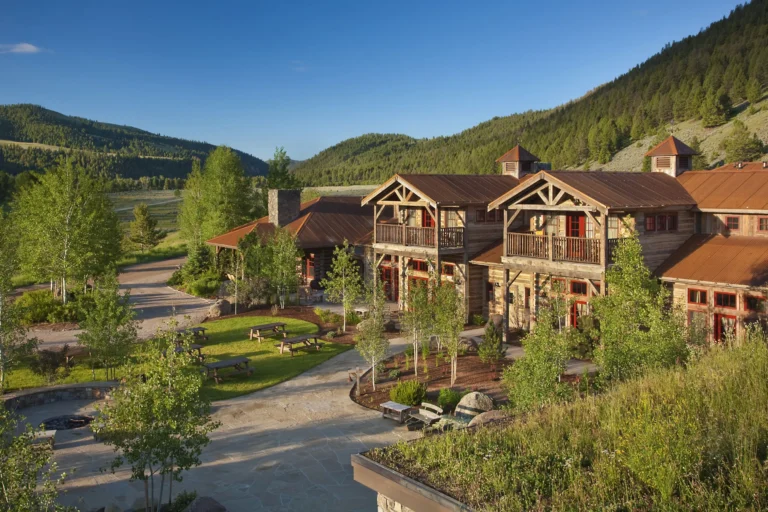
This framework evaluates how well a property’s physical structure complements its natural environment. A resort in the Arizona desert should not attempt to mimic a French chateau. True luxury leaders use “Biophilic Design” to blur the lines between indoor and outdoor spaces, utilizing local materials and light to ground the guest in a specific sense of place.
3. The Proprietary Experience Barrier
Does the resort offer something that cannot be replicated elsewhere? This could be exclusive access to a National Park, a private art collection, or a unique culinary program led by a world-renowned chef. If a resort’s experience can be easily duplicated by a mid-market competitor, it lacks the “defensible luxury” required to be considered among the best in the nation.
Key Categories and Regional Trade-offs
The US luxury market is geographically fragmented, with each region offering distinct structural advantages and drawbacks.
| Category | Primary Benefit | Core Trade-off | Representative Region |
| The Mountain Ranch | Privacy, vast acreage, adventure. | Logistical complexity; high altitude. | Montana / Wyoming |
| The Coastal Estate | Classic service, maritime access. | High density; seasonal weather risks. | New England / Florida |
| The Desert Sanctuary | Wellness focus, stunning light. | Extreme heat; water scarcity issues. | Arizona / Southern Utah |
| The Island Enclave | Isolation, tropical biodiversity. | Long travel times; limited supply chain. | Hawaii / USVI |
| The Urban Landmark | High-tier tech, culinary density. | Noise pollution; lack of nature. | NYC / Chicago / LA |
Decision Logic: Intent-Based Selection
Choosing among the best luxury resorts in the US requires a hierarchical decision process:
-
Isolation vs. Integration: Do you want to be completely off-grid (The Ranch) or within walking distance of world-class dining (The Urban Landmark)?
-
Activity Density: Is the goal “active recovery” (The Desert Sanctuary) or “passive leisure” (The Coastal Estate)?
-
Climate Tolerance: Can your party handle the dry heat of the Southwest, or is the humidity of the Atlantic coast a non-starter?
Detailed Real-World Scenarios
Scenario A: The Multi-Generational High-Altitude Retreat
A family of twelve plans a week-long stay in the Tetons.
-
The Constraint: Range of ages from 6 to 82.
-
The Strategy: They opt for a “Managed Estate” within a larger resort, providing a private chef and dedicated concierge while retaining access to the resort’s spa and kids’ club.
-
Failure Mode: Selecting a resort with “vertical architecture” (lots of stairs/elevators) that hampers the mobility of older family members.
Scenario B: The Corporate Leadership Reset
A C-suite team of eight seeks a “dark-site” retreat for strategic planning.
-
The Strategy: They chose a wellness-focused desert resort that offers “digital detox” zones and high-end meeting “pods” integrated into the landscape.
-
Second-Order Effect: By removing traditional office stimuli, the team achieves a higher level of “divergent thinking” and psychological safety, yielding better strategic results than a standard boardroom setting.
Resource Dynamics: The Economics of the Ultra-High-End
The “cost” of a luxury resort is a multi-dimensional figure that includes the daily rate, “soft” costs (service charges, resort fees), and the opportunity cost of travel time.
Estimated Resource Commitment Table
| Tier | Daily Rate (Base) | Service Charge / Tips | Travel Logistics |
| The Legacy Grand | $1,200 – $2,500 | ~20% of the total bill | Accessible via major hubs |
| The Ultra-Boutique | $3,500 – $6,000 | Often included (flat fee) | Requires private charter / 4×4 |
| The All-Inclusive Wellness | $2,000 – $4,500 | Typically inclusive | Moderate (regional airports) |
In 2026, many of the best luxury resorts in the US have moved toward “Transparent Pricing” models, where the daily rate includes most amenities and gratuities. This reduces the “transactional friction” that can detract from the luxury experience. However, travelers should be wary of “Fee Creep,” where resorts add surcharges for everything from high-speed Wi-Fi to beach umbrella reservations.
Strategies for Access and Portfolio Management
Maximizing the value of a luxury resort portfolio involves a mix of relationship management and timing.
-
The “Preferred Partner” Protocol: Utilizing travel advisors who belong to invitation-only networks (e.g., Virtuoso, Four Seasons Preferred). These advisors can often secure room upgrades, early check-in, and property credits that are unavailable through direct booking.
-
The Shoulder-Season Arbitrage: Many elite US resorts have extreme price volatility. Visiting a Montana ranch in late September or a Florida enclave in early May can yield a 40% reduction in price with only a 10% reduction in weather quality.
-
Loyalty Ecosystem Integration: While many top-tier resorts are independent, brands like Aman, Rosewood, and Montage have created their own “ecosystems” that reward repeat guests with preferential treatment that goes beyond a simple points system.
-
The “Hidden Inventory” Inquiry: For peak periods (Christmas, Spring Break), the best suites are often not listed on websites. A direct call to the Director of Sales can reveal “unreleased” inventory reserved for high-value clients.
The Risk Landscape: Failure Modes in Luxury Hospitality
Even the most prestigious resorts are subject to systemic failures.
-
The “Corporate Homogenization” Risk: When a legendary independent resort is bought by a global conglomerate, there is often an initial “standardization” that kills the property’s unique charm and lowers staff morale.
-
The Over-Tourism Paradox: A resort’s popularity can lead to overcrowding in communal areas (spas, pools), effectively turning a “private sanctuary” into a “luxury mall.”
-
Ecological Fragility: Many of the best US resorts are located in areas vulnerable to wildfires, hurricanes, or coastal erosion. A traveler’s “contingency governance” must include robust travel insurance and a 48-hour cancellation strategy.
Governance and Long-Term Adaptation
For the serious traveler, a luxury resort strategy should be reviewed annually.
The Annual Review Checklist
-
Brand Quality Tracking: Has your favorite resort undergone a management change in the last 12 months?
-
Benefit Audit: Are you still getting value from your high-tier credit card’s hotel program?
-
Geographical Diversification: Are you over-indexed on one region (e.g., too many trips to Hawaii), missing out on new developments in the Southeast or Mountain West?
-
Health Alignment: Does the resort’s wellness offering still match your current fitness and recovery goals?
Measurement and Qualitative Evaluation Signals
How do you objectively measure if a resort truly belongs among the best? Look for these signals during the first two hours of your stay:
-
The “Name Recognition” Test: Do staff members greet you by name without looking at a tablet or clipboard? This indicates a high level of pre-arrival briefing.
-
The “In-Room Friction” Audit: Is the technology (lights, AC, TV) intuitive, or does it require a manual? True luxury is the absence of minor frustrations.
-
The “Hidden Detail” Signal: Look at the quality of the books in the room or the provenance of the local coffee. If these are “off-the-shelf” or generic, it suggests a lack of intellectual depth in the management.
Common Misconceptions and Strategic Myths
-
“New is always better.” In luxury, a new resort often goes through a 12-to-18-month “bedding-in” period where service is inconsistent. Legacy properties often have much more stable service cultures.
-
“The most expensive room is the best.” Often, a mid-tier suite with a better view or more privacy is superior to the “Presidential Suite” located near the elevators.
-
“Resort fees are non-negotiable.” While difficult to remove, if a resort is under-delivering on the services the fee supposedly covers (e.g., a closed pool or broken Wi-Fi), a polite request to the Front Office Manager can often result in a waiver.
-
“The concierge knows best.” In the age of social media, many concierges are incentivized to recommend specific “Instagrammable” spots. Independent research is still required for authentic local dining.
Conclusion
The pursuit of the best luxury resorts in the US is a study in the intersection of environment and human service. As we move deeper into the 2020s, the definition of excellence in this field continues to narrow around properties that offer profound privacy, ecological integrity, and effortless service. A resort is no longer just a backdrop for a vacation; it is a complex system designed to facilitate psychological and physical restoration. By applying a rigorous, analytical framework to the selection process—and remaining wary of the pitfalls of corporate homogenization—the modern traveler can ensure that their time and capital are invested in experiences that provide a genuine, high-yield return on leisure.