Loyalty Program Overview: The 2026 Definitive Guide to Retention
The mechanics of consumer retention have evolved from primitive transactional incentives into a sophisticated discipline of behavioral economics and data orchestration. In the contemporary commercial landscape, a loyalty initiative is no longer a peripheral marketing tactic but a core operational engine. It functions as a bilateral contract between an enterprise and its constituents, where the currency of engagement is exchanged for a mixture of tangible value and psychological status. As we navigate the complexities of the 2026 economy, the efficacy of these systems is increasingly measured by their ability to foster “Emotional Lock-in” rather than mere “Transactional Inertia.”
At its most fundamental level, a retention system is an exercise in managing the lifetime value (LTV) of a participant. Businesses operate in a climate of escalating acquisition costs; therefore, the ability to build a “defensive moat” around an existing customer base is a prerequisite for long-term fiscal solvency. However, the design of these moats requires a forensic understanding of human motivation. A system that relies solely on discounting is often a “race to the bottom” that erodes brand equity, whereas a system that integrates seamlessly into the user’s lifestyle creates a durable value proposition that transcends price sensitivity.
This article provides a flagship inquiry into the structural reality of modern engagement frameworks. We will move past the superficiality of “points and perks” to examine the systemic evolution of these programs, the cognitive biases they leverage, and the logistical challenges inherent in maintaining them. From the historical lineage of copper tokens to the 2026 rise of decentralized, blockchain-adjacent loyalty ledgers, this serves as a definitive reference for understanding the hidden machinery of brand allegiance.
Understanding “loyalty program overview”
To engage with a loyalty program overview in the current era is to acknowledge that the definition of “loyalty” has fractured. For the enterprise, it is a data-harvesting mechanism; for the consumer, it is a quest for optimization; for the regulator, it is a landscape of privacy concerns and “dark patterns.” A primary misunderstanding in the field is the belief that loyalty can be “bought” through a linear rewards schedule. In reality, modern programs function as complex ecosystems where the value is often non-linear and subjective.
Oversimplification risks in this domain are significant. Many observers treat all rewards programs as a singular entity, failing to distinguish between “frequency programs” (designed to increase the number of transactions) and “loyalty programs” (designed to deepen the brand relationship). The former is a logistical challenge of scale and margin management, while the latter is a psychological challenge of identity and community. When these two objectives are conflated, the resulting program often fails to achieve either, leading to high “churn” rates and diluted brand resonance.
Furthermore, we must address the “Optimization Paradox.” As consumers become more sophisticated—aided by digital aggregators and automated tools—the “gap” that businesses rely on (where points are earned but never redeemed) is narrowing. This “Breakage” was historically a source of profit for companies, but in 2026, it is a liability. A successful overview of this sector must therefore account for the shift toward “Liquid Loyalty,” where the barriers to redemption are lowered to increase the perceived utility of the system, thereby driving higher long-term engagement despite lower immediate margins.
Deep Contextual Background: The Evolution of Retention
The trajectory of loyalty systems can be categorized into four distinct epochs of systemic evolution.
The Era of Tangible Tokens (1890s–1950s)
The origin of the modern system lies in the “S&H Green Stamps” model. Retailers issued physical stamps with purchases, which consumers collected in booklets to be exchanged for household goods. This era established the “Deferred Gratification” model, where the reward was a distant, tangible object of desire. It relied on the physical friction of collecting to ensure that only the most dedicated participants reached the redemption threshold.
The Standardization of Miles (1980s–2000s)
The 1981 launch of American Airlines’ AAdvantage program transformed loyalty into a digital currency. By commoditizing “miles,” airlines created a parallel economy. This period saw the rise of the “Status Tier,” introducing social hierarchy into the loyalty equation. The goal was no longer just the reward, but the exclusive access (lounges, priority boarding) that signaled one’s value to the network.
The Data-Centric Personalization (2010s–2020s)
With the advent of high-velocity data processing, loyalty programs transitioned into sophisticated “Surveillance Capitalism” nodes. The focus shifted from what the customer did to what the customer would do next. Predictive analytics allowed for “Surprise and Delight” tactics, where rewards were issued not just for past behavior, but as a preemptive strike against competitors.
The Ecosystem Integration (2024–Present)
Today, we occupy an era of “Platform Loyalty.” Individual programs are merging into interoperable ecosystems. A purchase at a grocery store might earn points toward a streaming subscription or a sustainable energy credit. This era is defined by “Frictionless Utility,” where the loyalty program is an invisible layer of the user’s digital identity, automatically applying benefits across a broad network of partner brands.
Conceptual Frameworks and Mental Models
To manage a retention system with professional rigor, one should employ specific mental models that go beyond the balance sheet.
1. The “Endowed Progress” Effect
This psychological framework suggests that people are more likely to complete a goal if they feel they have already made progress toward it. A loyalty program that grants “bonus points” upon signup—effectively starting the user at 20% toward their first reward—sees significantly higher completion rates than one starting at zero. It leverages the human aversion to leaving a task unfinished.
2. The “Loss Aversion” Tier Model
Status tiers (Gold, Platinum, Diamond) function primarily through the threat of loss. Once a participant achieves a certain level of privilege, the psychological pain of “dropping down” a tier is far greater than the pleasure of achieving it in the first place. This creates a “maintenance behavior” where the user continues to spend solely to preserve their existing status.
3. The “Paradox of Choice” in Redemptions
If a program offers too many redemption options, the cognitive load on the user becomes a barrier. A superior loyalty framework utilizes “Curated Optionality”—providing a wide range of rewards but surfacing only those most relevant to the individual’s historical data. This reduces “Redemption Friction” and increases the velocity of the points economy.
Taxonomy of Loyalty Categories and Variations
Loyalty systems are not monolithic; they are categorized by their underlying incentive structure and the type of behavior they seek to modify.
| Category | Primary Mechanism | Core Trade-off | Ideal Use Case |
| Point-Based | Spend $X to earn Y points | High transparency; low brand differentiation | Grocery, fuel, high-frequency retail |
| Tiered/Status | Threshold-based benefits | High aspirational value; high maintenance cost | Airlines, hotels, and luxury goods |
| Paid/Subscription | Fee for immediate perks | High “Upfront” commitment; high churn risk | Amazon Prime, Walmart+, premium fashion |
| Coalition | Shared points across brands | High utility; brand dilution risk | Travel alliances, banking ecosystems |
| Value-Based | Rewards linked to social causes | High emotional resonance; lower “greed” incentive | Sustainable brands, B-corporations |
| Gamified | Challenges and badges | High engagement; can feel trivializing | Fitness apps, coffee chains |
Decision Logic: Selecting the Optimal Architecture
The choice of category depends on the “Transaction Velocity.” A low-frequency, high-margin business (like a luxury watch manufacturer) should avoid point-based systems in favor of exclusive status or community-based rewards. Conversely, a high-frequency, low-margin business (like a convenience store) requires the immediate, clear feedback of a points-for-purchase model to drive daily habits.
Detailed Real-World Scenarios
Scenario A: The “Retention Pivot”
A regional airline faces aggressive competition from a low-cost carrier.
-
The Adjustment: Instead of lowering fares, they introduce a “status challenge” that allows frequent flyers from the competitor to match their status immediately if they book three flights in 30 days.
-
The Result: By leveraging “Endowed Progress,” they capture high-value business travelers who were previously hesitant to switch due to their accumulated perks elsewhere.
Scenario B: The “Breakage Crisis”
A retail chain discovers that 40% of its points are never redeemed, leading to a massive liability on its balance sheet.
-
The Adjustment: They implement “Micro-Redemptions,” allowing users to use small amounts of points for immediate, low-cost items like a coffee or a charitable donation at the point of sale.
-
The Result: Liability is reduced, and the “velocity” of the program increases, making the points feel “alive” and valuable to the casual user.
Planning, Cost, and Resource Dynamics
The “Total Cost of Ownership” (TCO) of a loyalty program is frequently underestimated. It is not merely the cost of the rewards, but the cost of the “Infrastructure of Allegiance.”
The Loyalty Expenditure Matrix
| Resource Tier | Cost Factor | Description | Variability |
| Direct Liability | Reward Fulfillment | The actual cost of the free product or service | High (based on redemption rates) |
| Technological | Platform Maintenance | CRM integration, security, and mobile UX | Fixed/Semi-variable |
| Operational | Staff Training | Ensuring front-line employees can manage the system | Moderate |
| Communication | Lifecycle Marketing | Email, SMS, and push notifications to drive earn/burn | High (based on frequency) |
| Data/Analytics | Insight Generation | The cost of turning data into actionable behavior models | Fixed |
The Hidden Cost of “Dilution”: When a loyalty program is too generous, it can devalue the core product. If a customer only buys when they have a reward, the business has successfully built a “promotion-sensitive” customer, not a “loyal” one. This opportunity cost must be factored into the long-term ROI calculations.
Tools, Strategies, and Support Systems
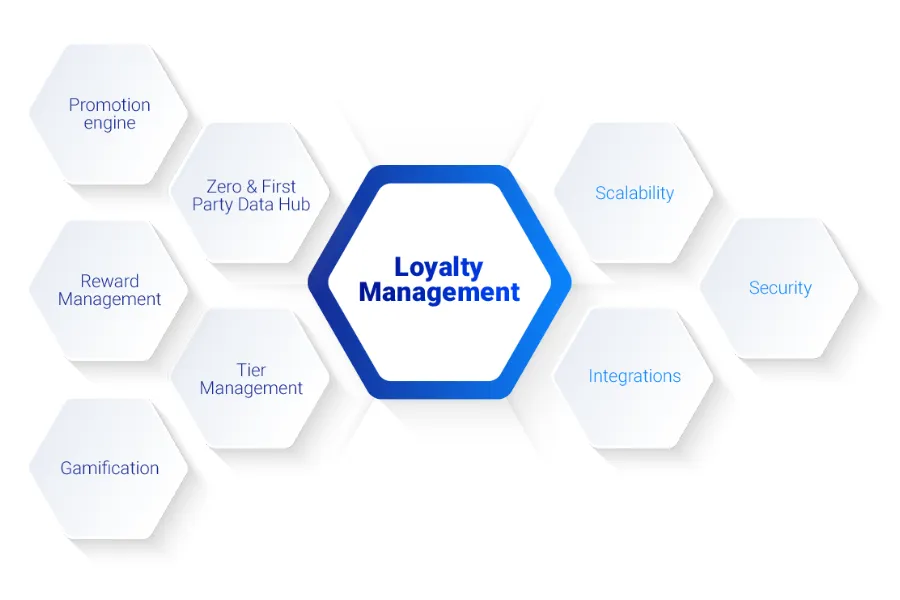
In 2026, the “Defensive Infrastructure” of a loyalty program relies on a stack of integrated technologies.
-
Headless Loyalty Engines: These allow brands to decouple the loyalty logic from the e-commerce platform, enabling benefits to be applied across web, mobile, and physical POS systems seamlessly.
-
Zero-Party Data Catchment: Strategies designed to encourage users to voluntarily share preferences (e.g., surveys, preference centers) in exchange for personalized rewards.
-
Real-Time Fulfillment APIs: Ensuring that as soon as a point is earned, it is visible and usable, reducing the “Recognition Lag” that often kills momentum.
-
AI-Driven Propensity Models: Tools that predict which users are at risk of churning and trigger “Resuscitation Rewards” before the user leaves the ecosystem.
-
Fraud Mitigation Layers: Protecting the “Points Economy” from organized theft, which has become a significant threat as points become more liquid and valuable.
-
Sustainability Ledgering: Systems that track the carbon footprint of redemptions, allowing users to choose “Green Rewards” (e.g., carbon offsets instead of a physical gift).
Risk Landscape and Failure Modes
Loyalty programs are high-leverage systems; when they fail, they fail spectacularly.
-
The “Devaluation Death Spiral”: When a program reduces the value of points to save costs, users feel cheated. This leads to mass redemptions (a “run on the bank”) followed by total disengagement.
-
Technological Fragility: If the loyalty system goes down at the point of sale, it creates immediate friction for the most valuable customers. In a physical retail environment, this is an “unforced error” that can destroy years of goodwill.
-
Privacy Overreach: In 2026, the regulatory landscape (GDPR, CCPA, and their successors) is unforgiving. A loyalty program that feels “creepy” or mismanages user data faces both legal penalties and brand tarnishment.
-
Complexity Paralysis: If a user needs a manual to understand how to earn a reward, they will simply ignore the program. Complexity is the enemy of retention.
Governance, Maintenance, and Long-Term Adaptation
A loyalty program is a living organism. It requires a “Governance Cycle” to ensure it remains aligned with both market conditions and brand objectives.
The Quarterly Loyalty Audit
-
[ ] Redemption Velocity: Are people using their points? (A stagnant pool of points is a sign of a failing program.
-
[ ] Tier Distribution: Is the “Elite” tier too crowded? (If everyone is VIP, no one is.
-
[ ] Competitive Parity: How does our “Value Back” ratio compare to the nearest three competitors?
-
[ ] Data Integrity: Are we collecting data that we actually use, or just hoarding noise?
Adjustment Triggers
If the program’s “Net Promoter Score” (NPS) among the top 10% of users drops by more than 5 points in a single quarter, it should trigger an immediate “Program Refresh”—not a change in rewards, but a change in the communication or service layer.
Measurement, Tracking, and Evaluation
Traditional metrics like “Enrollment Numbers” are lagging indicators and often misleading. To evaluate a program’s health, one must look at “Behavioral Delta.”
-
The “Loyalty Lift”: Comparing the spend of a program member to a non-member after adjusting for pre-enrollment behavior. This isolates the actual impact of the program.
-
Point Velocity: The time between a point being earned and it being burned. High velocity indicates high engagement and trust in the system.
-
The “Churn-to-Redemption” Ratio: If users redeem their points and then immediately stop spending, the program is facilitating an “exit” rather than a “lock-in.”
Documentation Examples
-
The Cohort Maturity Map: Tracking how the behavior of users who joined in 2024 differs from that of those who joined in 2026.
-
The Friction Log: A qualitative record of where users get stuck in the redemption process, used to inform UX updates.
Common Misconceptions and Strategic Myths
-
Myth: “Loyalty programs are for saving money.” Correction: For the business, they are for predicting behavior. The discount is a fee paid for the data and the guaranteed future transaction.
-
Myth: “Points should never expire.” Correction: Expiration is a critical tool for managing balance sheet liability and creating a sense of urgency. The key is “Transparent Expiration” with multiple warnings.
-
Myth: “A loyalty program can fix a bad product.” Correction: Loyalty programs are “Force Multipliers.” If the product is 0, the result will still be 0. They only work when the core value proposition is already solid.
-
Myth: “More data is always better.” Correction: Excess data creates “Analysis Paralysis.” The goal is insight, not volume.
Ethical and Practical Considerations
In the 2026 commercial environment, the ethics of loyalty are under scrutiny. We must consider the “Digital Divide”: are loyalty programs penalizing those who cannot afford the “subscription” to the brand, or those who choose not to be tracked? Furthermore, there is the question of “Cognitive Manipulation”—at what point does a gamified challenge become an addictive dark pattern? High-integrity brands address these issues through “Radical Transparency,” allowing users to opt out of data tracking while still participating in the basic value exchange, and by ensuring that the program promotes healthy, sustainable consumption patterns.
Conclusion
The architecture of allegiance is never truly finished. A robust loyalty system is a dynamic equilibrium between the needs of the enterprise and the desires of the individual. As we have seen in this forensic inquiry, success in this domain requires a departure from the “set it and forget it” mentality of the past. It demands an obsession with “Friction Removal,” a respect for the psychological power of status, and a commitment to data-driven empathy. In a world of infinite choice, the loyalty program is the ultimate tool for narrowing the consumer’s focus, creating a sanctuary of familiarity and value amidst the noise of the global marketplace. The brands that master this silent machinery in 2026 will not just survive; they will define the next century of human-commercial interaction.