Best Wilderness Lodges United States: The 2026 Definitive Pillar Guide
The American wilderness lodge is a profound architectural and psychological anomaly. In an era of hyper-connectivity and urban density, these structures serve as critical metabolic filters, separating the inhabitant from the noise of the “grid” and reintroducing them to the rhythms of the primary landscape. As of 2026, the demand for high-integrity wilderness retreats has surpassed simple recreation; it has become a quest for “Analog Recovery”—a systemic pursuit of environments where the absence of digital noise and the presence of raw geological scale allow for cognitive restoration.
To engage with the concept of a wilderness lodge today is to acknowledge the tension between comfort and consequence. These are not merely hotels in scenic locations; they are high-stakes operational environments. Whether perched on a glaciated fjord in Alaska or nestled within the ancient hardwood canopies of the Great Smoky Mountains, the best wilderness lodges function as self-contained life-support systems. They navigate the complexities of remote logistics, off-grid energy generation, and the ethical responsibility of occupying fragile ecological niches.
This article serves as a definitive reference for those seeking more than a reprieve. It is designed to dismantle the marketing hype surrounding “luxury camping” and replace it with a forensic understanding of how to identify and navigate the best wilderness lodges in the United States. By examining the historical evolution of high-altitude and deep-forest retreats, the mental models required for successful planning, and the compounding risk landscapes inherent in extreme isolation, we provide a structural framework for experiencing the American backcountry with intellectual and physical rigor.
Understanding “best wilderness lodges united states”
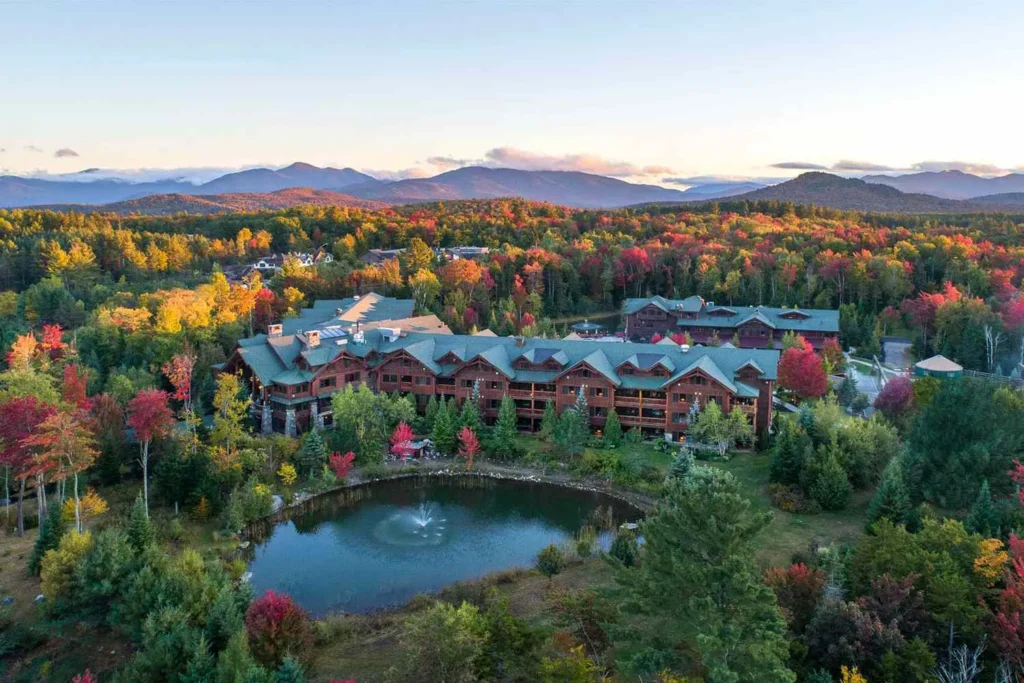
The identification of the best wilderness lodges in the United States is a multi-dimensional optimization exercise. For the discerning traveler, “best” is not a superlative of popularity, but a metric of alignment between the lodge’s operational integrity and the surrounding wilderness’s “Primary State.” One must distinguish between “Scenic Hotels”—properties with high infrastructure density that happen to have a view—and “True Wilderness Lodges,” where the environment dictates the property’s logistics, design, and guest experience.
A common misunderstanding in this space is the belief that high-end amenities are antithetical to a “true” wilderness experience. In reality, the technical capability required to provide a five-course meal or a heated floor 200 miles from the nearest paved road is a testament to the lodge’s mastery of its environment. The risk of oversimplification lies in ignoring the “Logistical Moat”: how much friction must be overcome to reach the site? If a lodge is accessible via a casual weekend drive, its “Wilderness Yield” is fundamentally different from a site that requires a bush plane, a multi-day hike, or a marine crossing.
Furthermore, we must account for the “Permeability of the Structure.” A superior lodge does not insulate you from the wilderness; it integrates you into it. This is achieved through architectural choices—such as “silent” ventilation systems that don’t drown out the sounds of the forest, or light pollution mitigation that preserves the integrity of the night sky. True mastery of this category requires a departure from “resort thinking” toward “ecological immersion,” where the structure is respected as a temporary guest in a permanent landscape.
Historical Evolution: From Grand Lodges to Regenerative Refuges
The development of the American wilderness lodge has progressed through three systemic phases:
1. The Gilded Expansion (1890–1930)
This era was characterized by the “National Park Style” or “Parkitecture.” Industrialists and railroad magnates funded the creation of massive log-and-stone monuments like the Old Faithful Inn or the El Tovar. These lodges were designed to “civilize” the wild, bringing European-style luxury to the American frontier. The value proposition was grand scale and social prestige within a rugged context.
2. The Recreational Boom (1950–2000)
Post-war prosperity and the expansion of the interstate highway system led to a democratization of the wilderness. This phase saw the rise of the “Family Fishing Camp” and the “Ski Chalet.” The focus shifted toward throughput and high-capacity recreation. While accessibility increased, the “Logistical Moat” shrank, leading to the first waves of environmental degradation and the “Scenic Crowding” we see in popular hubs today.
3. The Regenerative Integration (2010–2026)
We now occupy an era defined by “Eco-Minimalism” and “Indigenous Stewardship.” Contemporary leaders in the field, such as Alaska’s Ultima Thule or Tennessee’s Blackberry Mountain, prioritize low-impact footprints and metabolic recovery. The value is no longer found in the size of the lobby, but in the purity of the air, the silence of the surroundings, and the property’s commitment to restoring the land it occupies.
Conceptual Frameworks and Mental Models
To evaluate wilderness lodging with professional judgment, one should employ these specific frameworks:
The “Access-to-Isolation” Ratio
Calculate the time and energy required to travel from the nearest commercial airport to the lodge. The higher the ratio, the more “protected” the experience. A lodge requiring a private floatplane (e.g., in the Wrangell-Saint Elias wilderness) offers a higher “Privacy Dividend” than one accessible by a shuttle bus.
The “Analog-Digital” Delta
Evaluate the lodge based on its “Forced Unplugging.” In 2026, the true luxury is the absence of cellular signals and high-speed Wi-Fi. A superior wilderness lodge provides “Digital Friction,” encouraging guests to shift their focus from the global network to the immediate local biome.
The “Carry-In, Carry-Out” Operational Scale
Understand the lodge’s “Metabolic Footprint.” Does it generate its own solar power? Does it utilize an on-site “Bio-Cycle” waste system? The best lodges are those that function as “Closed-Loop” systems, minimizing their reliance on long-distance supply chains and reducing their impact on the local watershed.
The Taxonomy of Wilderness Lodging: Categories and Trade-offs
A comprehensive reference requires segmenting the wilderness landscape into functional categories.
| Lodge Archetype | Representative Geography | Primary Value | Core Trade-off |
| High-Alpine Granite | San Juan Mts, CO; High Sierras, CA | Monumental vistas, clear air | Extreme UV, thin oxygen |
| Glaciated Marine | Kenai Fjords, AK; Glacier Bay, AK | Whales, calving ice, coastal fog | High humidity, marine cold |
| Temperate Cloud Forest | Great Smokies, TN/NC | Biodiversity, lush textures | Frequent rain, high insect density |
| Boreal Lakefront | Boundary Waters, MN; Adirondacks, NY | Freshwater silence, fall color | Short season, winter freezes |
| High Desert Mesa | Canyonlands, UT; Sedona, AZ | Dramatic light, unique geology | Water scarcity, temperature swings |
Decision Logic: The “Operational Floor”
When selecting a lodge, one must determineone’sr “Threshold of Friction.” Do you require a climate-controlled suite with a private chef, or is the escape defined by the weight of a pack and a wood-burning stove? The most successful itineraries acknowledge that physical discomfort (e.g., the “sweat-chill” cycle of mountain hiking) is often the entry price for the most profound psychological breakthroughs.
Operational Real-World Scenarios
Scenario A: The “Shoulder Season” Pivot
A traveler seeks the solitude of the White Mountains (NH) but wants to avoid the “Leaf Peeping” crowds of October.
-
The Selection: A rustic lodge in early November (“Stick Season”).
-
The Dynamics: While the foliage is gone, the lodge rates drop by 40%, the trails are empty, and the first dusting of snow provides a minimalist beauty.
-
Outcome: A high-utility, low-cost immersion in a world-class landscape.
Scenario B: The “Base-Camp” vs. “Outpost” Choice
A family wants to experience Denali (AK) but finds the “Inside the Park” lodges overbooked.
-
The Selection: A fly-in lodge in the neighboring Alaska Range.
-
The Dynamics: They trade the “Name Brand” park access for a private glacier landing and 360-degree views of the mountain that 99% of visitors never see.
-
Outcome: Superior privacy and a “Deep Wild” experience without the regulatory friction of National Park crowds.
Planning, Cost, and Resource Dynamics
The “Total Cost of Ownership” of a wilderness lodge stay is often obscured by hidden variables. Unlike a standard hotel, a remote lodge’s pricing must account for the “Logistical Tax”—the extreme cost of transporting food, fuel, and staff to a location without roads.
Wilderness Resource Matrix (2026 Projections)
| Budget Category | % of Total Cost | Direct Driver | Opportunity Cost |
| Transport (Air/Marine) | 25% | Fuel surcharges, bush pilots | “Travel Days” vs. “Lodge Days” |
| Lodging/Infrastructure | 45% | Off-grid maintenance, staff: guest ratio | Privacy vs. Socialization |
| Guides & Technical Gear | 15% | Safety certifications, specialized tools | Skill acquisition vs. Leisure |
| Nutrition & Energy | 15% | Locally sourced vs. Flown-in | Metabolic recovery speed |
The Water-Weight Trade-off: In desert or high-alpine lodges, the most critical resource is water. Lodges that invest in “Atmospheric Water Generators” or deep-bore wells provide a higher level of “Life-Support Security” for the guest. Carrying water on a day-hike is a basic task, but the lodge’s ability to provide a hot shower at 10,000 feet is a masterclass in resource management.
Tools, Strategies, and Defensive Infrastructure
To achieve a “Master Class” wilderness experience, one must utilize a specific support system:
-
Personal Locator Beacons (PLB): A non-negotiable tool for any stay outside of “Resort Bounds.” Satellite connectivity (e.g., Garmin inReach) is the ultimate safety net.
-
Topo-Mapping Stack: Utilizing 3D terrain modeling (Gaia GPS) to visualize “Sun-Exposed” vs. “Shaded” slopes for heat management during day excursions.
-
Layering Systems: Utilizing the “three-layer” rule (wicking base, insulating mid, weatherproof shell) to manage the “Sweat-Chill” cycle in variable mountain climates.
-
Permit Arbitrage: Using notification services to snag cancelled permits for high-demand backcountry zones like the Enchantments or Zion.
-
Biometric Monitoring: Tracking “Heart Rate Variability” (HRV) to assess how the body is responding to altitude or cold stress, allowing for adjusted activity levels.
-
“Hard Shell” Luggage: Waterproof, dust-proof cases are essential for small aircraft or boat transfers where gear is exposed to the elements.
Risk Landscape: Failure Modes in Remote Environments
The pursuit of the best wilderness lodges in the United States is inherently linked to risk management.
-
Hypothermia (The “Wet-Cold” Trap): Most cases occur at 40-50°F, not sub-zero. A rainy day at elevation, combined with cotton clothing, is a lethal combination.
-
Dehydration and Altitude Sickness: At high altitude, you lose moisture through respiration twice as fast as at sea level. By the time you feel thirsty, you are already 2% dehydrated, increasing the risk of AMS (Acute Mountain Sickness).
-
Wildlife Encroachment: In 2026, “Bear-Aware” protocols are mandatory. Failure to use bear canisters or proper food storage leads to the “Euthanization” of local wildlife—a permanent ethical failure.
-
Connectivity Hubris: Relying on a smartphone for navigation without a physical backup. In the “Deep Wild,” battery failure or screen cracking transforms a mapping tool into a glass paperweight.
Governance and Long-Term Adaptation
A single trip is an event; a lifetime of wilderness exploration is a governance process.
The Annual Alpine Audit
-
Gear Stress Test: Did my boots hold up? Is my shell still waterproof after UV exposure?
-
Skill Refresh: Do I remember how to self-arrest with an ice axe? Can I read a topographical map without a phone?
-
Impact Assessment: Did I leave any trace? Did I contribute to trail erosion or “Social Trail” creation?
-
Destination Diversity: Am I returning to the same “Safe” lodges, or am I expanding my “Biorealm” literacy into new, more challenging terrains?
Measurement, Tracking, and Evaluation
How do you objectively evaluate if a lodge experience was successful?
-
Quantitative (The “Wilderness Pulse”): How many hours passed between seeing another human not associated with the lodge? (Target for “True Escape”: > 6 hours).
-
Qualitative (The “Cognitive Reset”): Does the brain still “loop” on work tasks, or has the focus shifted entirely to immediate physical needs (foot placement, breathing, temperature)?
-
The “Lichen Signal”: The presence of certain lichens (e.g., Usnea) is an indicator of air purity. High-quality wilderness stays should be rich in these sensitive bio-indicators.
Common Misconceptions and Strategic Myths
-
“Summer is the best time for mountains.” For many, the high heat and “Bug Season” (June/July) make summer the worst time. Late August/September provides the best balance of clear air and stable weather.
-
“Mountain water is pure.” Even the clearest stream in the Tetons can carry Giardia. Treatment or lodge-provided filtration is always mandatory.
-
“The higher the peak, the better the view.” Mid-level peaks often offer better views of the highest peaks, providing a more dramatic sense of scale.
-
“Wilderness lodges are for ‘Outdoorsy’ people only.” The most successful lodges specialize in “Gentle Immersion,” allowing someone with zero experience to safely experience the scale of the wild through expert guidance and robust infrastructure.
Ethical and Practical Considerations
The wilderness is currently facing a “Popularity Crisis.” Overtourism leads to compacted soils, polluted water sources, and the displacement of sensitive species like the Pika or Grizzly. As we seek the best wilderness lodges the United States offers, we must adopt a “Stewardship” mindset. This includes following “Leave No Trace” principles religiously and supporting lodges that prioritize conservation over development. The “Best” lodge is one that remains unchanged by our presence—where we are merely observers in a system that would flourish without us.
Conclusion
The pursuit of the American wilderness lodge is a cathedral of stone, wood, and light that demands both humility and high-level technical preparation. These structures are more than just places to sleep; they are gateways to a fundamental human experience that is increasingly rare: the experience of being “small” in the face of nature’s indifference. Whether it is a marine lodge in Alaska or a high-desert retreat in Utah, the vertical and horizontal sanctuaries of the American wild remain our most vital psychological assets. By moving beyond the superficial and embracing the forensic details of remote travel, we ensure that these escapes remain resilient, accessible, and profoundly transformative for the next century of explorers.