Top Island Getaways in America: The 2026 Definitive Strategy Guide
The American island landscape is a study in geological and cultural heterogeneity. For the modern traveler, an island represents a fundamental rupture from the continental “grid”—a distinct ecosystem where the constraints of geography dictate the rhythm of commerce, social interaction, and environmental preservation. As we navigate 2026, the demand for these isolated geographies has shifted from simple sun-seeking toward a more complex pursuit of “spatial autonomy” and ecological immersion.
The United States possesses over 18,000 named islands, ranging from the volcanic drama of the Central Pacific to the glaciated archipelagos of the Pacific Northwest and the subtropical coral cays of the Florida Straits. To engage with these locations as mere vacation spots is to ignore the structural complexity of insular living. Each island is a closed-loop system, where the cost of logistics, the fragility of the power grid, and the scarcity of fresh water create a unique operational environment for the visitor.
This article functions as a definitive pillar for those seeking to deconstruct the mechanics of high-value island travel. We will move beyond the superficiality of “beach rankings” to explore the systemic factors—regulatory, logistical, and environmental—that define the most resilient and rewarding insular experiences. From the seasonal ebbs of the Maine coast to the year-round pressures of the Hawaiian chain, we provide a forensic framework for understanding the vertical and horizontal complexities of the premier island destinations within the domestic sphere.
Understanding “top island getaways in america”
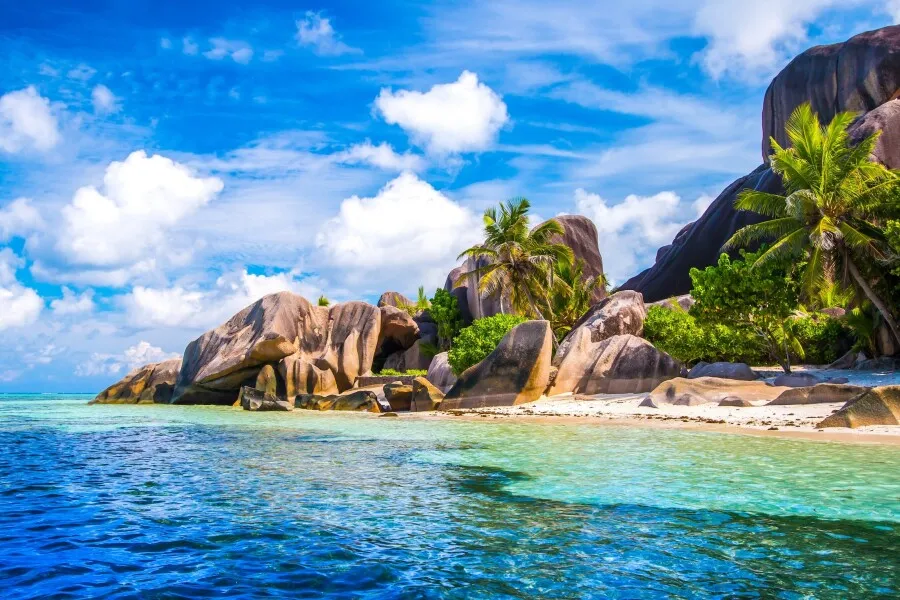
To categorize the top island getaways in America, one must first address the “Island Paradox”: the very isolation that creates the appeal also creates the friction. From a multi-perspective view, a top-tier island is not necessarily the one with the softest sand, but the one that manages its “carrying capacity” most effectively. Oversimplification in this space often leads travelers to over-touristed hubs where the infrastructure is buckling under demand, resulting in a degraded experience that mirrors the urban congestion they sought to escape.
The identification of a premier island getaway requires a forensic look at the “Access-to-Isolation Ratio.” An island like Manhattan is an insular geography by definition, but it lacks the psychological “unplugging” associated with the genre. Conversely, an uninhabited key in the Dry Tortugas offers absolute isolation but lacks the support systems required for a sustained stay. The “top” getaways are those that occupy the “Golden Mean”—providing enough infrastructure for health and safety while maintaining a distinct cultural and environmental barrier from the mainland.
Furthermore, we must consider the risk of “Aesthetic Homogenization.” Modern resort development often seeks to impose a generic “tropical” or “nautical” aesthetic regardless of the local ecology. A sophisticated traveler avoids these traps by seeking out islands where the architecture and pace of life are dictated by the local biome. Whether it is the salt-box houses of Nantucket or the stilt-homes of the Outer Banks, the integrity of the island’s character is a primary indicator of its long-term value as an authoritative asset in travel.
Contextual Evolution: From Strategic Outposts to Ecological Refuges
The American island narrative has moved through three distinct systemic phases. The Industrial/Strategic Phase (1860–1940) viewed islands through the lens of utility. Islands like Alcatraz, Ellis Island, or the various military installations in the Pacific were chosen for their natural moats. Travel to these locations was restricted, functional, and often involuntary.
The Commercial Expansion Phase (1950–2010) saw the rise of the “Resort Island.” This era was defined by the massive build-out of Waikiki, the Florida Keys, and Hilton Head. Geography was treated as a backdrop for high-density hospitality. During this period, “getting away” became a commoditized product, often divorced from the actual geography of the island itself.
Today, we are in the Ecological Stewardship Phase (2010–Present). Rising sea levels and the “overtourism” backlash have transformed how islands are managed. We now see a move toward “Regenerative Travel,” where the goal is to leave the island’s ecosystem better than it was found. This has led to the rise of “Managed Access” islands, where visitation is capped by permit systems or high “Impact Fees,” ensuring that the island remains a refuge for both humans and endemic species.
Conceptual Frameworks and Mental Models
To analyze island travel with professional rigor, one should employ these specific frameworks:
1. The “Logistical Moat” Framework
The difficulty of reaching an island is directly proportional to its preservation. If an island is accessible by a bridge, it is functionally part of the mainland. If it requires a ferry, it maintains a degree of separation.
2. The “Closed-Loop” Mental Model
Everything on an island—food, fuel, waste—must be imported or exported. Understanding the “Closure” of the system helps the traveler anticipate costs and adjust their consumption. A high-value traveler acts as a “Net-Zero” participant in the island’s delicate resource balance.
3. The “Bioregional Alignment” Matrix
Islands are often the last holdouts of unique flora and fauna. This model evaluates an island by its “Endemic Integrity.” Is the experience defined by the local environment (e.g., the wild horses of Assateague or the monk seals of Kauai), or is it an artificial imposition?
Taxonomy of Insular Experiences: Categories and Trade-offs
A rigorous classification of the island landscape reveals distinct archetypes, each with its own set of strategic trade-offs.
| Category | Representative Geography | Primary Value | Core Trade-off |
| Volcanic High-Islands | Hawaii (Kauai, Maui) | Dramatic terrain, microclimates | High cost, complex logistics |
| Barrier Islands | Outer Banks, NC; Sanibel, FL | Sandy beaches, easy water access | High vulnerability to storms |
| Boreal/Glaciated | San Juan Islands, WA; Mount Desert, ME | Rugged cliffs, whale watching | Short seasons, cold water |
| Subtropical Keys | Florida Keys; US Virgin Islands | Diving, sailing, year-round sun | Limited land area, humidity |
| Great Lakes Islands | Mackinac, MI; Apostle Islands, WI | Historic preservation, no cars | Freshwater focus, winter freezes |
Realistic Decision Logic
When selecting among the top island getaways in America, the traveler must apply a “Constraint-First” logic:
-
The Seasonality Constraint: Is the destination viable during the intended window? (e.g., avoiding the Atlantic Hurricane Season from June to November).
-
The Mobility Constraint: Is the island walkable, or does it require a golf cart, bike, or rental car? (e.g., Mackinac Island’s total ban on motor vehicles).
-
The Utility Constraint: Does the island provide the necessary “Bio-Aesthetic” (e.g., the need for lush greenery vs. stark, rocky vistas)?
Operational Real-World Scenarios
Scenario A: The “Shoulder Season” Pivot (Nantucket)
A traveler seeks the refined isolation of the Massachusetts coast but wishes to avoid the summer peak congestion.
-
The Decision: Visiting in late September (“Second Summer”).
-
The Logic: Water temperatures remain high from the summer heat, but ferry demand drops by 60%.
-
Second-Order Effect: Better access to high-demand culinary venues and a significant reduction in lodging rates, while maintaining the “Preppy” cultural atmosphere.
Scenario B: The “Multi-Modal” Ascent (Kauai)
A traveler wants to experience the Na Pali coast without the impact of a massive tour boat.
-
The Decision: Booking a permit for the Kalalau Trail or a doorless helicopter survey.
-
Failure Mode: Attempting to drive to view-points during rain events, resulting in road closures and “Time Loss.”
-
Success Indicator: Successfully timing the hike with a low-tide window for sea cave exploration.
Planning, Cost, and Resource Dynamics
Island economics are fundamentally “Distorted.” The lack of competition and the cost of transport create a “Premium” on all goods and services.
Resource Allocation Table (Estimated 2026 Prices)
| Resource Category | Mainland Price (Index) | Island Price (Index) | Mitigation Strategy |
| Gallon of Fuel | 1.0 | 1.4 – 1.8 | Utilize e-bikes or walking |
| Fresh Produce | 1.0 | 1.3 – 1.6 | Focus on local “Catch of the Day.” |
| Lodging (sq ft) | 1.0 | 2.0 – 4.0 | Book “Off-Water” properties |
| Electricity (kWh) | 1.0 | 1.5 – 3.0 | Minimize AC usage; seek solar stays. |
Opportunity Cost of Transit: A two-hour ferry ride is not just a cost in dollars, but a cost in “Utility Time.” For short-duration getaways, the time spent in the “Transitory Zone” can consume up to 30% of the total trip. Choosing islands with direct flight access (e.g., Key West or St. Thomas) optimizes for time, whereas ferry-only islands optimize for “Logistical Exclusion.”
Tools, Strategies, and Support Systems
To navigate islands with the skill of a senior editor, one must move beyond the standard booking apps.
-
Marine Traffic Trackers: Essential for ferry-dependent islands to monitor real-time delays or weather-related cancellations.
-
Tide-Table Integration: Crucial for barrier islands where beach access or coastal driving (as in the Outer Banks) is dictated by the moon cycle.
-
Local “Island Apps”: Many islands (like Catalina or Mackinac) have bespoke apps for golf cart rentals, permit management, and restaurant waitlists.
-
Satellite Messengers: In many Alaskan or Pacific Northwest islands, cellular signals are nonexistent once you leave the harbor.
-
Provisioning Services: Strategic use of mainland grocery delivery to the ferry terminal can save hundreds of dollars in “Island Markups.”
-
Permit Management Bots: For high-demand sites like the US Virgin Islands’ National Park campsites, these tools are often necessary to secure a spot.
Risk Landscape: Failure Modes in Island Environments
The pursuit of the top island getaways in America involves a unique taxonomy of risks that are often ignored by casual tourists.
-
The “Stranding” Risk: Heavy seas or fog can cancel ferries for days. A “Buffer Day” in your itinerary is not a luxury; it is a necessity.
-
Medical Fragility: Many small islands have only basic clinics. A serious injury requires an expensive Medevac (Airlift), which can cost $20,000+ without specific insurance.
-
Ecological “Encroachment” Fines: Increasingly, islands are enforcing strict fines for touching coral, feeding wildlife, or entering protected dunes.
-
Infrastructural Collapse: Seasonal islands often have “Hard Start” and “Hard Stop” dates for their water and sewer systems. Visiting outside these windows can lead to “Dry Stays.”
Governance, Maintenance, and Long-Term Adaptation
As islands face the pressures of the mid-21st century, the traveler’s “Governance” of their own habits must evolve.
The “Responsible Islander” Checklist
-
Water Stewardship: Utilizing low-flow practices, as many islands rely on finite aquifers or expensive desalination.
-
Waste Internalization: Bringing “Hard-to-Recycle” items (like batteries or electronics) back to the mainland.
-
Invasive Species Prevention: Cleaning gear (boots, kayaks) to ensure no mainland seeds or pathogens are introduced.
-
Local Economy Support: Prioritizing “Owner-Operated” establishments over international chains to ensure the “Economic Leakage” of the island is minimized.
Measurement, Tracking, and Evaluation
How do you evaluate if an island getaway was truly “Top Tier”?
-
Leading Indicator (Connectivity Decay): How many hours passed before you stopped checking your notifications? A successful island stay should trigger “Digital Detachment” within 24 hours.
-
Qualitative Signal (The “Local Niche”): Did you discover a location or tradition not documented on the first page of search results?
-
Quantitative Signal (The “Friction-to-Reward” Ratio): Was the difficulty of the journey justified by the quality of the solitude?
Documentation Examples
-
Logbook: Tracking the specific wind and tide conditions that made a particular bay accessible.
-
Flora/Fauna Audit: Using apps like iNaturalist to contribute to the island’s biodiversity database.
Common Misconceptions and Strategic Myths
-
“Islands are only for summer.” Many islands, particularly the barrier islands of the Carolinas or Georgia, offer a “Mild Winter” that is ideal for birdwatching and hiking without the heat or insects.
-
“You need a car on every island.” In fact, the most “Authority-Level” islands are those where a car is a liability (e.g., Fire Island, NY, or Daufuskie Island, SC).
-
“Island time” is just a joke. It is a physiological reality. The heat and humidity, combined with the lack of mainland urgency, create a slower metabolic rate that must be embraced, not fought.
-
“All Hawaiian islands are the same.” Each is a different stage of a volcanic life cycle. Kauai is the “Old Man” (lush, eroded), while the Big Island is the “Infant” (raw, volcanic, growing).
Ethical and Contextual Considerations
The ethics of island travel in 2026 cannot be ignored. The “Gentrification of the Coast” has pushed local populations—the very people who maintain the island’s culture and infrastructure—off-island. A “Top Getaway”acknowledgess this tension. This involves staying in licensed accommodations (rather than unregulated short-term rentals that deplete local housing) and respecting the “Private Property” signs that often protect ancestral lands. True island authority comes from being a guest who understands they are in a living community, not a theme park.
Conclusion
Navigating the top island getaways in America requires a shift from a “Consumption” mindset to a “Systems” mindset. These archipelagos are not just static backgrounds for leisure; they are dynamic, fragile, and culturally rich environments that reward those who plan with patience and intellectual honesty. By understanding the logistical moats, the closed-loop economics, and the bioregional integrity of these islands, the traveler can move beyond the “Tourist” label and become a true “Islander” for a brief, transformative window. In the end, the most profound island experiences are not those found in a brochure, but those discovered at the intersection of extreme geography and quiet human resilience.